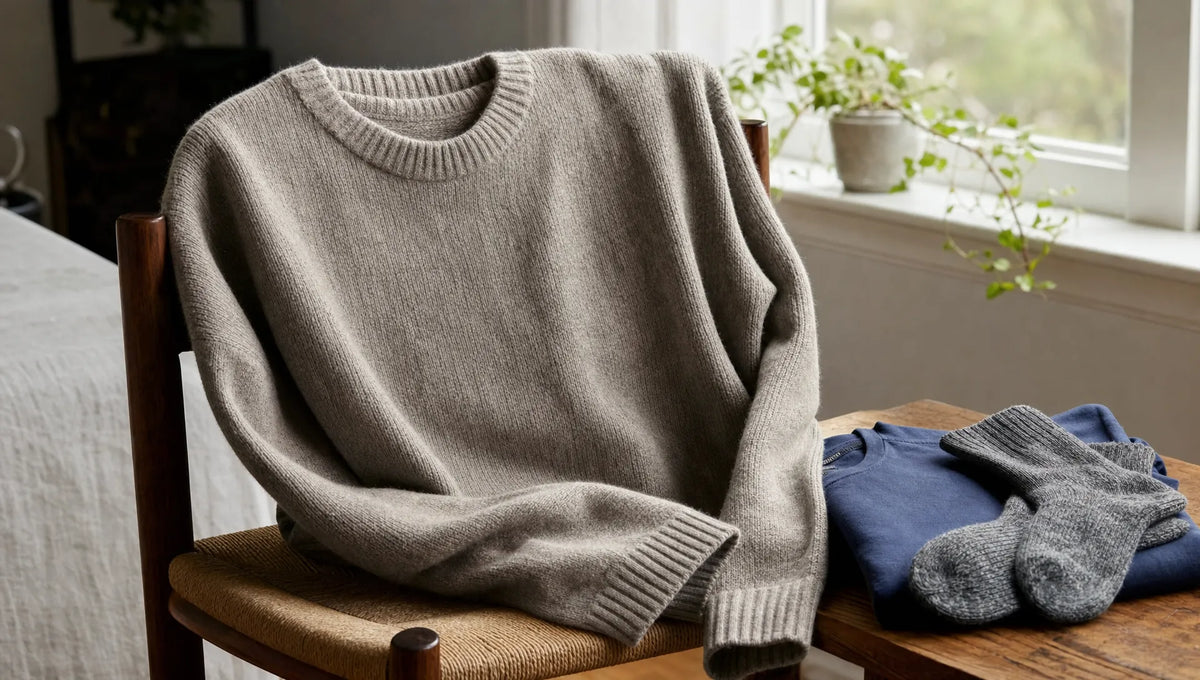
Merino wool has moved far beyond alpine base layers and winter socks. Today, it is one of the most practical natural fibers for everyday wear, especially if you want clothes that feel soft, breathe well, resist odor, and work across more than one season.
For a daily wardrobe, the real appeal of merino is not just performance. It is convenience. A good merino T-shirt, sweater, or pair of socks can handle a commute, a long workday, a weekend walk, and travel without demanding constant washing or complicated styling. That makes it useful for people who want fewer, better pieces that earn their place in the closet.
Why merino wool feels different from regular wool
Many people hear wool and think scratchy, heavy, or too warm. Merino is different because it comes from Merino sheep, whose fleece produces very fine fibers. Those finer fibers bend more easily against the skin, which is why merino often feels softer and less prickly than traditional wool.
If you want the deeper background on fiber structure, sourcing, and performance, Cavalcade has a full guide to what merino wool is and why this superfine fiber is valued. For everyday dressing, the short version is simple: merino combines natural comfort with practical performance in a way few fabrics can match.
Merino fibers also have a natural crimp, meaning they are slightly wavy rather than perfectly straight. That structure helps create tiny air pockets in the fabric. Those air pockets contribute to insulation, breathability, and a soft hand feel. The result is a garment that can feel cozy without automatically feeling bulky.
The everyday benefits that matter most
Softness you can wear all day
The best everyday clothes are the ones you forget you are wearing. Merino supports that because it is naturally soft, flexible, and gentle against the skin when made with fine fibers. This matters most in pieces that sit close to the body, such as T-shirts, long sleeves, underwear, socks, and lightweight knits.
Compared with coarse wool, fine merino is less likely to create the scratchy sensation many people associate with traditional sweaters. Not every merino garment feels identical, since softness depends on fiber fineness, knit, weight, and finishing, but the category is known for comfort.
Temperature regulation across changing conditions
Daily life rarely happens at one perfect temperature. You might walk outside in cool air, sit in a heated car, spend hours in an office, then run errands on the way home. Merino is useful because it helps moderate comfort across those changes.
It can keep you warm when the air is cool, yet it can also release heat and moisture vapor when you start to warm up. This is why merino is popular for travel and commuting. You do not need to dress for only one environment. A lightweight merino top can handle more temperature variation than many basic cotton or synthetic tops.
Moisture management without the clammy feel
Merino can absorb moisture vapor and move it away from the skin, which helps reduce that damp, sticky feeling during normal activity. This is especially useful if you walk to work, layer under a jacket, or spend the day moving between indoor and outdoor spaces.
Cotton can be comfortable, but once it gets damp, it often stays damp for a while. Polyester dries quickly, but it can trap odor more easily. Merino sits in a useful middle ground: breathable, moisture-managing, and naturally more odor resistant than many synthetic fabrics.
Natural odor resistance
One of merino’s most loved everyday benefits is odor resistance. It is not magic, and it does not mean you never have to wash your clothes. But merino often stays fresher between wears than many common fabrics, which can be a major advantage for travel, busy weeks, and minimalist wardrobes.
This benefit comes from how wool fibers interact with moisture and odor molecules. In practice, it means a merino shirt or sweater may be wearable more than once before washing, depending on the activity, climate, and your personal comfort level. Fewer washes can also help reduce wear on the garment over time.
Lightweight warmth without bulk
Merino is excellent for people who dislike bulky clothing but still want warmth. A fine merino sweater or long sleeve can add meaningful insulation under a coat without making your outfit feel stiff or overbuilt.
That makes merino especially good for transitional seasons. In fall and spring, a merino layer can replace heavier knits. In winter, it can work as part of a smarter system of layers. If you want to go deeper on that approach, see Cavalcade’s guide on building a versatile merino wool layering system.
Where merino shines in an everyday wardrobe
Merino works best when it solves a real problem in your routine. If you overheat easily, a lightweight merino tee can help. If your feet get cold or sweaty, merino socks can make a noticeable difference. If you travel often, a merino long sleeve can reduce the number of tops you need to pack.
| Everyday situation | How merino helps | Best garment types |
|---|---|---|
| Commuting | Handles temperature changes and light perspiration | T-shirts, long sleeves, socks |
| Office wear | Looks polished while staying breathable | Fine sweaters, cardigans, knit tops |
| Travel | Resists odor and can be reworn between washes | Tees, base layers, socks, underwear |
| Weekend errands | Feels comfortable across indoor and outdoor settings | Lightweight knits, casual tops |
| Cool weather walks | Adds warmth without heavy bulk | Midweight sweaters, beanies, socks |
The key is to choose the right weight. Lightweight merino is better for next-to-skin comfort and year-round wear. Midweight merino is better for cooler weather or light outer layers. Heavyweight merino can be beautiful and warm, but it may be less versatile indoors.

Merino wool compared with other everyday fabrics
No fabric is perfect for every use. The best wardrobes often combine fibers based on comfort, climate, care needs, and personal style. Merino stands out for temperature regulation and odor resistance, while other fabrics may win on drape, price, or ruggedness.
| Fabric | Everyday strengths | Tradeoffs to consider |
|---|---|---|
| Merino wool | Soft, breathable, odor resistant, warm without bulk | Usually costs more and needs gentle care |
| Cotton | Familiar, breathable, easy to find | Holds moisture and can feel damp longer |
| Polyester | Durable, quick drying, often affordable | Can hold odor and may feel less natural |
| Lyocell | Smooth, breathable, fluid drape | Often less insulating than merino |
| Cashmere | Very soft and warm | Often delicate and usually more expensive |
If your priority is a cool, smooth fabric with elegant drape, lyocell is worth considering too. Cavalcade’s article on lyocell clothing benefits for comfortable everyday style is a helpful companion if you are comparing natural and cellulosic fibers for daily wear.
What to look for when choosing merino clothing
The first thing to check is feel. If a merino piece is intended to sit directly on your skin, it should feel smooth, flexible, and comfortable the moment you try it on. Do not assume it will become dramatically softer later. Some garments relax with wear, but the basic feel should already suit you.
Next, consider fabric weight. Lightweight merino is often ideal for T-shirts and base layers. Midweight merino works well for sweaters, overshirts, and cooler weather tops. For everyday wear, extremely technical garments may not always be necessary. A clean design, comfortable fit, and practical weight often matter more.
Construction matters too. Look for seams that lie flat, collars and cuffs that recover well, and hems that do not twist. The quiet quality signals matter: labels should be comfortable, care instructions should be clear, and finishing should feel intentional. For independent apparel makers, professional details such as custom woven labels and care labels can help communicate fabric content and care in a way that supports a better long-term wearing experience.
Finally, think about color and silhouette. Neutral merino pieces in black, gray, navy, cream, brown, or olive are often the easiest to repeat without feeling obvious. If you are investing in merino for the first time, start with a piece that fits into outfits you already wear rather than buying something that requires a new wardrobe around it.
How to care for merino wool so it lasts
Merino is easier to care for than many people assume, but it still benefits from gentle habits. Always follow the garment’s care label first, because blends, dyes, and construction can change the best washing method.
In general, cool water, mild detergent, and low agitation are safer choices. Many merino garments can be machine washed on a delicate or wool cycle, while others may require hand washing. Avoid high heat, since heat can cause shrinking or damage. Air drying is usually the safest option.
A simple care routine can extend the life of merino clothing:
- Air garments out between wears when they are not visibly dirty.
- Wash only when needed, using cool water and a gentle detergent.
- Dry flat or hang carefully, depending on the garment’s structure.
- Store knits folded rather than hanging them for long periods.
- Use a sweater comb or fabric shaver gently if small pills appear.
Pilling can happen with merino, especially in high-friction areas like underarms, sides, and backpack contact points. Some pilling is normal for soft knitwear and does not automatically mean poor quality. Removing pills carefully can keep the surface looking clean.
When merino may not be the best choice
Merino is versatile, but it is not the answer to everything. If you need a garment for heavy abrasion, such as rough workwear or high-friction outdoor use, a merino blend may perform better than pure merino. Nylon or other reinforcing fibers can improve durability in socks and active pieces.
If you live in a very hot and humid climate, ultra-light merino can still be useful, but some people may prefer linen, lyocell, or very light cotton for maximum airflow. Merino’s strength is regulation, not necessarily the airiest possible feel.
Budget is another factor. Merino often costs more than basic cotton or polyester. The value comes from comfort, repeat wear, odor resistance, and versatility. If those benefits solve daily problems for you, the investment may make sense. If you only need a basic warm layer for occasional use, there may be simpler options.
Frequently Asked Questions
Is merino wool good for everyday wear? Yes, merino wool is excellent for everyday wear because it is soft, breathable, naturally odor resistant, and comfortable across changing temperatures. It works especially well for T-shirts, sweaters, socks, and travel clothing.
Can merino wool be worn in warm weather? Lightweight merino can be comfortable in warm weather because it manages moisture and breathes better than many people expect. In very hot and humid conditions, some wearers may still prefer linen, lyocell, or lightweight cotton.
Does merino wool shrink? Merino can shrink if exposed to high heat, aggressive agitation, or improper washing. Always follow the care label, use cool water when appropriate, and avoid tumble drying on high heat unless the garment specifically allows it.
Is merino wool worth the price? Merino can be worth it if you value comfort, fewer washes, odor resistance, and versatile styling. A well-chosen merino piece can replace several less adaptable garments in a daily wardrobe.
Choose everyday pieces with more intention
Merino wool is popular because it makes daily dressing easier. It feels good, performs in changing conditions, and supports a more versatile wardrobe with fewer compromises.
Cavalcade is opening soon. If you are interested in thoughtful everyday clothing and want launch updates, visit Cavalcade and sign up to be notified when the store opens.