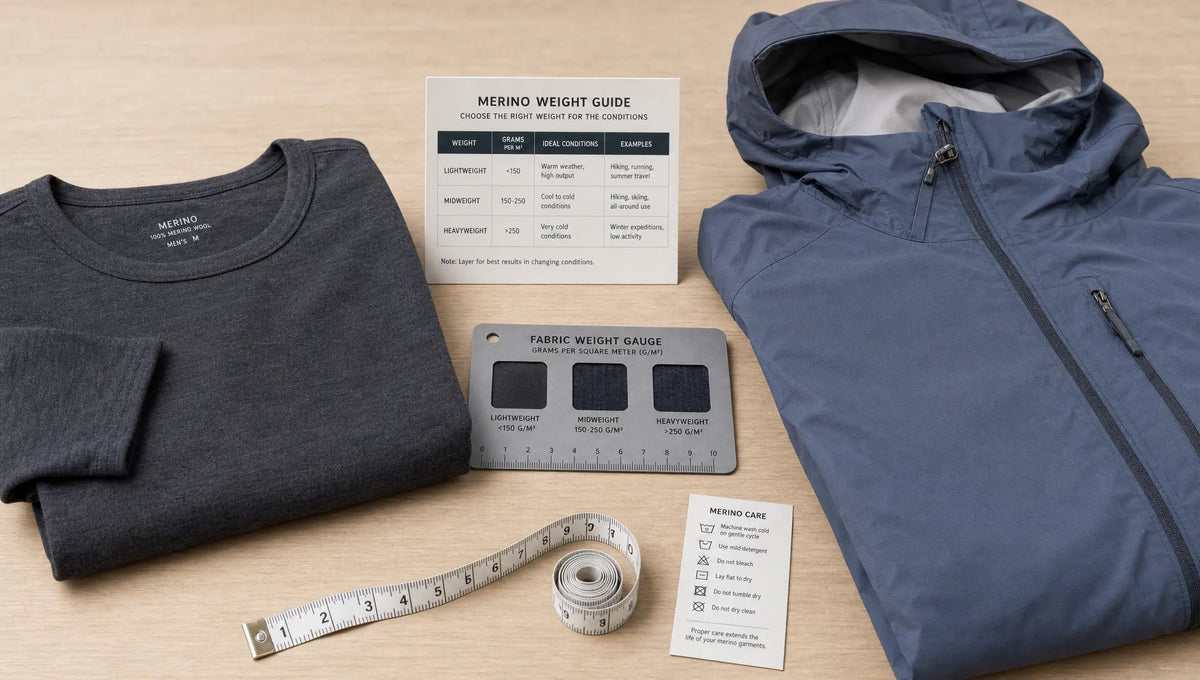
A good base layer is easy to underestimate. It sits closest to your skin, rarely gets the spotlight, and yet it decides whether you feel dry, warm, overheated, or clammy for the rest of the day. This merino wool base layer guide is designed to help you choose the right weight, fit, and layering approach for every season, from humid summer travel to freezing winter mornings.
Merino is often marketed as cold-weather gear, but that undersells it. The right merino base layer can work as a standalone shirt in warm weather, a breathable next-to-skin piece in spring and fall, or the foundation of a winter layering system. The key is matching the fabric weight and design to your climate, activity level, and personal comfort needs.
Why merino wool works beyond winter
Merino wool comes from Merino sheep and is valued for its fine fibers, soft handfeel, and natural performance properties. If you want the fiber-level background first, Cavalcade has a deeper primer on what merino wool is and why it feels different.
As a base layer, merino works because it handles moisture differently from cotton. Cotton tends to absorb sweat and stay wet, which can leave you cold when temperatures drop or uncomfortable when you stop moving. Merino can absorb moisture vapor into the fiber while still feeling less clammy against the skin, and it helps move moisture away from your body so it can evaporate.
Merino also has a natural crimp, which helps trap small pockets of air. That is useful in winter because trapped air supports insulation, but it also matters in warmer weather because breathable fabrics help your body manage temperature changes. When you go from a shaded trail to direct sun, or from an air-conditioned train to a warm street, a lightweight merino layer can feel more balanced than many standard tees.
Another major advantage is odor resistance. Merino is not magic, and it still needs washing, but many wearers find they can air it out and re-wear it more often than synthetic performance shirts. That makes it especially practical for travel, multi-day hikes, commuting, and capsule wardrobes.
Start with fabric weight, not the season label
The most useful number to look for is fabric weight, usually listed in grams per square meter, or gsm. Brand labels vary, but these ranges are a helpful starting point.
| Merino weight | Common range | Best use | What to expect |
|---|---|---|---|
| Ultralight | 120 to 150 gsm | Summer, travel, high-output activity | Very breathable, less insulating, can be more delicate |
| Lightweight | 150 to 180 gsm | Spring, warm fall days, year-round daily wear | Versatile, easy to layer, good for mild climates |
| Midweight | 190 to 250 gsm | Cool weather, winter activity, shoulder seasons | Noticeably warmer, still breathable when layered well |
| Heavyweight | 260 gsm and up | Cold winter, low-output activity, alpine conditions | Maximum warmth, less flexible in mild weather |
For most people, a lightweight merino base layer is the best first purchase because it works across the broadest range of conditions. If you run cold, live in a colder climate, or spend long periods outside without moving much, add a midweight piece. If you live somewhere warm or humid, an ultralight short sleeve may get more use than a traditional long-sleeve base layer.
The biggest mistake is buying a thick winter base layer and expecting it to work all year. Merino regulates temperature well, but a 260 gsm top will still be too warm for a summer hike or a crowded airport. Think of weight as the foundation of comfort.
Fit matters as much as fiber
A base layer should sit close enough to the body to move moisture efficiently, but not so tight that it restricts breathing or movement. For outdoor activity, a trim fit usually performs better because it reduces gaps where cold air can collect. For everyday wear, travel, or lounging, a slightly relaxed fit can be more comfortable and easier to style on its own.
Pay attention to seams and cut. Flat seams can reduce rubbing under backpack straps. Raglan sleeves or well-placed shoulder seams are useful if you carry a pack. A longer hem helps keep the layer tucked in during skiing, cycling, or cold-weather commuting. A crew neck is the most versatile, while a mock neck or quarter zip gives you more warmth and ventilation control.
Sleeve length also changes how the garment performs. Short sleeves and tanks are excellent for warm weather, but long sleeves protect more skin from sun, wind, pack friction, and temperature swings. For winter, thumb loops can help keep sleeves in place under gloves, but they are not essential for everyday use.
Spring: choose adaptable lightweight layers
Spring is unpredictable. A morning can start cold, turn sunny by lunch, then shift back to windy by evening. For that reason, lightweight merino in the 150 to 180 gsm range is ideal. It adds enough warmth under a jacket without feeling stifling when the temperature rises.
A long-sleeve lightweight top is often the most practical spring base layer. Wear it under a rain shell for cool, wet days, under a shirt jacket for errands, or on its own when the sun comes out. If you tend to overheat, choose a short sleeve and add a breathable midlayer instead.
Spring is also when fabric blends can shine. A merino and nylon blend may improve durability for hiking and commuting, while a merino and plant-based fiber blend may feel softer and drape more like everyday clothing. Pure merino is excellent, but it is not automatically better for every use.
Summer: go ultralight and think breathability
Yes, you can wear merino in summer, but the weight and design have to be right. Look for ultralight merino, usually around 120 to 150 gsm, in a short-sleeve tee, tank, or airy long sleeve. The goal is breathability, odor control, and comfort across changing conditions, not insulation.
For hot-weather hiking or travel, a lightweight merino shirt can help you pack less because it can often be worn more than once between washes if aired out properly. That matters when you are living out of a carry-on or washing clothes in a sink. It also helps if your day includes both outdoor heat and intense indoor air conditioning.
Do not assume every merino shirt provides strong sun protection. Some brands test and list UPF ratings, while others do not. If sun exposure is a major concern, look for a stated UPF rating, choose darker colors, or layer with additional sun protection.
Fall: lean into versatility
Fall is the season where merino base layers feel most natural. Temperatures fluctuate, layering becomes easier, and a 150 to 220 gsm top can cover a wide range of days. A lightweight long sleeve is useful for early fall, while a midweight top becomes more comfortable as mornings get colder.
This is also a good time to think in outfits rather than individual garments. A merino base layer under a flannel, overshirt, light fleece, or unlined jacket gives you warmth without bulk. If you are building a more complete system, Cavalcade’s guide on how to build a versatile merino wool layering system explains how base layers, midlayers, and outer layers work together.
For travel, fall is where merino really earns its space in your bag. One neutral long-sleeve base layer can function as sleepwear, a hiking layer, a casual shirt, or extra warmth under a coat. Choose colors you actually wear, not just technical-looking shades that only work on the trail.

Winter: build warmth through layers, not bulk
In winter, the base layer should keep your skin dry and comfortable while the rest of your outfit provides insulation and weather protection. A midweight merino top in the 190 to 250 gsm range is a strong default for cold days. For very cold conditions or low-output activities, a heavier base layer may make sense.
The important point is that your base layer should not do all the work. If you choose a base layer that is too thick, you may sweat during activity and then chill when you stop. A better approach is to pair a breathable merino base layer with an insulating midlayer, then add a windproof or waterproof outer layer when conditions require it.
For winter sports, fit becomes especially important. The base layer should move with you, tuck comfortably into your pants, and avoid bulky seams under bibs, jackets, or packs. For everyday winter wear, a softer relaxed-fit merino top may be more useful than a technical ski layer.
Match your base layer to the activity
Season matters, but activity level matters just as much. The same 40-degree day can call for different base layers depending on whether you are standing at a bus stop or hiking uphill.
| Activity | Best starting point | Why it works |
|---|---|---|
| Warm-weather travel | Ultralight short sleeve or tank | Packs small, resists odor, works across changing indoor and outdoor temperatures |
| Hiking in mild weather | Lightweight long sleeve | Adds coverage, manages sweat, layers easily under a shell |
| Cold-weather commuting | Midweight crew or quarter zip | Keeps you warm during low-output movement and waiting outdoors |
| Running or cycling | Ultralight or lightweight blend | Prioritizes breathability and faster drying over maximum warmth |
| Skiing or snowboarding | Midweight long sleeve and bottoms | Balances moisture management with warmth under insulation |
| Everyday winter wear | Lightweight to midweight top | Comfortable under sweaters, overshirts, and coats without bulk |
If you sweat heavily, err lighter. If you run cold, spend time standing still, or live in a damp climate, consider midweight. Comfort comes from matching the layer to the intensity of your day.
How to care for merino base layers
Merino is easier to care for than many people think, but it rewards a gentler routine. Always check the garment label first because blends, trims, dyes, and construction can affect care instructions.
- Wash in cold water on a gentle cycle or by hand when the care label recommends it.
- Use a mild detergent, and avoid bleach or harsh stain treatments.
- Skip fabric softener because it can affect moisture management.
- Lay flat or hang to dry when possible, since high heat can cause shrinkage or shorten garment life.
- Air out between wears to reduce unnecessary washing.
- Store clean and dry, especially if the garment will sit unused for a season.
Small holes can happen with fine natural fibers, especially in ultralight weights. Repairing them early is often better than replacing the garment. A visible mend, small patch, or careful stitch can extend the life of a base layer and reduce waste.
Common mistakes to avoid
The first mistake is treating all merino as the same. A featherweight summer tee and a heavyweight thermal top may both be merino, but they are built for different jobs. Check the weight, weave, fit, and intended use before buying.
Another mistake is assuming 100 percent merino is always the best option. Pure merino feels natural and performs beautifully, but blends can improve durability, stretch, drying speed, and shape retention. For travel, hiking, and repeated washing, a thoughtful blend can be the smarter choice.
Many people also wash merino too often. If it smells clean and is not visibly dirty, airing it out may be enough for another wear. This is especially useful when traveling, but it also helps the garment last longer.
Finally, avoid building your system around extreme conditions you rarely face. If most of your life is mild winters, office commutes, weekend walks, and occasional travel, you may get more value from two lightweight layers than one expedition-weight thermal.
Sustainability starts with buying fewer, better layers
Merino is a natural fiber, but sustainability depends on more than the fiber itself. Longevity, repairability, animal welfare, responsible sourcing, washing habits, and how often you actually wear the garment all matter. Look for clear brand information where available, such as sourcing standards, mulesing policies, and care guidance.
Packaging and shipping are part of the same conversation, especially as more people buy clothing online. For brands and retailers, right-sized corrugated mailers, reusable packaging strategies, and custom cardboard packaging can reduce excess space and help garments arrive protected without unnecessary bulk.
For shoppers, the most sustainable base layer is usually the one you wear constantly, care for properly, and keep for years. Choose a weight that fits your real life, a color that works with your wardrobe, and a style you are comfortable wearing beyond a single activity.
A simple all-season merino base layer plan
If you are starting from scratch, you do not need a drawer full of technical gear. A small, intentional setup can cover most conditions.
For warm climates or frequent travel, start with one ultralight short-sleeve merino tee and one lightweight long-sleeve top. For four-season climates, add a midweight long-sleeve top for winter. If you ski, camp, or spend long periods outside in freezing weather, consider merino base layer bottoms as well.
Color matters more than people think. Black, charcoal, navy, olive, cream, and other easy neutrals can move from outdoor use to everyday outfits. If you want your base layer to double as a shirt, choose a cut and fabric that look good on their own, not just under a jacket.
Frequently Asked Questions
Can you wear a merino wool base layer in summer? Yes, if it is ultralight and breathable. Look for 120 to 150 gsm merino in a short sleeve, tank, or airy long sleeve. For hot and humid conditions, a merino blend may dry faster and feel more durable.
What is the best merino wool base layer weight for winter? Midweight merino, usually around 190 to 250 gsm, is the best starting point for most winter use. Choose heavyweight merino only for very cold conditions, low-output activity, or if you naturally run cold.
Is merino better than synthetic base layers? It depends on the use. Merino is excellent for comfort, odor resistance, and temperature regulation. Synthetics often dry faster and can be more durable for intense sweat-heavy activity. Many blends try to combine the strengths of both.
Does merino wool itch? Fine merino is much softer than traditional wool, but sensitivity varies by person. If you have sensitive skin, look for lower micron fibers, soft blends, and flat seams. Try wearing the garment for a short period before committing to a full day outdoors.
How many merino base layers do I need? Most people can start with two or three: one ultralight or lightweight short sleeve, one lightweight long sleeve, and one midweight winter layer. Add base layer bottoms if you spend time outdoors in cold weather.
Can merino wool go in the dryer? Some merino garments allow low-heat tumble drying, but air drying is usually safer. High heat can cause shrinkage or shorten the life of the fabric, so always follow the care label.
Build your base layer wardrobe with intention
A merino base layer should make daily life easier, not more complicated. Choose the right weight for your climate, the right fit for your activity, and the right style for how you actually dress.
Cavalcade is preparing to open its online store. If you want launch updates, visit Cavalcade and join the email list while you plan the merino pieces that will work hardest in your year-round wardrobe.