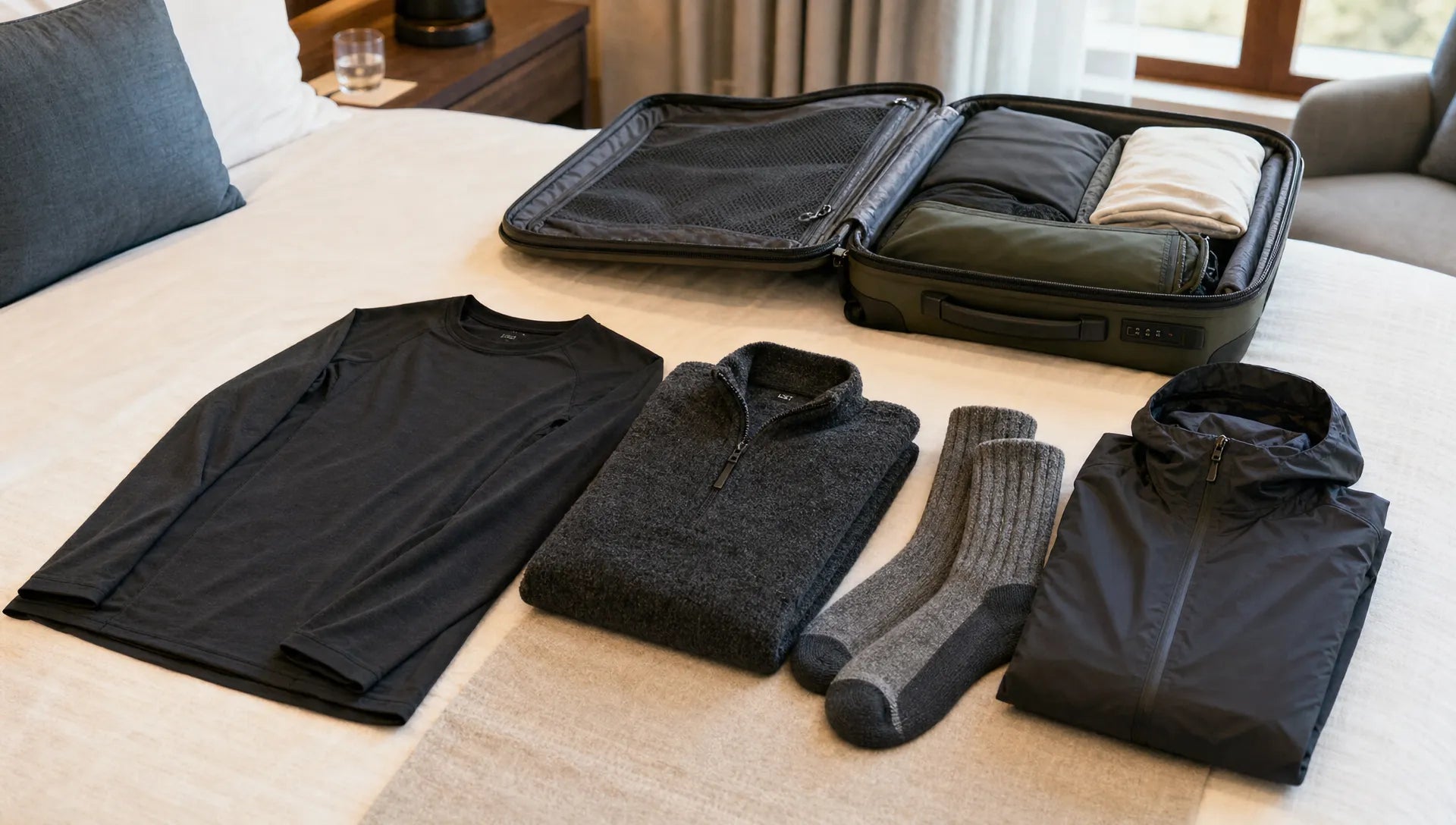
Merino wool has earned its reputation because it solves a practical problem: you need clothing that adapts when your day moves between cold sidewalks, warm interiors, windy trails, long travel days, and changing weather. A versatile merino wool layering system lets you build warmth without bulk, manage moisture more comfortably, and rewear key pieces more often between washes.
The goal is not to own every possible layer. The goal is to choose a small set of pieces that work together. When your base layer, insulating layer, and weather protection layer are chosen intentionally, you can dress for a wide range of temperatures with fewer decisions and fewer items in your closet.
Why merino wool works so well for layering
Merino wool is finer and softer than traditional wool, which makes it more comfortable next to skin. It is also naturally breathable, temperature regulating, and odor resistant, all of which matter when you are building a system instead of buying a single warm garment.
Unlike cotton, which tends to hold moisture and feel cold when damp, merino can help move moisture away from your skin while still insulating. That makes it useful for active days, travel, commuting, hiking, skiing, and everyday wear in unpredictable conditions. The Woolmark Company describes wool as a natural fiber with strong moisture management and thermal regulation properties, which is why it remains popular in both performance and lifestyle clothing.
A good layering system also gives you control. If you start cold, you can add insulation. If you heat up, you can remove a midlayer. If wind or rain picks up, you can add a protective shell. Merino gives each layer a wider comfort range, so the system feels more forgiving.
The basic structure of a merino wool layering system
Most layering systems use three core layers: a base layer, a midlayer, and an outer layer. You can add or remove pieces depending on the season, but the logic stays the same.
The base layer sits closest to your skin. Its job is moisture management and comfort. This is where merino often shines the most, especially in long-sleeve tees, short-sleeve tees, tanks, leggings, underwear, and socks.
The midlayer provides insulation. This could be a merino sweater, hoodie, cardigan, vest, or heavier knit. It traps warmth while allowing moisture vapor to continue moving outward.
The outer layer protects against wind, rain, snow, or abrasion. This layer is not always merino, and that is fine. In heavy rain or strong wind, a technical shell can complete the system. As REI explains in its layering basics guide, each layer has a specific role, and the best results come from matching those roles to your activity and conditions.
Choose the right merino weight first
Merino garments are often described by fabric weight, usually in grams per square meter, or gsm. While exact ranges vary by brand, the following guide is a helpful starting point.
| Merino weight | Common range | Best use | Layering role |
|---|---|---|---|
| Ultralight | 120 to 150 gsm | Warm weather, high-output activity, travel | Base layer |
| Lightweight | 150 to 180 gsm | Daily wear, cool weather, indoor-outdoor use | Base layer |
| Midweight | 190 to 250 gsm | Cold weather, moderate activity, winter commuting | Base or light midlayer |
| Heavyweight | 260 gsm and above | Low-output cold conditions, extra insulation | Midlayer |
If you are building your first system, start with lightweight or midweight merino. Lightweight pieces are easier to wear across seasons, while midweight pieces offer more warmth without becoming too specialized.
A common mistake is buying the warmest layer first. That can work for static cold, but it may feel too hot during walking, commuting, or travel. Versatility usually comes from combining lighter pieces, not relying on one heavy garment.
Start with a dependable base layer
Your base layer sets the tone for the entire system. If it is too thick, itchy, loose, or slow to dry, the rest of your layers have to compensate. For most people, the best first purchase is a lightweight long-sleeve merino crew or quarter-zip.
A crew neck is simple and works under sweaters, overshirts, jackets, and coats. A quarter-zip gives you more ventilation and is useful for hiking, skiing, and travel. Short-sleeve merino tees are also excellent for year-round use because they can work alone in mild weather or under warmer layers when temperatures drop.
Fit matters. A base layer should sit close enough to move moisture away from the skin, but not so tight that it restricts movement. If you plan to wear it casually, look for a fit that can stand alone without looking like thermal underwear.
For lower body layering, merino leggings or long underwear are useful in winter, especially under jeans, work pants, ski pants, or rain pants. Merino socks are also part of the system, not an afterthought. Cold feet often make the rest of your outfit feel inadequate.
Add a midlayer that matches your lifestyle
The midlayer is where your system becomes personal. A backpacker, a city commuter, and someone dressing for a casual office may all use merino differently.
For everyday wear, a merino sweater or cardigan is one of the most versatile options. It can go over a tee, under a coat, and into indoor settings without looking overly technical. For active use, a merino hoodie, zip layer, or hybrid knit can offer better temperature control.
The best midlayer should be easy to remove and easy to carry. Full-zip and half-zip styles are especially practical because they let you vent heat quickly. Pullovers can be warmer and cleaner looking, but they are less adjustable on the move.
Color also affects versatility. Neutral shades such as black, charcoal, navy, oatmeal, olive, and deep brown are easier to combine. If you prefer a smaller wardrobe, choose midlayers that pair with both your outdoor shell and your everyday outerwear.

Finish with weather protection
Merino handles cool air and mild moisture well, but it is not a substitute for a true rain shell in wet weather or a windproof layer in harsh wind. The outer layer protects your insulation so the system can perform.
For everyday use, this could be a wool coat, waxed jacket, trench, or insulated parka. For outdoor activity, it may be a waterproof breathable shell, wind jacket, or ski shell. The key is leaving enough room underneath for your merino base and midlayer without compressing them.
A shell that is too tight can make the whole system feel colder because compressed insulation traps less warm air. When trying on outerwear, wear the layers you expect to use underneath. Lift your arms, sit down, bend forward, and check whether the back, shoulders, and cuffs still feel comfortable.
Build a small merino capsule wardrobe
You do not need a large collection to cover most conditions. A lean capsule can work for travel, commuting, outdoor weekends, and daily wear.
For a simple three-season setup, consider the following framework:
- Two lightweight merino tees, one short-sleeve and one long-sleeve
- One midweight merino long-sleeve or quarter-zip
- One merino sweater, hoodie, or cardigan
- Two to four pairs of merino socks in different weights
- One reliable wind or rain shell, depending on your climate
This gives you enough flexibility to rotate pieces, adapt to temperature swings, and pack efficiently. If you live in a cold climate, add merino leggings and a heavier midlayer. If you live somewhere mild, you may get more use from tees, thin knits, and socks than from heavyweight layers.
The key is compatibility. Each item should work with at least two others. A long-sleeve base should fit under your sweater. Your sweater should fit under your jacket. Your socks should match the footwear you actually wear. A layering system fails when the pieces are individually good but awkward together.
Match your system to the activity
Different days require different layering strategies. The same temperature can feel completely different depending on wind, humidity, sun exposure, and how hard you are moving.
For commuting, prioritize comfort across indoor and outdoor environments. A lightweight merino tee, merino sweater, and coat often works better than a very heavy base layer because you can remove the coat indoors and still look put together.
For hiking or other high-output activity, start cooler than you think. You will warm up quickly once you move. A breathable merino base layer with a light wind shell can be enough in many conditions. Keep a warmer midlayer in your pack for rest stops.
For travel, merino is especially useful because odor resistance and comfort can reduce the number of items you need to pack. A few merino tops in complementary colors can create multiple outfits while saving space.
For winter sports, focus on moisture management. A merino base layer under an insulating midlayer and technical shell gives you adjustability through changing weather, lift rides, and periods of exertion.
Pay attention to fit, fiber blend, and feel
Not all merino garments feel the same. Finer fibers tend to feel softer, while heavier knits can feel more structured. Some garments use 100 percent merino, while others blend merino with nylon, elastane, recycled fibers, or other materials for durability, stretch, shape retention, or easier care.
A blend is not automatically worse. For socks and high-wear base layers, a small amount of synthetic fiber can improve durability. For sweaters and casual knits, 100 percent merino can offer a more classic hand feel. Choose based on the job the garment needs to do.
If you have sensitive skin, check product descriptions for fiber fineness when available, and avoid buying several pieces before testing one. Merino is much softer than conventional wool, but personal tolerance varies.
Care for merino so it lasts
Merino is naturally practical, but it still benefits from careful care. Always follow the garment label first, since construction, dye, knit type, and blends can change the instructions.
In general, wash merino less often than cotton if it still smells and feels fresh. When washing is needed, use cool water and a gentle detergent. Avoid high heat, which can shrink or damage wool fibers. Lay flat to dry when possible, especially for sweaters and knits that may stretch on a hanger.
Pilling can happen with soft natural fibers, especially in areas that rub against backpacks, seatbelts, desks, or jacket linings. A wool comb or fabric shaver can help refresh the surface. Store clean merino in a dry place, and consider cedar or breathable storage bags if moths are a concern in your home.
Good care protects your investment. A well-chosen merino layer should not be treated as disposable gear. It is a flexible wardrobe tool that gets better when you understand how to use and maintain it.
Common layering mistakes to avoid
The most common mistake is overdressing at the start of an active day. If you are already warm before you begin moving, you may become sweaty quickly, which can make you colder later. Start slightly cool, then adjust.
Another mistake is mixing a strong base layer with a poor outer layer. Even the best merino cannot fully compensate for a jacket that traps sweat, leaks rain, or blocks movement. Layering is a system, so every piece matters.
Finally, avoid buying only for extreme conditions. If you rarely experience deep winter temperatures, heavyweight pieces may sit unused. Most people get more value from lightweight and midweight merino because those layers adapt to more days of the year.
Frequently Asked Questions
Is merino wool good for all seasons? Yes, depending on the weight. Lightweight merino works well in mild weather and travel, while midweight and heavyweight merino are better for cold conditions.
Can merino wool be worn directly against the skin? Most merino base layers are designed for next-to-skin comfort. If you are sensitive to wool, start with a lightweight, fine-fiber garment and test it before building a full system.
How many merino layers do I need? A practical starting point is one lightweight base layer, one warmer midlayer, merino socks, and an appropriate outer shell. You can expand from there based on your climate and activities.
Is 100 percent merino better than a blend? Not always. Pure merino is valued for softness and natural performance, while blends can improve durability, stretch, and recovery. The best choice depends on the garment’s purpose.
How should a merino base layer fit? It should be close enough to manage moisture but comfortable enough to move in. For everyday wear, choose a cut that can be worn alone or under other layers.
Build your system with intention
A versatile merino wool layering system is less about owning more and more about choosing pieces that work together. Start with a comfortable base layer, add a midlayer that suits your lifestyle, and finish with outerwear that protects against the conditions you actually face.
Cavalcade is opening soon. If you want launch updates as the online store gets ready, you can join the Cavalcade email list and be notified when the shop opens.