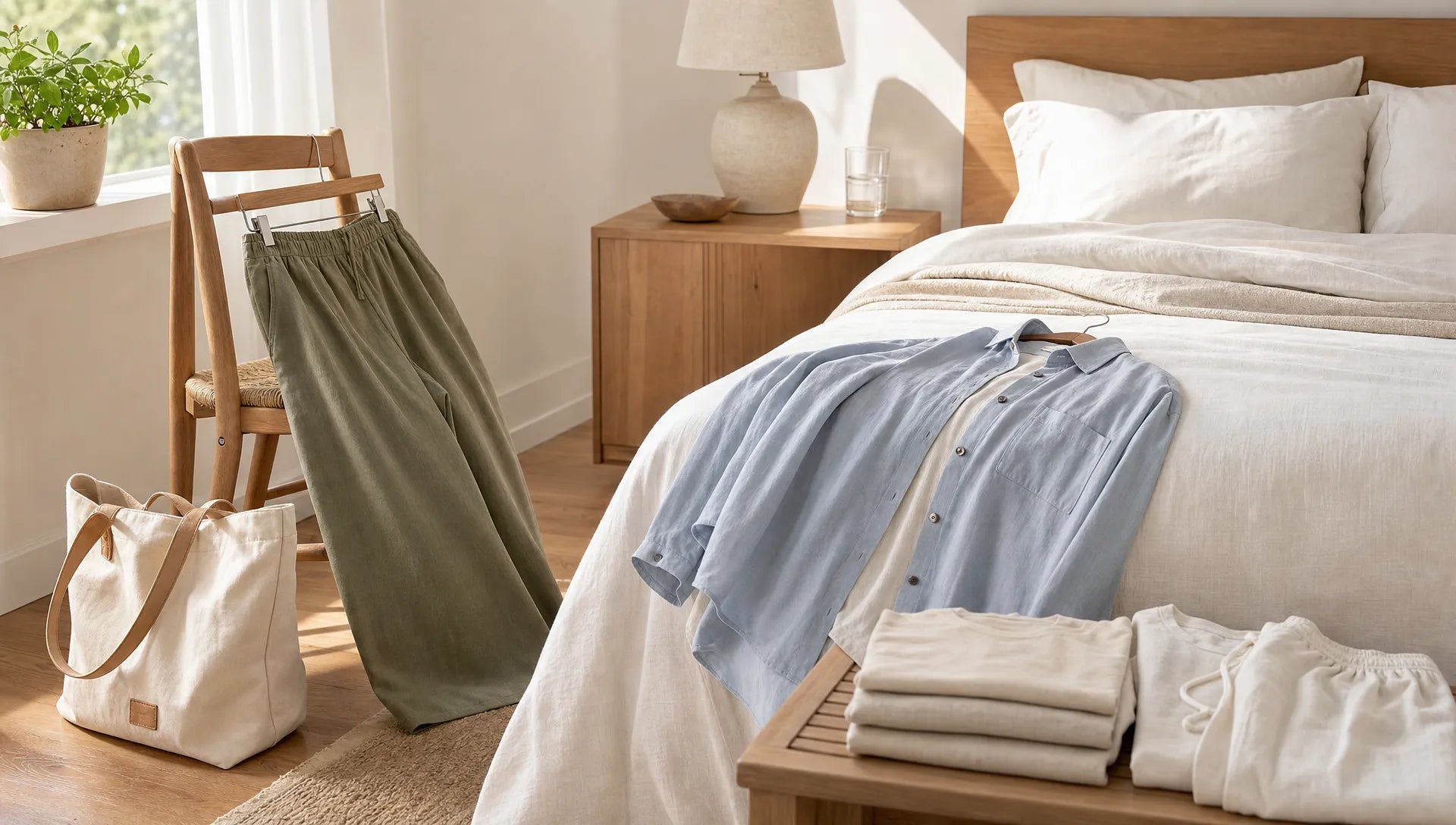
Everyday clothing has to do a lot. It needs to feel good during a commute, hold its shape through a full day, look polished enough for lunch plans, and still be easy to wear when you get home. That is why lyocell has become a favorite fabric for people who want comfort without giving up style.
The main lyocell clothing benefits come down to feel, drape, breathability, and versatility. It is soft enough for elevated basics, fluid enough for dresses and wide-leg pants, and practical enough to earn a steady place in a modern wardrobe. If you are trying to build outfits that feel relaxed but still intentional, lyocell is worth knowing.
What Is Lyocell?
Lyocell is a cellulosic fiber, which means it is made from cellulose, usually sourced from wood pulp. It belongs to the same broad family as rayon and modal, but it is produced using a different manufacturing process. In the United States, lyocell is recognized as a generic fiber name, and the Federal Trade Commission’s textile labeling guidance is a helpful reference for understanding why fiber names on clothing labels matter.
You may also see TENCEL on a clothing tag. TENCEL is not a separate fiber category. It is a brand name most commonly associated with lyocell and modal fibers made by Lenzing. Think of it like this: all TENCEL lyocell is lyocell, but not all lyocell is TENCEL.
What makes lyocell especially appealing for everyday style is how it bridges categories. It can feel smoother than many cotton knits, less clingy than some synthetics, and more relaxed than crisp woven fabrics. Depending on how it is spun, woven, knitted, or blended, lyocell can show up in T-shirts, button-downs, trousers, skirts, dresses, sleepwear, and lightweight layers.
The Biggest Lyocell Clothing Benefits
Softness that feels easy from the first wear
Lyocell is known for a smooth, soft handfeel. This makes it especially useful for pieces that sit close to the skin, such as tees, tanks, slips, underlayers, and pajamas. Unlike some fabrics that need repeated washing to soften, lyocell often feels comfortable right away.
That softness also helps everyday outfits feel more elevated. A simple lyocell tee can look more fluid than a basic cotton tee, while a lyocell blouse can feel refined without being stiff. If your personal style leans minimal, casual, or understated, that subtle improvement in texture can make a noticeable difference.
Breathability and moisture comfort
Lyocell is often chosen for warm-weather and transitional clothing because it can feel breathable and moisture absorbent. It does not guarantee that you will never sweat, no fabric can do that, but it can help make daily wear feel more comfortable than heavy, non-breathable materials.
This is one reason lyocell works well for travel, busy weekdays, and layered outfits. A lyocell shirt under a jacket can feel less bulky, while a lyocell dress can be comfortable enough for a long day without looking too casual.
A fluid drape that flatters without clinging
One of lyocell’s strongest style advantages is its drape. It tends to fall softly rather than standing away from the body. That quality works beautifully in relaxed trousers, wrap dresses, wide-leg pants, bias-cut skirts, and camp-collar shirts.
Drape matters because it affects how clothing moves. Lyocell pieces can create a clean line without feeling rigid. For many people, that balance is exactly what makes an outfit feel modern: comfortable, but not sloppy.
Versatility across seasons
Lyocell is not only a summer fabric. Lightweight lyocell can be ideal for hot days, but midweight lyocell blends can work year-round. A lyocell-cotton knit may be great for layering, while a lyocell-linen blend can create a breezy warm-weather texture. A lyocell-wool or lyocell-nylon blend may add softness or movement to cooler-weather pieces, depending on the garment.
The key is not just the fiber, but the fabric construction. A thin jersey will behave differently from a twill, crepe, or denim-like lyocell fabric. That is why two garments labeled lyocell can feel completely different.
A more thoughtful material choice, when sourced responsibly
Lyocell is often discussed as a more responsible fabric option because its production can use a solvent-spinning process designed to recover and reuse solvent. However, sustainability depends on the manufacturer, wood sourcing, dyeing, finishing, shipping, and garment durability.
In other words, lyocell can be a strong choice, but it is not automatically perfect. The best approach is to look for transparent brands, responsible sourcing claims, credible certifications where available, and garments you will actually wear often.
| Everyday wardrobe need | How lyocell can help | What to check before buying |
|---|---|---|
| Soft basics | Smooth feel against the skin | Fabric weight and opacity |
| Office-casual outfits | Fluid drape with a polished look | Wrinkle tendency and care label |
| Warm-weather dressing | Breathable, lightweight comfort | Whether the fabric is woven or knit |
| Travel outfits | Comfortable for long wear | How easily it creases in your bag |
| Minimal wardrobes | Versatile texture that pairs well | Color, cut, and long-term wearability |
Where Lyocell Fits in an Everyday Wardrobe
Lyocell works best when you use its natural strengths: softness, movement, and ease. It is not meant to replace every fabric in your closet. Instead, it can fill the gap between ultra-casual basics and more structured pieces.
A lyocell T-shirt, for example, can be dressed up with tailored pants and a belt. A lyocell button-down can be worn open over a tank, tucked into denim, or layered under a cardigan. A lyocell slip skirt can work with sandals in summer and boots in fall. The same fabric quality that makes it comfortable also makes it adaptable.
Some of the easiest ways to wear lyocell include:
- Soft tees and tanks for outfits that feel casual but look smoother than standard basics.
- Button-down shirts for relaxed office dressing, weekend layering, or travel.
- Dresses and skirts when you want movement, softness, and a less structured silhouette.
- Wide-leg pants and pull-on trousers for comfort that still looks intentional.
- Sleepwear and loungewear when softness is the main priority.

Lyocell vs Cotton, Viscose, and Polyester
No single fabric is best for every person or every use. Lyocell shines in certain situations, while other fibers may be better for structure, athletic performance, or low-maintenance care. Comparing it with common wardrobe fabrics can help you shop more confidently.
| Fabric | Typical feel | Everyday strengths | Possible drawbacks |
|---|---|---|---|
| Lyocell | Smooth, soft, fluid | Breathable feel, elegant drape, comfort | Can wrinkle, may need gentle care |
| Cotton | Natural, familiar, varies widely | Durable basics, easy styling, washable | Can feel stiff, may hold moisture |
| Viscose | Soft, drapey, lightweight | Dressy movement, affordable options | Can be delicate, may shrink if mishandled |
| Polyester | Smooth or textured, varies widely | Wrinkle resistance, durability, performance uses | Can feel less breathable in some garments |
| Linen | Crisp, airy, textured | Excellent warm-weather look and breathability | Wrinkles easily, can feel rough at first |
If you like cotton but want something softer and more fluid, lyocell may be a good fit. If you like viscose but want a fabric that is often associated with a more modern production process, lyocell is worth considering. If you prioritize wrinkle resistance above all else, polyester blends may still be more practical for certain pieces.
How to Shop for Lyocell Clothing
The first step is reading the fiber label. A garment may be 100 percent lyocell, or it may use lyocell in a blend. Neither option is automatically better. A blend can improve structure, stretch, opacity, or durability, while 100 percent lyocell can maximize softness and drape.
Next, pay attention to fabric weight. Lightweight lyocell can feel airy and elegant, but it may be more sheer or delicate. Midweight lyocell twill, jersey, or denim-like fabrics may offer more coverage and structure. If you are shopping online, product photos, garment measurements, and reviews can help, but the care label and fabric composition are still important.
Also consider the garment’s purpose. For a work blouse, you may want a slightly heavier weave that resists transparency. For a summer dress, you may prefer a breezy fabric with movement. For travel pants, you might choose a lyocell blend that balances softness with shape retention.
Certifications can also be useful, especially if responsible sourcing matters to you. You may see references to FSC, PEFC, OEKO-TEX, or brand-specific fiber sourcing programs. These labels do not replace good design or good care, but they can offer additional context about how a garment was made.
How to Care for Lyocell So It Lasts
Lyocell is comfortable, but it deserves thoughtful care. Always follow the specific garment care label, since construction, dyes, trims, and blends can change the best washing method.
In general, these habits can help preserve lyocell clothing:
- Wash with cool water to reduce stress on the fibers and help limit shrinkage.
- Use a gentle cycle or hand wash for delicate knits, dresses, and blouses.
- Skip high heat because tumble drying on hot settings can damage or shrink some garments.
- Air dry when possible by laying knits flat or hanging woven pieces carefully.
- Steam or iron on low if the care label allows it, especially for woven shirts and dresses.
Wrinkling is normal for many cellulosic fabrics. If you want a completely crisp look, lyocell may need a quick steam. If you prefer a relaxed look, the natural softness and movement can be part of the appeal.
Common Mistakes to Avoid
The biggest mistake is assuming that every lyocell garment will behave the same way. A thin lyocell jersey top is not the same as a structured lyocell twill pant. Always evaluate the whole garment, not just the fiber name.
Another mistake is ignoring opacity. Because lyocell can be lightweight and fluid, some pieces may be more sheer than expected, especially in white, cream, or pale colors. If you are buying online, look for close-up fabric photos and notes about lining.
Finally, do not treat lyocell like workout polyester or heavy denim. It may be durable enough for frequent wear, but many pieces benefit from gentle washing, lower heat, and careful storage. Better care usually means better cost per wear.
Is Lyocell Right for Your Everyday Style?
Lyocell is a great option if you want clothing that feels soft, moves well, and looks quietly polished. It is especially useful for people who prefer relaxed silhouettes, breathable layers, and elevated basics.
It may be less ideal if you dislike any visible wrinkling, need rugged workwear, or prefer very crisp structure. In those cases, lyocell blends or different fabrics may be a better choice.
For most wardrobes, the smartest approach is selective. Start with one piece you know you will wear often, such as a T-shirt, button-down, dress, or pair of relaxed pants. If you like how it feels and how it wears through a full day, lyocell can become one of your go-to everyday fabrics.
Frequently Asked Questions
Is lyocell good for hot weather? Yes, lyocell can be a strong warm-weather choice because it often feels breathable, smooth, and moisture absorbent. The exact comfort level depends on fabric weight, weave, fit, and garment design.
Does lyocell wrinkle easily? Lyocell can wrinkle, especially in lightweight woven fabrics. It usually responds well to steaming or low-temperature ironing if the care label allows it.
Is lyocell better than cotton? It depends on what you want. Lyocell is often softer and more fluid, while cotton can feel more familiar, crisp, or sturdy. Many people like both for different uses.
Can lyocell shrink in the wash? Some lyocell garments can shrink if washed or dried with high heat. Cool water, gentle cycles, and air drying are usually safer, but always follow the garment’s care label.
Is lyocell a sustainable fabric? Lyocell can be a more responsible option when it comes from well-managed wood sources and transparent production systems. Still, sustainability depends on the full supply chain, garment quality, and how long you keep wearing the piece.
Get Ready for Comfortable Everyday Style
Lyocell is not just a trend fabric. It solves real wardrobe problems: softness, movement, breathability, and everyday polish. If you are refining your closet around pieces you can wear often, lyocell is one of the materials worth looking for on the label.
Cavalcade is opening soon as an online store, and the best way to stay updated is to join Cavalcade’s launch email list. When the shop opens, use the fabric label, fit, and care details to choose pieces that match your lifestyle and feel good from the first wear.