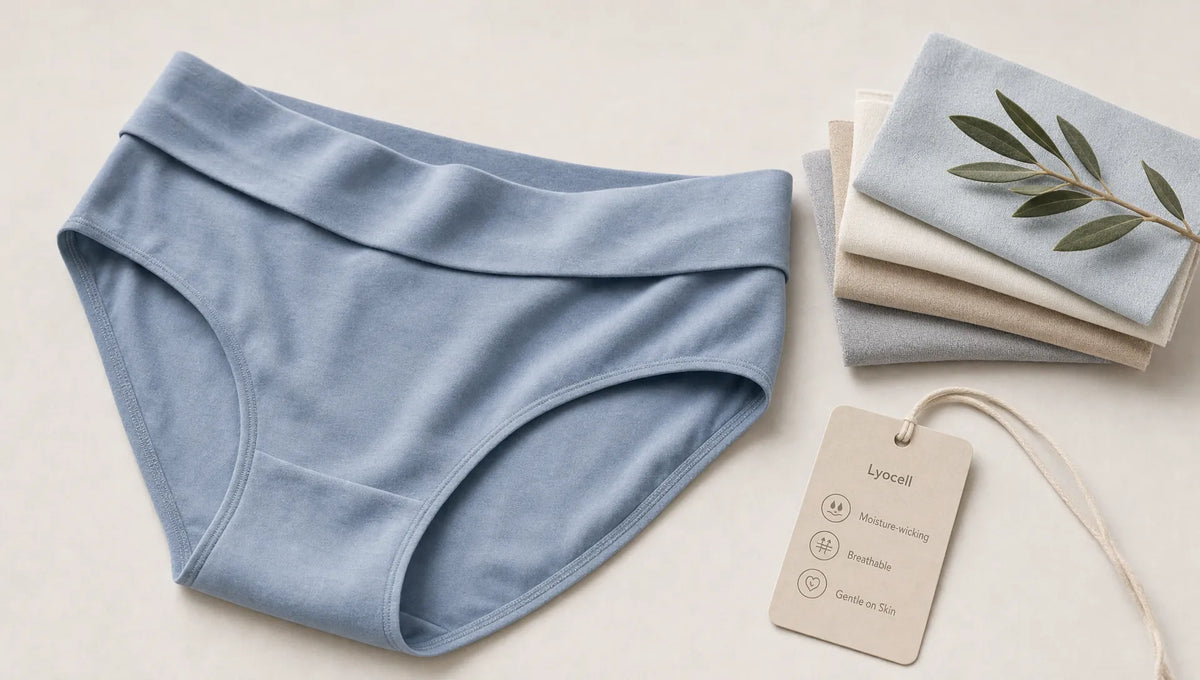
Underwear is the first layer you put on and the last thing you want to think about once you leave the house. If it pinches, traps heat, rides up, or feels rough after a few washes, the rest of your outfit has to work harder than it should. That is why lyocell underwear has become such a strong choice for people who want everyday comfort without overcomplicating their wardrobe.
Lyocell is soft, smooth, breathable, and naturally good at handling moisture. Those qualities matter more in underwear than almost any other clothing category because the fabric sits close to delicate skin for hours at a time. The right pair can feel barely there while still giving you the support, coverage, and freshness you need for workdays, travel, lounging, and light activity.
What makes underwear genuinely comfortable?
Comfortable underwear is not only about softness, although softness is usually the first thing you notice. A pair that works all day needs to manage several things at once: skin feel, airflow, moisture, stretch, seam placement, and recovery after washing.
That is why fabric choice matters. Underwear sits in a high-friction, high-movement area of the body. It needs to adapt when you walk, sit, commute, exercise lightly, or sleep. A fabric that feels nice for five minutes in a fitting room may not feel the same after a full day if it traps heat or loses shape.
Lyocell stands out because it balances several everyday needs at once. It has a naturally smooth hand feel, drapes easily, and tends to feel cool against the skin. If you are used to cotton briefs that become damp or synthetic pairs that feel slick but stuffy, lyocell can feel like a middle ground: soft like a natural fiber, but more fluid and moisture-friendly than traditional cotton.
For a deeper look at the material itself, Cavalcade has a helpful guide on what lyocell fabric is and why it has become so popular.
Why lyocell works so well next to skin
Lyocell is a regenerated cellulose fiber, typically made from wood pulp using a solvent-spinning process. In simple terms, it begins with plant-based cellulose and is transformed into a soft textile fiber. The result is a fabric that often feels smooth, cool, and flexible, which is exactly what many people want in underwear.
It feels smooth, not scratchy
One of lyocell's biggest strengths is its smooth surface. In underwear, this can help reduce that rough or abrasive feeling that sometimes appears with lower-quality cotton, stiff lace, or certain synthetics. Smoothness matters around waistbands, leg openings, and gussets, where repeated movement can cause irritation.
This is especially useful if you prefer close-fitting styles such as briefs, boxer briefs, boyshorts, bikinis, or trunks. When the fabric moves with you instead of dragging against the skin, underwear becomes something you stop noticing.
It helps manage moisture
Everyday comfort depends heavily on moisture control. Heat and humidity can make underwear feel clingy, and damp fabric can increase friction. Lyocell is known for good moisture absorption, which helps pull moisture away from the skin so the fabric feels less clammy during ordinary wear.
This does not mean lyocell underwear is the same as technical athletic underwear designed for intense training. If you are doing high-sweat workouts, you may still prefer a performance blend. But for daily routines, commuting, office wear, travel days, and lounging, lyocell offers a comfortable balance of absorbency and breathability.
It has a cool, breathable feel
Lyocell often feels cool to the touch, which makes it appealing for people who run warm or dislike heavy underwear. Breathability is not only about the fiber, of course. Knit structure, fabric weight, fit, and garment design all matter. Still, lyocell's smooth, moisture-friendly character makes it a strong foundation for breathable everyday underwear.
If you are building a closet around fabrics that feel good from morning to night, Cavalcade's article on lyocell clothing benefits for comfortable everyday style expands on how the same qualities translate across shirts, dresses, layers, and casual staples.
Lyocell underwear compared with other common fabrics
The best underwear fabric depends on your priorities. Some people want maximum softness. Others care most about durability, odor control, quick drying, or price. Lyocell is not the only good option, but it is one of the most versatile for daily comfort.
| Fabric | Everyday feel | Moisture handling | Best for | Watch for |
|---|---|---|---|---|
| Lyocell | Smooth, soft, cool | Absorbent and breathable | Daily wear, travel, lounging, sensitive-feeling skin | Needs gentle care to preserve softness |
| Cotton | Familiar, soft, natural-feeling | Absorbent but can stay damp | Casual basics and people who prefer classic fabrics | May feel heavy or clammy when wet |
| Modal | Very soft and fluid | Good absorbency | Soft loungewear and lightweight underwear | Quality varies by knit and construction |
| Polyester blends | Smooth or sporty | Often quick-drying | Workouts and high-sweat activity | Can feel less breathable depending on weave |
| Merino wool | Soft when fine, temperature-regulating | Good moisture and odor management | Travel, outdoor layering, cool weather | Usually higher cost and requires proper care |
Merino is worth mentioning because it is another premium everyday fiber with comfort advantages, especially for temperature regulation and odor resistance. If you are comparing fiber choices beyond underwear, Cavalcade's guide to the benefits of merino wool for everyday wear is a useful companion read.
The comfort details that matter when choosing lyocell underwear
Not all lyocell underwear feels the same. The fiber is important, but construction turns a nice fabric into a pair you actually want to reach for again and again.
Look closely at the label, seams, waistband, and cut. A blend with a small amount of elastane or spandex can improve stretch and recovery, helping the underwear keep its shape throughout the day. The lyocell provides softness and breathability, while the stretch fiber helps the garment move with the body.
Flat or low-profile seams are also important. Bulky seams can create pressure points under jeans, trousers, leggings, or fitted skirts. A well-made gusset can improve comfort and mobility, especially in styles designed for close contact with the body. Waistbands should feel secure without digging in, and leg openings should stay in place without cutting into the skin.
A few practical signs of a better pair include:
- A soft, even knit that does not feel thin or papery
- A waistband that stretches easily and returns to shape
- Smooth seams around the gusset and leg openings
- A cut that matches your body and wardrobe, not just the trend
- Care instructions that are realistic for your laundry routine
Fit is personal. Some people feel best in full-coverage briefs. Others prefer thongs, trunks, or boxer briefs. Lyocell's fluid drape can work across many silhouettes, but the best pair is the one that stays in place for your actual day.

Is lyocell underwear good for sensitive skin?
Lyocell can be a good option for people who dislike scratchy, stiff, or heat-trapping underwear. Its smooth surface and soft drape may reduce friction, which is often a major source of irritation. That said, sensitive skin is highly individual.
If your skin reacts easily, pay attention to more than the main fiber. Dyes, elastic, finishing treatments, detergents, and seam placement can all affect comfort. A simple lyocell-rich pair with smooth seams and a covered or gentle waistband may be more comfortable than a heavily embellished style, even if both use the same base fiber.
It is also smart to wash new underwear before wearing it. This helps remove residual finishing substances from manufacturing and gives you a better sense of the fabric's true hand feel. Use a mild detergent and avoid fabric softeners if you are prone to irritation, since softeners can leave residues that affect breathability and skin feel.
Does lyocell underwear help with odor?
Lyocell is not usually marketed as a natural odor-resistant fiber in the same way merino wool often is. Its advantage is different: it helps manage moisture and feels breathable, which can make underwear feel fresher during normal daily wear.
Odor often develops when heat, moisture, and bacteria build up in fabric. Because lyocell can absorb moisture and feel less clammy than some alternatives, it may help create a more comfortable microclimate next to the skin. However, hygiene habits, laundry routine, garment fit, activity level, and climate all matter.
For multi-day travel or outdoor use, some people prefer merino underwear because of its odor-management reputation. For ordinary daily wear, lyocell is often appealing because it feels softer, cooler, and more fluid than many classic basics.
How to care for lyocell underwear so it stays comfortable
The softness of lyocell is one of its best features, so it is worth protecting. Care instructions vary by brand and blend, but gentle laundering usually helps extend the life of the garment.
Wash lyocell underwear in cool water with similar colors. A mesh laundry bag can reduce friction with zippers, hooks, denim, and towels. Choose a mild detergent, and skip bleach unless the care label specifically allows it. High heat can be hard on elastic and may affect the fabric's feel over time, so air drying or tumble drying on low is usually the safer choice.
The goal is not to make laundry complicated. It is simply to avoid the habits that shorten the life of delicate everyday basics: hot water, harsh chemicals, overloaded machines, and high dryer heat. The longer your underwear keeps its softness and shape, the better its real value becomes.
The sustainability angle, comfort with a longer view
Many shoppers are drawn to lyocell because it can be produced through a more resource-conscious process than some older regenerated cellulose fibers. The lyocell process is often described as a closed-loop system because the solvent used to dissolve cellulose can be recovered and reused at high rates, depending on the producer and facility.
Still, it is best to avoid blanket assumptions. The environmental profile of any garment depends on the source of the cellulose, manufacturing standards, dyeing, transportation, durability, and how long you keep wearing it. A thoughtfully made pair that lasts and stays comfortable is usually a better choice than a cheaper pair that stretches out quickly and ends up unworn.
This is where everyday buying habits matter. Choosing durable, useful products with transparent sourcing can reduce waste across many categories, from clothing basics to home and storage decisions. The same practical mindset applies when people research long-lasting infrastructure such as premium shipping containers for modular storage and transport, where quality, inspection, and clear pricing can matter as much as the initial purchase.
With underwear, the most sustainable pair is not only the one made from a preferred fiber. It is the one you actually wear, wash responsibly, and keep in rotation because it continues to feel good.
When lyocell underwear may not be the perfect choice
Lyocell is versatile, but no fabric is ideal for every situation. If you need underwear specifically for intense workouts, you may want a technical performance fabric or a lyocell blend designed for faster drying. If you need strong odor resistance for backpacking or repeated wear between washes, merino may be a better fit.
Lyocell can also feel different depending on thickness and knit. Some lightweight pairs feel silky and cool, while heavier versions feel more substantial. If you prefer a crisp, structured feel, lyocell's soft drape may feel too fluid. If you prefer a barely there feel, that same drape may be exactly the point.
The key is to match the underwear to the use case. For everyday wear, especially under casual clothes, work outfits, relaxed weekend looks, and sleepwear, lyocell has a strong comfort profile.
Frequently Asked Questions
Is lyocell underwear better than cotton? Lyocell often feels smoother, cooler, and more fluid than cotton, and it may feel less damp during daily wear. Cotton is still a good classic choice, but lyocell can be more comfortable for people who want softness with better moisture handling.
Can you wear lyocell underwear every day? Yes, lyocell underwear is well suited to everyday wear when the fit and construction are right. Look for comfortable seams, a stable waistband, and enough stretch for movement.
Does lyocell underwear shrink? Lyocell can be sensitive to heat depending on the fabric and garment construction. Washing in cool water and drying on low or air drying can help reduce shrinkage risk and protect softness.
Is lyocell underwear good for hot weather? Lyocell is often a strong choice for warm weather because it feels cool, breathable, and moisture-friendly. Lightweight knits are usually best for hot or humid days.
What should I avoid when buying lyocell underwear? Avoid pairs with rough seams, tight elastic, unclear fiber content, or care instructions that do not fit your routine. A soft fabric will not compensate for a poor cut or uncomfortable waistband.
Build a softer everyday drawer
Lyocell underwear is ideal for everyday comfort because it solves the small problems that make underwear annoying: friction, heat, dampness, stiffness, and poor movement. It feels soft from the first wear, works well close to the skin, and fits naturally into a wardrobe built around comfort rather than compromise.
If you are refreshing your daily essentials, start with the pieces closest to your skin. A better first layer can make everything you wear over it feel easier. To follow Cavalcade as the shop prepares to open, join the launch list for updates and future arrivals.