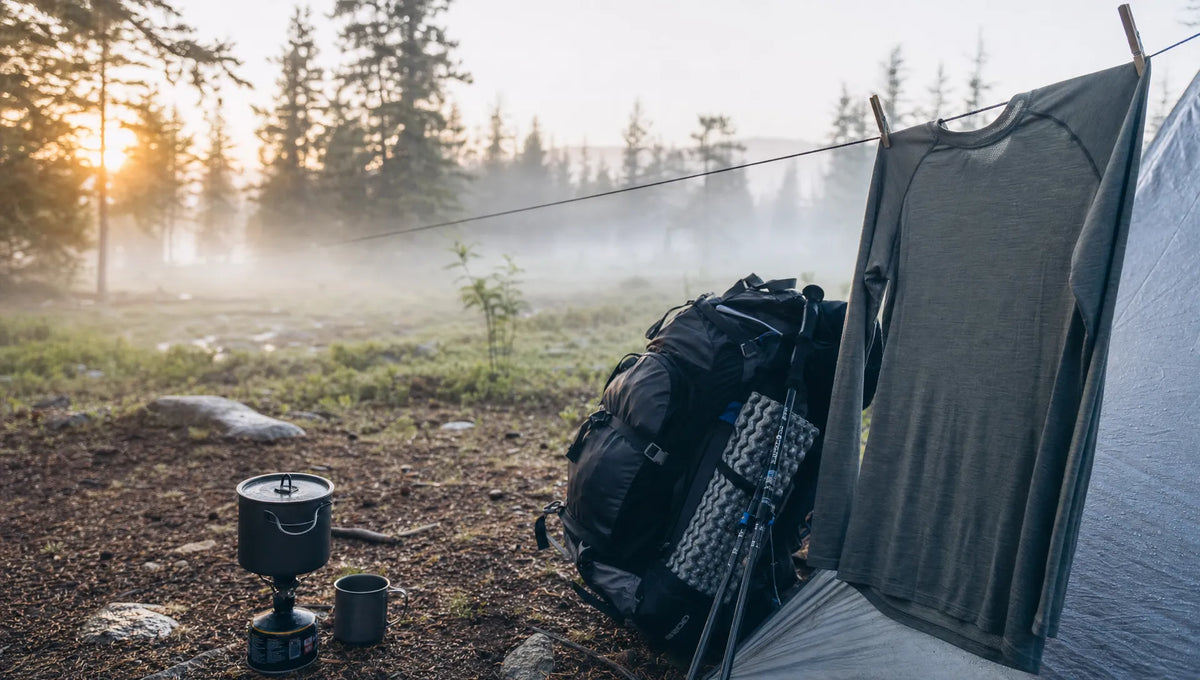
The best time to wear a merino wool underlayer outdoors is when conditions are cool, changeable, damp, or physically demanding enough that sweat management matters as much as warmth. In other words, merino shines when you need a layer that can sit comfortably against your skin, help regulate temperature, and stay wearable longer than a typical cotton undershirt.
That makes it useful far beyond deep winter. A merino wool underlayer can be the piece you reach for on a cold hike, a windy spring campsite, a fall trail run, a ski day, a rainy commute, or a multi-day backpacking trip where you need one shirt to do more than one job.
The quick answer: wear a merino wool underlayer when comfort could change fast
A merino underlayer is most useful when the day will not stay perfectly predictable. If you will move between sun and shade, climb and descend, sweat and rest, or transition from cold mornings to mild afternoons, merino is often the safer choice.
Wear one outdoors when you expect:
- Cool to cold temperatures, especially from fall through spring
- Stop-and-go activity, such as hiking, skiing, climbing, fishing, hunting, or camping chores
- Damp air, light rain, snow, fog, or mist under a protective outer layer
- Long hours outside without an easy wardrobe change
- Travel days where you need comfort, odor resistance, and low bulk
- Early starts or late finishes when temperatures drop quickly
The key is not simply that merino is warm. The real advantage is that it helps balance warmth, breathability, and moisture handling in one next-to-skin layer.
Why merino works so well as an outdoor underlayer
Merino wool comes from fine-wool sheep bred for soft, lightweight fibers. Compared with traditional coarse wool, quality merino feels smoother against the skin, which is why it is widely used for base layers and undershirts.
As an underlayer, merino has four outdoor strengths. First, it insulates without feeling bulky. Second, it can absorb moisture vapor within the fiber structure while still feeling comfortable for many wearers. Third, it tends to resist odor better than many synthetic fabrics, which is useful on longer outings. Fourth, it adapts well to temperature swings, making it practical when a single day includes both effort and rest.
If you want a deeper primer on the fiber itself, Cavalcade has a helpful explanation of what merino wool is and why it performs differently from ordinary wool or cotton.
In an online world where even sites about detecting AI generated writing underline how complicated content trust can be, the best way to choose outdoor clothing is to focus on observable performance: fiber type, fabric weight, fit, weather, and activity level.
Best conditions for wearing a merino wool underlayer outdoors
Merino is not just for extreme cold. It is often at its best in moderate but unstable conditions, where overdressing can make you sweaty and underdressing can leave you chilled.
| Outdoor condition | Is merino a good choice? | Why it helps |
|---|---|---|
| Cold and dry | Yes | Adds warmth with low bulk and works well under fleece or insulation |
| Cold and damp | Yes, with a shell | Helps manage moisture while an outer layer blocks rain, snow, or wind |
| Cool and windy | Yes | Comfortable under a wind shell or softshell |
| Mild but changeable | Yes, especially lightweight merino | Helps prevent the on-off cycle of feeling too hot, then too cold |
| Hot and humid | Sometimes, only in very light weights | Breathable, but may not dry as fast as the lightest synthetics |
| Heavy rain without a shell | No | No underlayer performs well if it becomes fully soaked |
Think of merino as the layer that protects your comfort margin. It gives you more room for error when the forecast, pace, or terrain changes.
Wear merino for cold hikes and winter trail days
Cold hiking is one of the clearest use cases for a merino wool underlayer. When you start moving, your body generates heat. When you stop for a snack, take photos, check a map, or wait for a group, that heat production drops quickly. If your base layer is wet with sweat, the chill can set in fast.
Merino helps because it remains comfortable across that warm-to-cool cycle. A fitted long-sleeve merino top under a fleece and weather-resistant shell can handle a surprising range of winter trail conditions. For lower-output cold weather, a midweight merino layer is usually more comfortable than an ultralight one. For steep climbs, a lighter merino layer may be better because it reduces overheating.
If your priority is cold-weather warmth, this guide to merino thermal layers for cold-weather comfort offers a more focused look at staying warm without building a bulky outfit.
Wear merino in shoulder seasons, when mornings and afternoons feel different
Spring and fall are ideal merino seasons. A morning trailhead can feel cold enough for gloves, while the return hike can feel sunny and mild. A cotton T-shirt may feel fine at noon, but uncomfortable when a breeze picks up or clouds roll in. A synthetic performance top may wick quickly, but can become odor-prone on repeated wear.
A lightweight or midweight merino underlayer handles these shoulder-season shifts well. It is warm enough at the start, breathable enough when you pick up the pace, and comfortable under a vest, overshirt, fleece, or rain shell.
This is especially helpful for outdoor days with mixed activity. You might hike for two hours, sit at a campsite, walk into town, and then return after sunset. A merino base layer reduces the need to constantly change shirts as the day changes around you.
Wear merino for high-output activity in cool air
Merino can also work well for high-output pursuits like trail running, fast hiking, ski touring, cycling, and snowshoeing, especially when the air is cool. The goal is to avoid sweating through a heavy layer early, then getting chilled later.
For these activities, choose a lighter merino underlayer. A close fit is important because moisture moves more efficiently when the fabric sits near the skin. You do not want a loose shirt bunching under a pack, harness, or jacket.
That said, merino is not always the fastest-drying option. If you are racing, training intensely in warm rain, or expecting constant heavy sweat, a technical synthetic may dry faster. But for many outdoor activities where comfort, warmth, and odor resistance matter together, merino remains a strong choice.

Wear merino for camping, backpacking, and multi-day trips
Merino earns its place on multi-day trips because it can often be worn longer between washes than many alternatives. That matters when you are packing light, carrying everything, or sleeping outdoors.
A merino underlayer can serve as your hiking shirt, sleep layer, backup warm layer, or town-day shirt, depending on the cut and fabric weight. Many backpackers like having one lighter merino top for active use and one dry merino layer reserved for sleeping. That dry sleep layer can make a cold night much more comfortable.
Merino is also useful around camp because your activity level drops. After a day of moving, you may suddenly spend hours cooking, setting up shelter, or sitting still. A damp cotton layer can feel miserable in that moment. A merino layer under a fleece or insulated jacket helps you stay comfortable while your body cools down.
Wear merino under a rain shell or wind shell
A merino wool underlayer pairs especially well with outer layers. On its own, merino is not a rain jacket and it should not be treated like one. But under a waterproof shell, wind shell, softshell, or insulated jacket, it helps create a more complete outdoor system.
The base layer manages next-to-skin comfort. The midlayer adds insulation. The shell blocks wind, rain, or snow. When these pieces work together, you can adjust your outfit without changing everything.
For example, on a windy ridgeline, you might wear a lightweight merino top under a wind shell. On a cold ski day, you might wear a midweight merino base layer under a fleece and waterproof shell. On a damp fall hike, a merino long sleeve under a breathable rain jacket can be more comfortable than cotton, especially when you are moving.
For more detail on combining pieces efficiently, see this guide on building a versatile merino wool layering system.
Choose the right merino weight for the weather
Fabric weight is one of the biggest factors in deciding when to wear a merino underlayer. The exact numbers vary by brand, but merino base layers are commonly described as ultralight, lightweight, midweight, or heavyweight.
| Merino weight | Common use | Best outdoor timing |
|---|---|---|
| Ultralight, about 120 to 150 gsm | Warm-weather hiking, travel, cool summer mornings | When you want breathability more than warmth |
| Lightweight, about 150 to 180 gsm | Three-season hiking, active layering, daily outdoor use | When conditions are cool, mild, or variable |
| Midweight, about 190 to 250 gsm | Winter hiking, skiing, camping, cold commutes | When you need reliable warmth with moisture management |
| Heavyweight, about 250 gsm and up | Low-output cold weather, basecamp, very cold conditions | When you will spend more time still than moving |
If you are unsure, lightweight merino is usually the most versatile starting point. It can be worn alone in mild conditions or layered under insulation when temperatures drop. Midweight is better if your outdoor plans lean toward winter, snow, or long periods of low movement.
For season-specific recommendations, the Merino Wool Base Layer Guide for Every Season breaks down how to match weight and fit to spring, summer, fall, and winter use.
Fit matters as much as fabric
A merino underlayer should sit close to the body without restricting movement. If it is too loose, it will trap pockets of air and may not manage moisture as effectively. If it is too tight, it can feel restrictive under a pack, jacket, or harness.
Look for enough length to stay tucked or covered when you bend, reach, or shoulder a backpack. Sleeves should allow full arm movement. Neckline matters too. A crew neck holds warmth better, while a quarter-zip allows more ventilation on climbs. For bottoms, a smooth waistband and flat seams help prevent rubbing during long walks or cold-weather sports.
Blends can also be practical. Some merino garments include nylon for durability or elastane for stretch. Pure merino can feel very natural and soft, while blended merino may hold up better to abrasion from backpacks, repeated washing, and intense activity.
When not to wear a merino wool underlayer
Merino is versatile, but it is not perfect for every outdoor setting. Knowing when to choose something else will keep you more comfortable.
Avoid relying on merino as your only solution in these situations:
- Hot, humid, high-sweat conditions where maximum drying speed is the main priority
- Continuous heavy rain without a waterproof outer layer
- Very abrasive activities where a pack, rock, or rough surface will constantly rub the same area
- Workouts where compression, slickness, or ultra-fast drying matter more than warmth or odor resistance
- Trips where you cannot protect the layer from sparks, snagging, or repeated friction
Merino can still be useful in warm weather if it is very light and loosely styled, but the hotter and wetter the environment becomes, the more you should compare it with lightweight synthetics or other breathable fabrics.
A simple decision rule for outdoor dressing
If you are standing in front of your gear wondering whether to wear merino, ask one question: will I care more about staying comfortable through changing conditions than about drying at the absolute fastest possible speed?
If the answer is yes, merino is usually a strong choice. If the answer is no because the day is hot, humid, short, and sweat-heavy, you may prefer a lighter synthetic top.
Here is a practical way to think about it:
| Activity | Merino underlayer choice | Best setup |
|---|---|---|
| Day hike in fall | Lightweight or midweight top | Merino plus fleece or shell in pack |
| Winter hike | Midweight top and possibly merino bottoms | Merino plus insulating layer and shell |
| Skiing or snowboarding | Lightweight for high effort, midweight for cold resort days | Merino plus midlayer and waterproof shell |
| Camping | Midweight top or dedicated sleep layer | Keep one merino layer dry for night |
| Travel with outdoor walking | Lightweight top | Wear alone or under overshirt, sweater, or jacket |
| Trail run in cool weather | Ultralight or lightweight top | Minimal layers, add wind shell if needed |
The right answer depends on pace, weather, and how much you personally sweat. A cold-natured person may prefer midweight merino where someone else would choose lightweight.
Care tips so your underlayer lasts longer
Merino performs best when it is cared for gently. After a short outing, airing it out may be enough before the next wear. When it needs washing, use cool or lukewarm water and follow the garment label. Avoid fabric softener, which can interfere with performance fibers. Drying flat or on low heat helps reduce stress on the fabric.
Between trips, store merino clean and dry. If you are packing it for a hike or camping trip, keep at least one layer protected in a dry bag or sealed packing cube. The best base layer in the world is much less helpful if it is already damp when you need it most.
Frequently Asked Questions
Is a merino wool underlayer only for winter? No. Merino is useful in winter, but lightweight merino can also work well in spring, fall, cool summer mornings, windy hikes, and travel days with changing temperatures.
Should a merino underlayer be tight or loose? It should be close-fitting but not restrictive. A close fit helps manage moisture and layer smoothly under jackets, while too much tightness can limit movement and comfort.
Can I wear merino wool in the rain? Yes, but it should be worn under a rain shell in steady rain. Merino can help with comfort beneath outerwear, but it is not a substitute for waterproof protection.
Is merino better than synthetic fabric outdoors? It depends on the activity. Merino is excellent for comfort, warmth, odor resistance, and changing conditions. Synthetics may be better when ultra-fast drying and intense sweat management are the top priorities.
How many merino underlayers do I need for a trip? For a day trip, one is usually enough. For multi-day camping or backpacking, many people prefer one active layer and one dry sleep layer so they always have something comfortable at night.
Build your outdoor kit around the conditions you actually face
A merino wool underlayer is worth wearing outdoors when you need adaptable comfort: cold mornings, windy trails, damp campsites, snowy days, long travel, or any activity where sweating and cooling happen in the same outing.
Choose lighter merino for movement, midweight merino for colder days, and heavier options for low-output cold. Pair it with the right midlayer and shell, and it becomes one of the most dependable pieces in a practical outdoor wardrobe.
Cavalcade is opening soon. If you are planning a cleaner, more versatile outdoor clothing setup, join the email list for launch updates and be ready when the store opens.