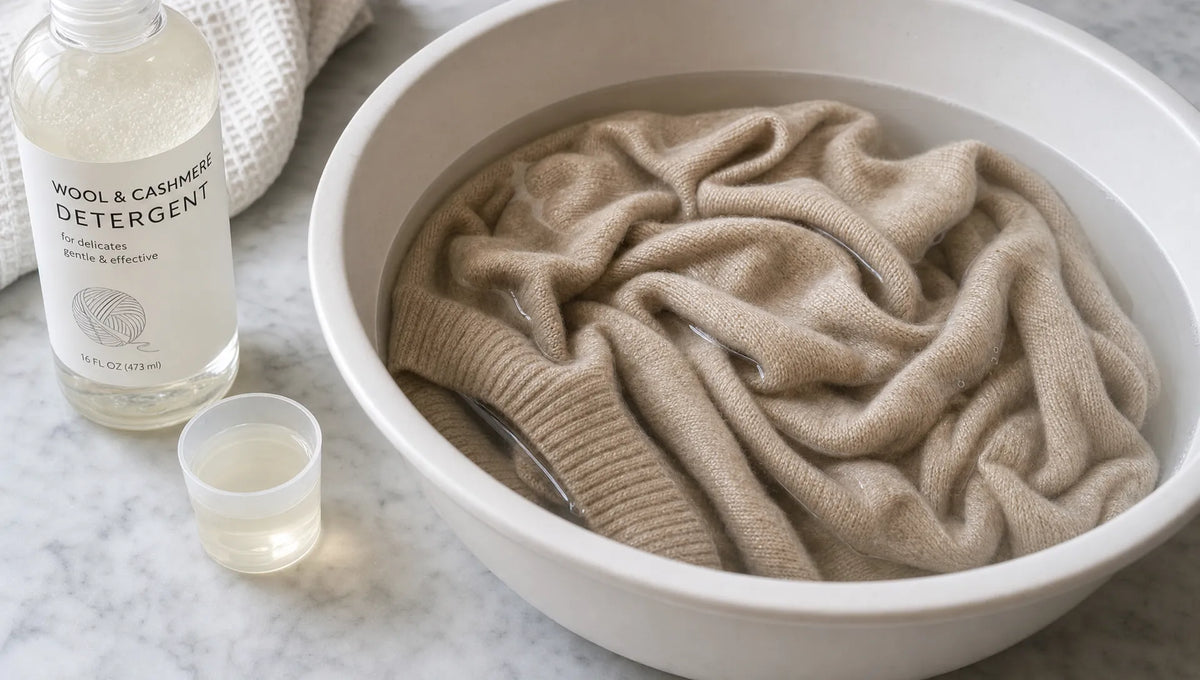
Merino wool is easier to care for than its luxury reputation suggests, but it does ask for a gentler wash routine than cotton or synthetic gym gear. The good news: you do not need special equipment, a complicated ritual or weekly dry cleaning. You just need cool water, mild detergent, low agitation and patient drying.
The main goal is to protect the fiber’s natural structure. Merino fibers are fine, crimped and naturally elastic, which is why they feel soft, breathe well and resist odor. Those same qualities can be compromised by hot water, aggressive spinning, harsh detergent and careless drying. If you wash merino wool correctly, it can stay soft, hold its shape and perform well for years.
If you are still learning why this fiber behaves differently from ordinary wool, Cavalcade’s guide to what merino wool is is a useful companion to this care guide.
The quick answer: the safest way to wash merino wool
For most merino wool garments, the safest method is to wash in cool water with a wool-safe detergent, either by hand or on a delicate machine cycle if the care label allows it. Turn the garment inside out, avoid bleach and fabric softener, skip high heat and dry it flat after gently removing excess water.
Use this table as a fast reference before your next wash day:
| Care decision | Best choice for merino wool | What to avoid |
|---|---|---|
| Water temperature | Cool or lukewarm water | Hot water |
| Detergent | Wool wash or mild liquid detergent | Bleach, fabric softener and harsh stain removers |
| Wash motion | Gentle squeezing or a delicate cycle | Scrubbing, twisting and heavy agitation |
| Spin setting | Low spin or no spin | High-speed spin on delicate knits |
| Drying method | Roll in a towel, reshape and dry flat | Hot tumble drying, radiators and direct heat |
| Storage after washing | Fold when fully dry | Hanging damp or heavy merino garments |
Always check the care label first. Some merino garments are machine washable, some are hand wash only and some structured pieces may recommend dry cleaning. The label wins over any general rule.
Why merino wool needs gentle washing
Merino wool is made of natural protein fibers. Those fibers have tiny surface scales and a springy internal structure that help the fabric regulate temperature, manage moisture and resist odor. This is part of what makes merino so practical for everyday wear, travel and layering, as covered in Cavalcade’s article on the benefits of merino wool for everyday wear.
Washing damage usually comes from a combination of three things: heat, agitation and chemistry. Hot water can encourage shrinking or felting. Heavy agitation can cause fibers to rub against each other and lock together. Harsh detergents can strip the fiber, leaving the garment feeling rougher over time.
Merino does not need to be washed after every light wear. Because it naturally resists odor, many pieces can be aired out between washes. Washing less often is not just convenient, it also reduces friction and extends the life of the garment.
Before washing: read, sort and prepare
Start with the care label. Look for instructions such as “machine wash cold,” “hand wash,” “dry clean only” or “do not tumble dry.” Also check the fiber content. A 100 percent merino sweater may behave differently from a merino blend with nylon, elastane or polyester.
Next, sort your laundry carefully. Wash merino with similar colors and similar fabric weights. A fine merino undershirt should not share a load with jeans, towels or garments with rough zippers. Abrasion is one of the easiest ways to make merino look worn before its time.
Before washing, turn garments inside out. Close zippers, fasten buttons and empty pockets. If you are using a washing machine, place lighter merino items in a mesh laundry bag. This helps reduce friction in the drum and can also help limit surface fuzz and pilling. For more prevention tips, see Cavalcade’s guide on how to stop merino wool from pilling.
Choose the right detergent and water temperature
A wool-specific detergent is the safest option because it is designed for animal fibers. If you do not have one, use a small amount of mild liquid detergent. Less is usually better than more. Too much detergent can leave residue, which can make merino feel stiff or attract more dirt.
Avoid chlorine bleach. It can weaken wool fibers and cause discoloration. Fabric softener is also unnecessary. Merino is naturally soft, and softeners can coat the fiber in a way that reduces breathability and moisture management.
Water temperature matters. Use cool water for both washing and rinsing. Lukewarm water is usually fine for many garments, but hot water adds risk, especially when combined with agitation. If you are unsure, choose cold.
This low-equipment routine works in almost any laundry setup, whether you are washing in an apartment sink, a travel basin, a compact laundry closet or a full-size laundry room in one of the manufactured homes in San Antonio. The principles stay the same: cool water, mild detergent and gentle handling.
How to hand wash merino wool
Hand washing is the gentlest option for delicate merino sweaters, base layers, scarves and fine knits. It gives you control over water temperature and movement, which lowers the risk of shrinking or stretching.
Fill a clean basin with cool water
Use a sink, basin or clean tub. Add a small amount of wool-safe detergent and mix it into the water before adding the garment. This helps distribute the detergent evenly and prevents concentrated soap from sitting on one area of fabric.
Submerge and soak the garment
Place the merino garment in the water and press it down gently until it is fully wet. Let it soak for about 10 to 15 minutes. You do not need to scrub unless there is a specific stained area, and even then, use light pressure.
Gently move the water through the fibers
Use your hands to press and release the garment in the water. Think of it as encouraging the water to pass through the fabric rather than forcing the garment to move. Do not rub the fabric against itself and do not wring it.
Rinse with cool water
Drain the soapy water and refill the basin with clean cool water. Press the garment gently to release detergent. Repeat if needed until the water is clear and the garment no longer feels soapy.
Remove excess water without twisting
Lift the garment carefully with both hands so it does not stretch under its own weight. Press out water gently. Then lay it flat on a clean towel, roll the towel with the garment inside and press down to absorb moisture.

How to machine wash merino wool safely
Many modern merino garments can be machine washed, but only if the care label allows it. If the label says hand wash or dry clean only, do not assume the machine will be fine.
Choose the wool cycle if your machine has one. If not, use the delicate or gentle cycle with cold water. Select a low spin speed. High spin can stretch lighter garments or crease fine knits, especially when the drum is crowded.
Wash merino with similar soft items. A load of merino base layers, undershirts and lightweight socks is better than a mixed load with denim or towels. A mesh laundry bag adds another layer of protection for thinner pieces.
Do not overload the machine. Garments need room to move gently. A packed drum increases friction and may prevent detergent from rinsing out properly.
How to dry merino wool without shrinking it
Drying is where many merino mistakes happen. Heat is the biggest risk. Unless the care label clearly says tumble drying is allowed, skip the dryer.
After washing, reshape the garment while it is damp. Lay it on a dry towel or mesh drying rack and smooth it into its natural shape. Align shoulder seams, straighten sleeves and flatten curled hems. This is especially important for sweaters and base layers that should fit close to the body.
Avoid hanging wet merino on a hanger. Water adds weight, and the garment may stretch at the shoulders or lengthen unevenly. Also avoid drying directly on a radiator, in front of a heater or in strong direct sunlight. Airflow is helpful, direct heat is not.
For travel or small spaces, lay the garment flat on a towel and turn it over after a few hours. If the towel becomes very damp, replace it with a dry one. Merino often dries faster than heavier cotton, but thick knits still need time.
How often should you wash merino wool?
You can usually wash merino less often than cotton. For light daily wear, airing the garment between uses may be enough. Hang it over a chair or drying rack in a ventilated space, away from direct heat. This helps moisture evaporate and allows odors to dissipate.
For activewear, base layers and socks, washing depends on sweat level and conditions. A lightly worn undershirt may be fine after airing out. A base layer worn during a hard winter hike or gym session should be washed sooner.
The best test is simple: if the garment smells fresh, feels dry and has no visible soil, it may not need a full wash yet. Washing only when needed helps preserve softness and reduces pilling.
Treating stains on merino wool
Treat stains as soon as possible, but stay gentle. Blot liquid stains with a clean cloth instead of rubbing. Rubbing pushes the stain deeper and abrades the fibers.
For most small stains, use cool water and a tiny amount of wool-safe detergent. Apply it with your fingertips, press gently and rinse. Avoid aggressive stain sticks unless the label says they are safe for wool. Many stain removers are designed for cotton or synthetics and may be too harsh for merino.
Protein-based stains, such as sweat or food, should not be treated with hot water. Heat can set some stains and make them harder to remove. If a stain remains after gentle treatment, repeat the process rather than escalating quickly to harsh chemicals.
Common merino washing mistakes to avoid
The most common merino damage is preventable. If you remember nothing else, avoid high heat and rough handling.
- Do not wash merino in hot water.
- Do not wring or twist wet merino.
- Do not use chlorine bleach.
- Do not dry on a radiator or high-heat dryer setting.
- Do not wash delicate merino with towels, denim or rough hardware.
- Do not hang heavy wet knits from a hanger.
Another mistake is using too much detergent. More soap does not mean cleaner wool. It can leave residue, make fibers feel coated and require extra rinsing. Use the smallest effective amount, especially when hand washing.
Can you fix merino wool after a bad wash?
Sometimes, but not always. If the garment has slightly tightened up, you may be able to relax it by soaking it in cool water with a wool-safe conditioner or gentle wool wash, then reshaping it flat while damp. Work slowly and avoid pulling hard.
If the garment has felted, meaning the fibers have locked together and the fabric has become dense, stiff and much smaller, the change is usually permanent. Felting happens when heat, moisture and agitation cause the wool scales to interlock. Prevention is far more reliable than repair.
If the issue is stretching rather than shrinking, washing gently and reshaping flat can help restore some structure. For example, if a damp sleeve stretched because it was hung up, lay the garment flat, ease the sleeve back into shape and let it dry completely before wearing.
Storing merino wool after washing
Only store merino when it is completely dry. Even slight dampness can lead to odor or mildew, especially in drawers and storage bins.
Fold merino rather than hanging it, particularly sweaters and heavier knits. Lightweight merino shirts may tolerate hanging when dry, but folding is safer for long-term storage. Keep storage areas clean and avoid packing garments too tightly.
For seasonal storage, wash garments first. Body oils and food traces can attract pests. Store clean merino in a breathable cotton bag or sealed container, depending on your climate and storage space. Cedar blocks or lavender sachets may help keep storage fresh, but they should not touch the fabric directly if they contain oils.
Frequently Asked Questions
Can merino wool go in the washing machine? Yes, many merino garments can be machine washed if the care label allows it. Use cold water, a wool or delicate cycle, low spin and mild detergent. For delicate knits, hand washing is still safer.
Does merino wool shrink when washed? Merino can shrink if exposed to hot water, high heat or heavy agitation. Cold water, gentle movement and flat air drying greatly reduce the risk.
What detergent should I use for merino wool? Use a wool-specific detergent when possible. A mild liquid detergent can work in a pinch, but avoid bleach, fabric softener and aggressive stain removers.
Can I put merino wool in the dryer? Only if the care label clearly says tumble drying is allowed. When in doubt, dry flat. Heat from a dryer is one of the fastest ways to shrink or damage merino.
How do I stop merino wool from smelling between washes? Air it out after each wear. Hang it in a ventilated space until fully dry. Merino naturally resists odor, so many garments can be worn more than once before washing.
Should I wash merino wool before wearing it for the first time? Usually, yes. A gentle first wash can remove finishing residues and freshen the garment. Follow the care label and use the same cool, gentle process you would use for regular washing.
Build a better merino care routine
Washing merino wool well is mostly about restraint: wash only when needed, use cool water, handle the fabric gently and let it dry flat. Those small habits protect softness, shape and performance over time.
Cavalcade is opening soon. If you are building a wardrobe around durable, comfortable everyday layers, join the email list at Cavalcade for launch updates and care-focused guides as the store prepares to open.