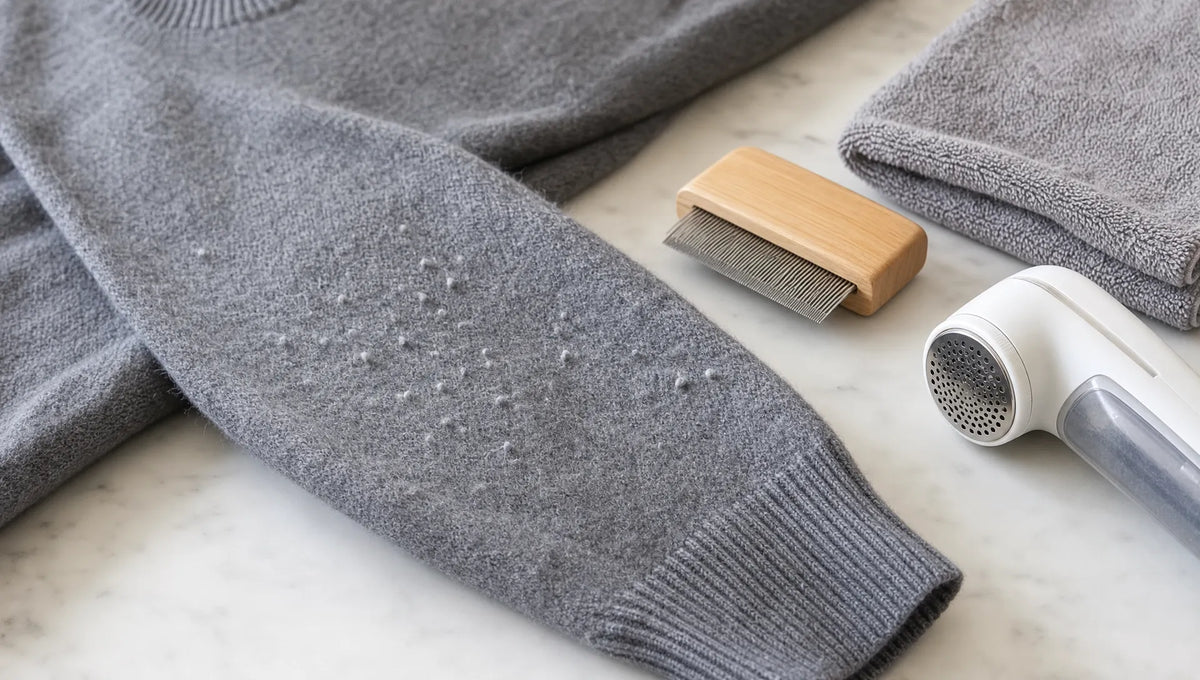
Merino wool is prized because it feels soft, breathes well and regulates temperature across changing conditions. That same softness can make pilling more noticeable, especially on base layers, sweaters and everyday pieces that rub against bags, jackets, waistbands or seat belts.
The good news is that pilling is not a sign that your merino is ruined. In many cases, it is a normal surface effect that can be slowed with better washing, drying, storage and wear habits. With a few small changes, you can keep merino wool smoother for longer and remove pills safely when they appear.
Why merino wool pills in the first place
Pilling happens when loose fibers work their way to the surface of a fabric, tangle together and form tiny balls. Friction is the trigger. The more a garment rubs against itself or another surface, the more likely those loose fibers are to gather into pills.
Merino wool can pill because its fibers are naturally fine. That fineness is part of what makes it feel less itchy than traditional wool. If you want a deeper primer on the fiber itself, Cavalcade’s guide to what merino wool is explains why this superfine wool is so valued for next-to-skin comfort.
The most common pilling zones are easy to predict:
- Under the arms, where sleeves and body fabric rub together
- Across the lower back, especially under backpacks or chairs
- At the waistband, where belts, packs or outer layers create friction
- Around cuffs and hems, where fabric moves constantly
- On the chest or shoulders, where straps, zippers or seat belts sit
A small amount of early pilling can also happen as short surface fibers release during the first few wears. Once those loose fibers are removed, a well-made merino garment may stabilize and look smoother with proper care.
Start with the right merino garment
You can reduce pilling before you ever wash the piece. Fabric structure, yarn quality and garment use all affect how much pilling you see.
A very lightweight merino base layer may feel amazing under a jacket, but it is not designed to handle the same abrasion as a dense sweater or heavyweight midlayer. A looser knit tends to snag and fuzz more easily than a tighter construction. Pure merino may offer excellent softness and odor resistance, while some merino blends add durability for high-friction use.
That does not mean one is always better than the other. The right choice depends on how you plan to wear it. If you are choosing next-to-skin layers for comfort, pure wool has real advantages. If you expect pack straps, workouts or heavy daily wear, construction and fiber blend matter. Cavalcade’s article on 100% merino wool base layers is useful if you are comparing pure merino with blended options.
When buying merino wool, look for a fabric that matches the job. Ultralight merino works best as a protected layer. Midweight merino is often more forgiving for everyday wear. Heavier knits usually handle friction better, though they still need gentle care.
Wash merino wool gently to prevent pilling
The washing machine is one of the easiest places to create unnecessary friction. A rough cycle, crowded drum or harsh detergent can accelerate fuzzing, even if the garment looked fine before washing.
Always read the care label first. Some merino garments are machine washable, some need hand washing and some may have specific instructions because of dyes, trims or blends. The Woolmark Company recommends washing wool according to the garment care label and using a wool setting when machine washing is allowed, since wool cycles are designed to reduce agitation.
A simple anti-pilling wash routine looks like this:
- Turn merino garments inside out before washing.
- Wash similar fabrics together instead of mixing merino with denim, towels or garments with rough zippers.
- Use cold water or the temperature listed on the care label.
- Choose a wool cycle, delicate cycle or hand wash setting.
- Use a mild wool detergent rather than heavy-duty detergent.
- Avoid bleach and avoid fabric softener, which can coat wool fibers and reduce performance.
- Do not overload the machine, since tight packing increases rubbing.
If your merino piece is especially delicate, hand washing is often the safer choice. Use cool water, add a small amount of wool detergent and move the garment gently through the water. Do not scrub, twist or wring it. Press the water out carefully instead.
For merino activewear or base layers, washing less often can also help. Merino naturally resists odor better than many synthetic fabrics, so airing it out between wears may be enough unless it is sweaty, dirty or visibly soiled. Less washing means less abrasion, which means fewer opportunities for pills to form.
| Cause of pilling | What it does to merino | Better habit |
|---|---|---|
| Rough wash cycle | Increases agitation and fiber breakage | Use wool, delicate or hand wash settings |
| Overloaded machine | Forces garments to rub tightly together | Wash smaller loads |
| Mixed laundry | Rough fabrics and hardware abrade wool | Wash merino with similar soft items |
| High heat | Can stress wool fibers and change fit | Use cool water and air drying |
| Aggressive scrubbing | Pulls fibers to the surface | Press and soak gently instead |
Dry and store merino with less friction
Heat and movement can be hard on merino. Unless the care label specifically allows tumble drying, air drying is the safer default. After washing, press out excess water with your hands, then lay the garment flat on a clean towel. Roll the towel gently to absorb moisture, unroll it and reshape the garment while it is damp.
Lay merino flat to dry away from direct heat. Hanging wet wool can stretch the garment because water adds weight. Radiators, hot dryers and strong direct sun can also stress fibers, affect fit or make the fabric feel harsher over time.
Storage matters too. Fold merino wool instead of hanging heavy knits. Keep it away from rough surfaces, hook-and-loop closures, exposed zippers and embellished clothing that can catch or rub. If you also store delicate occasionwear, including bridal pieces from specialists such as Le Michel Bruidsmode, keep those garments separate from merino so beads, lace, closures or structured details do not abrade the wool.
For longer storage, make sure merino is clean and fully dry before putting it away. Body oils and food traces can attract pests. Use breathable storage rather than sealing wool in damp plastic, and consider cedar or lavender as part of a broader moth prevention routine.

Reduce pilling while wearing merino
Most pilling comes from wear, not washing. You do not need to baby your merino, but you should pay attention to repeated friction points.
Backpacks are one of the biggest culprits. Shoulder straps and hip belts grind against merino with every step. If you are wearing a merino base layer on a hike, add a smoother outer layer between the wool and your pack straps when possible. This is especially helpful with lightweight merino.
Jackets can also cause pilling if the inside lining is rough, if seams rub constantly or if a zipper flap presses against the fabric. The same applies to crossbody bags, messenger bags, tool belts and seat belts during long drives.
Rotation helps. Wearing the same merino shirt or sweater several days in a row gives friction more time to build in the same spots. Letting garments rest between wears allows fibers to relax and gives you a chance to air them out before washing.
Layering can either protect merino or damage it, depending on what sits against the wool. Smooth layers reduce abrasion. Rough shells, coarse flannels and stiff backpack straps increase it. If you use merino across seasons, Cavalcade’s guide to building a merino wool layering system can help you choose combinations that stay comfortable without overworking one garment.
How to remove pills from merino wool safely
Even with careful habits, some pilling may happen. Removing pills correctly can make a garment look much cleaner without weakening the fabric.
The safest tools are a wool comb, sweater stone or fabric shaver used with a light hand. A wool comb gives you more control and is ideal for small areas. A fabric shaver is faster, but it can cut the fabric if you press too hard or hold it at the wrong angle.
Place the garment on a flat surface and pull the fabric smooth without stretching it. Work slowly in one direction. Do not dig into the knit. The goal is to remove pills sitting on the surface, not shave down the fabric itself.
For fine merino base layers, use extra caution. Thin fabric can be damaged by aggressive shaving. Start with a small hidden area, especially if the garment is lightweight or loosely knit. If pills are small and scattered, a gentle wool comb is often better than an electric shaver.
Avoid pulling pills off with your fingers. It feels harmless, but it can drag more fibers out of the yarn and make the area fuzzier. Scissors are risky too unless you are cutting a single snag with extreme care. One accidental cut can turn a cosmetic issue into a hole.
After depilling, shake the garment outside or use a soft lint brush to remove loose fibers. Then wash gently only when needed. Depilling too often can thin the fabric, so treat it as occasional maintenance rather than a weekly habit.
What not to do with pilling merino
Some common fixes make pilling worse. The biggest mistake is treating merino like a rugged cotton sweatshirt. Wool is resilient in the right conditions, but it does not respond well to heat, harsh chemistry or abrasion.
Do not use a hot wash to “tighten” the fibers. Heat can shrink or distort wool. Do not use heavy stain removers unless the care label allows them. Do not scrub pilled areas with a stiff brush. Do not throw merino in a mixed load with towels and jeans, then expect it to stay smooth.
It is also worth keeping expectations realistic. Merino is a natural performance fiber, not a plastic-coated fabric. A small amount of pilling in high-friction areas is normal, especially on softer and lighter pieces. The goal is not to make merino immune to wear. The goal is to slow the process, remove pills without damage and help the garment age cleanly.
Frequently Asked Questions
Does merino wool always pill? Not always, but it can pill in areas exposed to friction. Fabric weight, knit structure, yarn quality, garment fit and care habits all influence how much pilling appears.
Is pilling a sign of bad merino wool? Not necessarily. Soft, fine fibers can pill because they are comfortable and flexible. Heavy pilling after very little wear may point to poor construction or excessive abrasion, but light pilling is common.
Can I use a fabric shaver on merino wool? Yes, but use it carefully. Lay the garment flat, avoid pressing hard and test a small hidden area first. A wool comb may be safer for thin base layers.
How often should I wash merino wool to prevent pilling? Wash it only when needed. Merino can often be aired out between wears because it resists odor well. When you do wash it, use a gentle cycle or hand wash method.
Should merino wool be washed inside out? Yes. Turning merino inside out reduces surface friction during washing and helps protect the visible side of the garment.
Can pilling be completely stopped? You can reduce pilling significantly, but you may not eliminate it completely. Friction, movement and normal wear will always affect soft natural fibers over time.
Stay ready for better merino care
Caring for merino is mostly about reducing friction: wash gently, dry flat, store thoughtfully and remove pills with a light touch. Those habits protect the qualities people choose merino for in the first place, including softness, breathability and everyday comfort.
Cavalcade is opening soon. If you want launch updates, use the email signup on the site to be notified when the online store opens.