Do merino wool clothes shrink? Yes, they can, but shrinkage is usually preventable if you avoid the combination that wool hates most: heat, friction and aggressive drying. Merino is more forgiving than many people expect, especially when the garment is made for everyday wear or active use, but it still needs a gentler routine than cotton tees or synthetic gym shirts.
The good news is that merino does not need complicated care. In most cases, cold water, a mild detergent and flat drying are enough to keep the shape, softness and fit you paid for. The bigger risk comes from treating merino like regular laundry, especially by using hot water, high spin cycles or a tumble dryer.
So, Do Merino Wool Clothes Shrink?
Merino wool clothes shrink when the fibers are exposed to the wrong washing or drying conditions. Wool fibers have tiny surface scales. When those scales meet moisture, heat and movement, they can catch on one another and tighten. That process is often called felting, and once severe felting happens, it is difficult to fully reverse.
Not every merino garment reacts the same way. A lightweight undershirt, a thick knit sweater and a merino blend activewear top may all have different care limits. Some garments are machine washable because the fibers have been treated or the fabric construction is more stable. Others, especially loosely knitted pieces or untreated wool, need more caution.
If you are new to the fiber itself, Cavalcade has a useful primer on what makes merino wool different from regular wool. Understanding the fiber helps explain why merino can feel soft against skin yet still react strongly to heat and agitation.
Why Merino Shrinks in the First Place
Shrinkage is not just about water. Clean water at the right temperature is usually safe. The problem begins when water is paired with heat and mechanical movement.
Hot water can relax and open the fiber structure. Agitation from rubbing, twisting or a rough machine cycle pushes the fibers together. Heat from a dryer then tightens everything further. This is why a merino shirt might look fine after washing but come out smaller after drying.
There are two common kinds of size change. The first is temporary tightening, where the fabric contracts slightly while wet and relaxes again when reshaped. The second is permanent felting, where the fiber scales lock together. Temporary tightening can often be corrected by careful reshaping. Felted shrinkage usually cannot.
What Affects Shrink Risk?
The answer to “do merino wool clothes shrink?” depends on the garment label, fabric weight, knit structure and whether the wool has been treated for easier care. You do not need to become a textile engineer, but a few clues can help you judge risk before laundry day.
| Garment type | Shrink risk | What to watch for |
|---|---|---|
| 100 percent untreated merino | Higher | Hot water, rubbing and tumble drying |
| Machine washable merino | Lower | Still avoid heat unless the label allows it |
| Merino blends | Varies | Synthetic fibers may add stability, but wool content still needs care |
| Loose knit sweaters | Higher | Knits can stretch when wet and shrink with heat |
| Lightweight base layers | Moderate | Usually easier to wash, but high heat can still damage fit |
Care labels matter more than assumptions. If a label says hand wash and dry flat, follow it. If it says machine wash cold, use the gentlest cycle available and skip the dryer unless the label clearly permits tumble drying.
Care Tips That Prevent Merino Wool Clothes From Shrinking
The safest merino routine is simple: wash less often, wash colder and dry without heat. Merino naturally resists odor better than many fabrics, so you usually do not need to wash it after every wear unless it is visibly dirty or sweat-soaked.
Start by airing the garment between wears. Hang it somewhere with airflow, away from direct sunlight or high heat. This helps moisture evaporate and reduces unnecessary laundering, which is one of the easiest ways to extend the life of merino clothing.
When washing is needed, use these core rules:
- Wash in cold or lukewarm water, never hot water.
- Choose a wool-safe or gentle detergent.
- Use a delicate cycle if machine washing is allowed.
- Turn garments inside out before washing.
- Avoid bleach, fabric softener and enzyme-heavy detergents.
- Never wring, twist or scrub merino aggressively.
- Dry flat on a towel instead of hanging heavy wet knits.
- Keep merino out of high heat dryers unless the care label explicitly says otherwise.
For a deeper step by step routine, see Cavalcade’s guide on how to wash merino wool without damaging it. The main idea is consistent: gentle handling beats aggressive cleaning every time.
Hand Washing vs Machine Washing
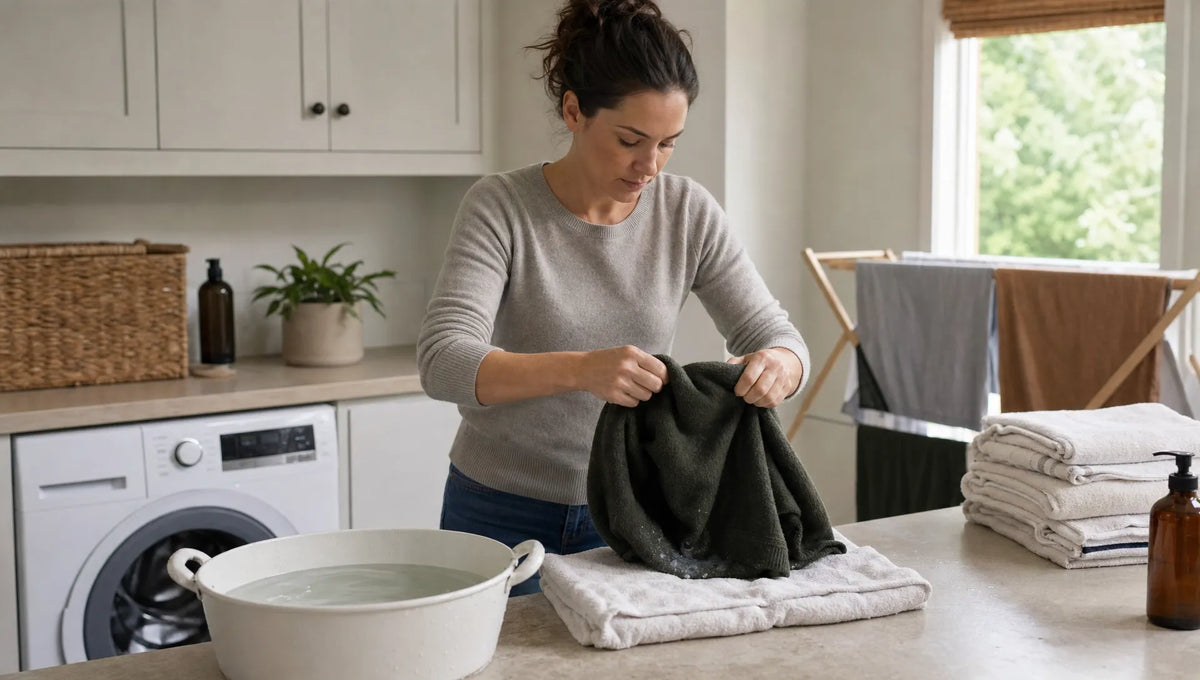
Hand washing is the safest choice for delicate merino, expensive knitwear or any garment with a “hand wash only” label. Fill a basin with cold water, add a small amount of gentle detergent and press the garment into the water. Let it soak briefly, then swish it lightly. Do not rub one part of the fabric against another.
After washing, rinse with cold water until the detergent is gone. Lift the garment carefully with both hands so it does not stretch under the weight of the water. Press water out gently against the side of the basin, then roll the item in a clean towel to remove extra moisture.
Machine washing can be fine for many modern merino pieces. Use a delicate or wool cycle, cold water and low spin. A mesh laundry bag adds protection by reducing friction with zippers, buttons and rougher fabrics in the same load. Wash merino with similar soft garments, not jeans or towels.

Drying Is Where Many Mistakes Happen
If merino wool clothes shrink in your laundry routine, the dryer is often the reason. Even when washing goes well, hot air and tumbling can cause fibers to tighten. That is especially true for fitted garments where a small amount of shrinkage changes how the item feels on the body.
Drying flat is the safest method. Lay the garment on a clean dry towel and shape it back to its original dimensions. Smooth the shoulders, hem, sleeves and side seams. If the towel becomes soaked, replace it with a dry one so the garment does not sit in trapped moisture for too long.
Avoid hanging wet merino sweaters or heavy layers from a hanger. Wet wool is heavier than dry wool, and gravity can stretch the shoulders or body out of shape. For lightweight tees or underwear, hanging may be less risky once most moisture is removed, but flat drying is still gentler.
| Drying mistake | Why it causes problems | Better option |
|---|---|---|
| High heat tumble drying | Heat and tumbling can tighten fibers | Dry flat at room temperature |
| Hanging wet knits | Weight can stretch shoulders and hems | Reshape on a towel |
| Direct radiator heat | Concentrated heat can distort fabric | Use airflow, not heat |
| Wringing before drying | Twisting stresses fibers and seams | Roll in a towel and press |
Can You Unshrink Merino Wool?
Sometimes. If the garment has only tightened slightly, you may be able to relax and reshape it. If it has felted heavily, meaning the texture is denser, thicker and less stretchy than before, the change is usually permanent.
A gentle reshaping method is worth trying on mild shrinkage. Soak the garment in cool water with a small amount of hair conditioner or wool conditioner for about 15 to 20 minutes. Drain the water, press out moisture without rinsing too aggressively, then lay the item flat on a towel. Carefully ease it back toward its original shape, working slowly across the fabric.
Do not yank the garment. Pulling too hard can distort seams, thin out stressed areas or make the garment look uneven. The goal is to relax the fibers, not force them. Let it dry flat in the reshaped position and check it periodically as it dries.
This technique works best for small fit changes, like sleeves that feel slightly shorter or a body that feels a bit tighter. It will not reliably restore a sweater that has gone down a full size after a hot dryer cycle.
How to Store Merino So It Keeps Its Shape
Storage does not usually cause shrinkage, but it can affect fit and longevity. Clean merino before storing it for long periods because body oils, food residue and sweat can attract moths. Make sure the garment is completely dry before folding it away.
Fold heavier merino pieces rather than hanging them. Long-term hanging can stretch shoulders and create hanger marks. Lightweight shirts can be hung if the hanger is smooth and wide enough, but folding is still the safer default.
For seasonal storage, use breathable bags or sealed containers with clean dry garments. Cedar blocks or lavender sachets may help deter pests, but cleanliness matters most. Avoid storing merino in damp basements, hot attics or plastic bags that trap moisture.
Good storage also helps reduce friction damage. If pilling is another issue you are trying to avoid, Cavalcade’s guide on how to stop merino wool from pilling explains how washing, wearing and storage habits all play a role.
Special Care for Activewear, Travel and Everyday Layers
Merino is popular for activewear and travel because it manages moisture, regulates temperature and resists odor. Those strengths also make people tempted to treat it like rugged synthetic performance gear. It can handle regular use, but it still benefits from gentler laundry habits.
After a workout, let merino dry before tossing it into a hamper. A damp, compressed pile encourages odor and makes you more likely to over-wash later. If the garment is only lightly worn, airing it overnight may be enough. If it needs washing, a cold gentle cycle is better than a hot “sanitize” setting.
For travel, pack merino with a small amount of gentle detergent or laundry soap sheets. Wash items in a sink when needed, roll them in a towel and lay them flat overnight. If you are planning a longer trip, think through the small logistics before leaving, from laundry access to entertainment options like 4K IPTV streaming options for compatible devices. The less you improvise on the road, the less likely you are to rush the care process and damage a favorite merino layer.
Everyday merino basics, including undershirts, underwear and base layers, usually perform best when rotated. Owning more than one piece reduces the pressure to wash and dry the same garment quickly. Quick drying is convenient, but forced drying with heat is the shortcut that creates problems.
Quick Shrink Prevention Checklist
If you remember nothing else, remember that merino prefers gentle conditions. Before washing, check the label and separate merino from rough fabrics. During washing, use cold water and mild detergent. After washing, press out water instead of wringing and dry the garment flat.
The most reliable answer to “do merino wool clothes shrink?” is that they can, but they should not if you treat them correctly. Most shrinkage disasters come from avoidable habits: hot water, rough agitation, high spin cycles and tumble drying.
Merino is not fragile in the sense that it cannot be worn often. It is simply sensitive to the wrong kind of laundering. Respect the fiber and it will usually keep its size, softness and comfort for years.
Frequently Asked Questions
Do merino wool clothes shrink every time you wash them? No. Merino should not shrink every time you wash it if you use cold water, gentle detergent and proper drying. Repeated exposure to heat, agitation and tumble drying is what creates the biggest risk.
Can merino wool go in the dryer? Only if the care label clearly says it can. Even then, low heat or air dry settings are safer. For most merino garments, flat drying is the best way to preserve size and shape.
Is cold water enough to stop merino from shrinking? Cold water helps a lot, but it is not the only factor. You also need low agitation, gentle detergent and no high heat during drying.
Does merino shrink more than cotton? Merino and cotton shrink differently. Cotton often shrinks because of fiber relaxation and fabric construction, while wool can felt when heat, water and friction combine. Felted wool shrinkage is usually harder to reverse.
Can dry cleaning prevent merino shrinkage? Dry cleaning can be appropriate for some structured or delicate wool garments, but it is not necessary for every merino item. Follow the care label. Many modern merino base layers, tees and underwear are designed for gentle washing at home.
What should I do if my merino garment feels smaller after washing? Lay it flat while damp and gently reshape it. If it still feels too small, try a cool water soak with a small amount of conditioner, then reshape slowly. If the texture has become dense and felt-like, the shrinkage is probably permanent.