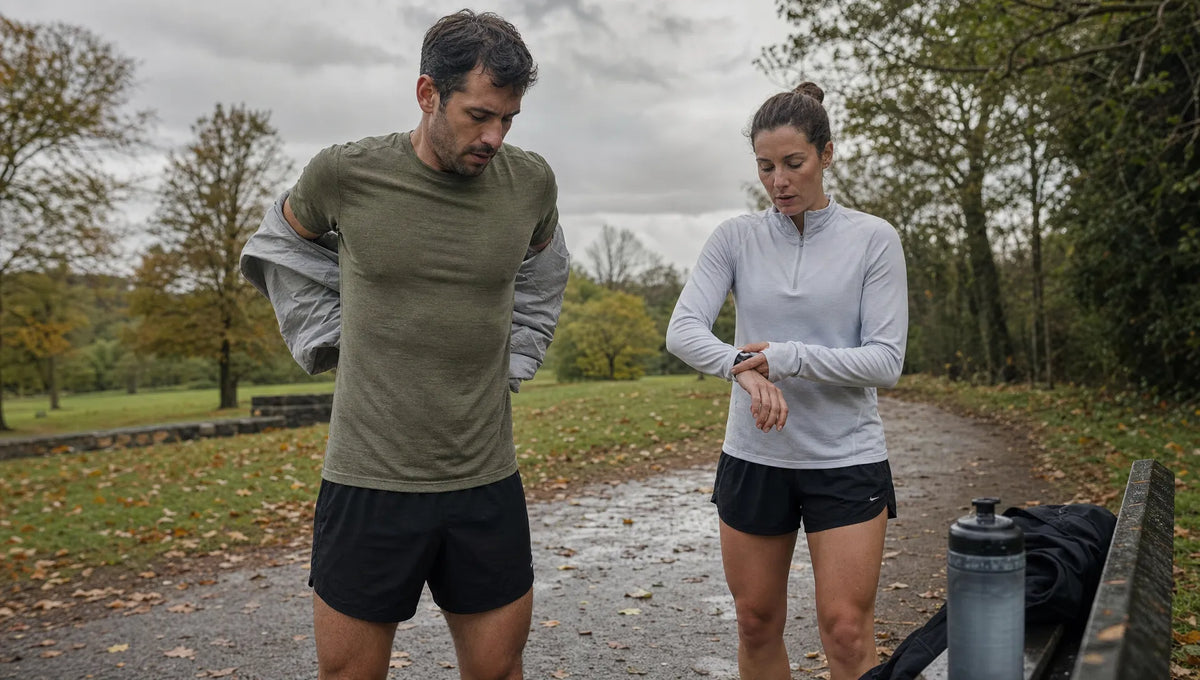
Weather is rarely consistent when you train. A cool morning run turns humid by mile three. A windy hike starts cold, then becomes a sweat test on the climb. A gym commute can mean rain outside, heat inside, and a damp shirt on the way home.
That is where merino wool activewear earns its place. Unlike standard cotton, which tends to hold sweat, and unlike many synthetics, which can feel clammy or develop odor quickly, merino helps manage the changing conditions your body moves through during training. It is soft, breathable, naturally odor resistant, and useful across a surprisingly wide temperature range.
The key is not treating merino as only a winter fiber. When chosen in the right weight and fit, merino can work for warm-weather workouts, cold-weather base layers, travel training, outdoor conditioning, and everyday recovery wear.
Why merino wool works for activewear
Merino wool comes from merino sheep and is known for its fine, soft fibers. In performance clothing, that fineness matters because it makes the fabric comfortable enough to wear next to skin, even during repeated movement.
For training, merino’s biggest advantage is how it handles moisture and temperature. The fiber can absorb moisture vapor while still feeling drier than cotton, then release that moisture as conditions change. In practice, that means a merino training top can help reduce the cold, wet feeling that often happens after sweating in cooler weather.
Merino also insulates in a different way than many flat synthetic fabrics. Its natural crimp creates tiny air pockets that help buffer temperature shifts. This is why a lightweight merino tee can feel comfortable during a breezy warm-up, while a midweight merino base layer can support warmth under a shell in colder weather.
Another major benefit is odor control. Merino is naturally resistant to odor buildup, which makes it useful for multi-day travel, long hikes, training camps, commuting, and anyone who does not want to wash workout gear after every short session. That does not mean it never needs washing, but it can usually stay fresher longer than many synthetic gym shirts.
Merino in heat, cold, wind, and damp weather
The phrase “training in any weather” does not mean one merino piece can do everything. It means merino can form the core of a flexible system. The right fabric weight, fit, and layering choices make all the difference.
| Training condition | Best merino choice | Why it works |
|---|---|---|
| Warm and dry | Lightweight merino tee or tank | Breathes well, feels soft, and helps manage sweat without the heavy feel of cotton |
| Humid or high-sweat sessions | Lightweight merino blend | Added stretch or synthetic fibers can improve durability and drying speed |
| Cool mornings | Light or midweight long sleeve | Adds warmth without overheating once your body temperature rises |
| Cold weather | Midweight base layer under an insulating layer | Helps move moisture away from skin while preserving warmth |
| Wind or light rain | Merino base layer under a wind-resistant shell | Merino manages sweat, while the shell blocks wind and precipitation |
| Travel training | Lightweight merino top and underwear | Odor resistance makes it easier to pack less and rewear more confidently |
For truly cold sessions, merino should be part of a layered system rather than your only defense. If you want a deeper cold-weather breakdown, Cavalcade’s guide to merino thermal layers for cold-weather comfort explains how warmth, breathability, and fabric weight work together.
What to wear for different types of training
A gym workout, trail run, bike commute, and strength session all place different demands on fabric. Merino works best when you choose the garment for the activity rather than assuming every merino piece performs the same way.
For strength training, look for a merino tee or tank with enough stretch for pressing, pulling, hinging, and squatting. Pure merino can be comfortable, but a merino blend with elastane or nylon may offer better shape retention and abrasion resistance, especially if you train with barbells, kettlebells, or a backpack.
For running, lightweight merino is usually the most versatile. It can help limit chill during warm-ups and cooldowns, especially in spring and fall. In hot weather, many runners prefer blends because they dry faster while keeping some of merino’s comfort and odor benefits.
For hiking and outdoor conditioning, merino is especially useful because conditions often change over several hours. A merino base layer can feel comfortable during uphill effort, then help reduce post-sweat chill when you stop for water, lunch, or a weather change.
For cycling and commuting, merino’s odor resistance and clean look are major advantages. A simple merino top can move from workout to daily life better than many technical shirts with shiny finishes or bold sport styling.
For mobility, yoga, and recovery, softness matters. Fine merino feels smooth against the skin, making it a strong choice for slower sessions where comfort, breathability, and temperature balance are more important than maximum sweat dumping.

Layering merino activewear for any weather
The most reliable way to train comfortably in unpredictable weather is to think in layers. Merino is especially effective as the layer closest to your skin because it helps manage sweat before it becomes a problem.
A basic activewear layering system has three parts: a next-to-skin layer, an insulating layer, and a protective outer layer. The base layer handles moisture. The midlayer adds warmth. The shell blocks wind, rain, or snow. You do not always need all three, but understanding their roles helps you adapt quickly.
In mild weather, a lightweight merino tee may be enough. In cool weather, swap to a merino long sleeve or add a thin vest. In cold weather, wear a merino base layer under fleece, wool, or another insulating midlayer, then add a shell if the forecast includes wind or precipitation.
The advantage of this system is control. You can unzip, remove, or add layers as intensity changes. That matters because overheating in cold weather can be just as uncomfortable as underdressing. Sweat trapped against your skin can become a chill risk once you stop moving.
If you are building a full kit, this guide to a versatile merino wool layering system covers how base layers, midlayers, and outer layers work together across changing conditions.
Choosing the right fabric weight
Merino activewear is often described by fabric weight, usually measured in grams per square meter, or gsm. You do not need to obsess over the number, but it helps you choose the right piece for your climate and training intensity.
| Fabric weight | Common use | Best for |
|---|---|---|
| Ultralight, under 150 gsm | Minimal warm-weather layers | Hot-weather training, travel, high-output workouts |
| Lightweight, 150 to 180 gsm | Everyday performance tops | Running, gym training, hiking, mild weather |
| Midweight, 180 to 250 gsm | Base layers and cool-weather tops | Cold mornings, lower intensity sessions, layering |
| Heavyweight, over 250 gsm | Warm insulation pieces | Very cold conditions, recovery, low-output outdoor use |
For most activewear, lightweight and midweight merino are the sweet spots. Heavyweight merino can be excellent for warmth, but it is often too warm for high-output training unless conditions are genuinely cold.
Fit matters as much as weight. A base layer should sit close enough to move moisture efficiently, but not so tight that it restricts movement. A training tee can have a slightly more relaxed fit, especially if you want it to double as everyday wear.
If you are still comparing seasonal options, Cavalcade’s merino wool base layer guide for every season is a useful companion to this activewear-focused approach.
Pure merino or merino blend?
Pure merino is prized for softness, breathability, odor resistance, and natural feel. It is a strong choice for base layers, travel tops, underwear, and lower-abrasion activities.
Merino blends add other fibers to improve specific performance qualities. Nylon can increase durability. Elastane can improve stretch and recovery. Polyester can speed up drying. Lyocell can add smoothness and drape. The best choice depends on how and where you train.
If your workouts involve heavy packs, climbing, barbell knurling, or repeated friction, a blend may last longer. If your priority is next-to-skin comfort, natural feel, and odor resistance, a high-merino fabric may be ideal.
The most important point is transparency. Look for clear fiber percentages, fabric weight, and care instructions. “Merino” can appear on a label even when the garment contains a relatively small amount of wool, so it is worth checking the details before buying.
How merino activewear fits into everyday style
One reason merino activewear is so practical is that it does not always look like gym gear. A clean merino tee, long sleeve, or half-zip can work for a training session, a travel day, or a casual afternoon without feeling out of place.
That versatility is useful if you want a smaller wardrobe built around pieces that perform well and still look polished. Neutral colors such as black, charcoal, navy, cream, and olive are easy to layer. A streamlined merino top can pair with joggers, trail pants, denim, or a weatherproof jacket.
Footwear also changes the feel of the outfit. Trail shoes make the look technical, minimalist trainers keep it understated, and statement sneakers make it more street-ready. If your activewear often crosses into casual styling, pairing merino layers with authentic sneakers and streetwear from BigBoiSneakers can help bridge performance and everyday wear.
Care tips to make merino activewear last
Merino is a performance fiber, but it still benefits from gentle care. The better you care for it, the longer it keeps its shape, softness, and comfort.
- Wash according to the garment label, usually in cold water on a gentle cycle.
- Use a mild detergent and avoid fabric softener, which can coat fibers and reduce performance.
- Turn garments inside out to reduce friction during washing.
- Air dry flat or hang carefully, unless the label specifically allows low tumble drying.
- Store clean and dry, especially if pieces will sit unused between seasons.
Because merino resists odor, you may not need to wash it after every light wear. Airing it out between sessions can extend the time between washes, reduce wear, and make your kit easier to manage.
Common mistakes when training in merino
The first mistake is overdressing. Merino is excellent at balancing temperature, but it cannot prevent overheating if you wear a heavy layer during high-intensity work in mild weather. Start slightly cool if you are heading into a hard run, ride, or hike, since your body will warm up quickly.
The second mistake is choosing cotton layers around merino. A merino base layer can only do so much if you put a sweat-holding cotton hoodie over it. For outdoor training, pair merino with breathable insulation and weather-appropriate outerwear.
The third mistake is ignoring durability needs. If your activity involves repeated abrasion, choose a merino blend or use merino where it makes the most sense, such as the base layer, socks, or underwear. Save delicate lightweight pieces for lower-friction use.
The fourth mistake is buying by season alone. A winter runner and a winter dog walker need different layers. Intensity, wind, precipitation, and stop-start patterns all matter. Choose for the conditions and the workout, not just the month on the calendar.
Frequently Asked Questions
Is merino wool activewear good for summer training? Yes, lightweight merino can work well in summer because it breathes, feels soft, and helps manage moisture. For very hot or high-sweat workouts, a lightweight merino blend may dry faster than pure merino.
Does merino wool get itchy during workouts? Quality merino is much finer than traditional wool, so it is usually soft enough for next-to-skin wear. If you have very sensitive skin, look for superfine merino, smooth seams, and a fit that does not rub.
Can I wear merino for high-intensity training? Yes, but choose the right weight. Lightweight merino or a merino blend is usually best for running, HIIT, and gym sessions. Midweight merino is better for cool-weather outdoor training or lower-intensity movement.
How often should I wash merino activewear? It depends on sweat level, climate, and personal preference. Merino can often be aired out and reworn after light activity, but wash it after heavy sweat sessions or whenever it smells or feels soiled.
Is merino better than synthetic activewear? It depends on the workout. Synthetics can dry very quickly and handle abrasion well, while merino offers excellent comfort, odor resistance, and temperature regulation. Many athletes prefer merino blends because they combine benefits from both.
Train comfortably when the forecast changes
Merino wool activewear is not just for cold days. With the right weight, fit, and layering strategy, it can help you stay comfortable through heat, chill, wind, damp conditions, travel, and everyday movement.
Cavalcade is opening soon with a focus on comfortable, versatile essentials. Visit Cavalcade to join the email list and get notified when the store launches.