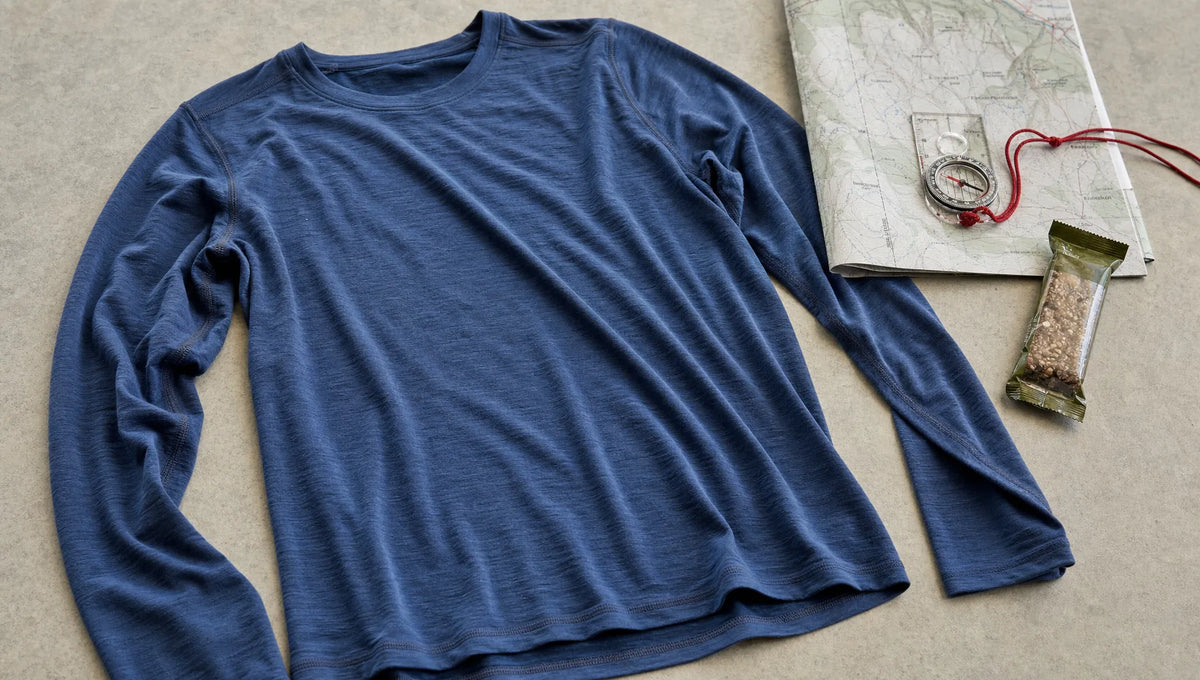
Lightweight merino wool base layers are made for the kind of day that refuses to stay in one lane: a cool morning hike, a warm uphill push, a windy overlook, then a relaxed stop for coffee on the way home. The right layer should keep you comfortable through those changes without feeling bulky, clammy or overly technical.
For active days, the goal is not maximum warmth. It is balance. A lightweight merino base layer should sit comfortably against the skin, move moisture away from your body, breathe during high-output moments and add just enough insulation when your pace slows. That makes it useful for hiking, running, cycling, travel, gym warmups, ski touring approaches and everyday movement in unpredictable weather.
What “lightweight” means in a merino base layer
Most lightweight merino wool base layers sit around 120-170 gsm, meaning grams per square meter. GSM is not the only measure of performance, but it gives you a practical way to compare warmth, breathability and packability.
A lower gsm usually feels airier and dries faster. A higher gsm feels more protective and warmer, especially when you are moving at a moderate pace instead of sweating hard. For active days, lightweight fabric often works better than heavy thermal fabric because it helps prevent overheating, which is one of the fastest ways to end up cold once you stop.
| Merino weight | Best for | How it feels |
|---|---|---|
| 120-150 gsm | High-output workouts, mild hikes, travel, shoulder-season layering | Very light, breathable and easy to pack |
| 150-170 gsm | All-day outdoor movement, cool mornings, mixed activity levels | Balanced warmth and airflow |
| 180-200 gsm | Cooler weather, slower-paced activity, layering under shells | Warmer, still versatile but less airy |
If you tend to run hot, start closer to 150 gsm or below. If your active days include long breaks, exposed wind or cool starts, a slightly heavier lightweight layer around 165-170 gsm can feel more forgiving.
Why merino works so well when you are moving
Merino wool has a few properties that make it especially useful as a first layer. The fibers are fine, naturally crimped and able to manage moisture in a way that feels different from cotton or many synthetics. Rather than simply holding sweat against the skin, merino can absorb moisture vapor within the fiber and release it as conditions change. The Woolmark Company describes wool as breathable, temperature-regulating and naturally suited to next-to-skin comfort.
That matters during stop-and-go activity. When you are climbing a hill, your body generates heat quickly. When you reach the top, take a break or face a cold breeze, that same sweat can chill you. A lightweight merino base layer helps smooth out those swings by staying breathable during movement and offering gentle insulation when your pace drops.
Odor resistance is another practical reason people reach for merino. A synthetic workout shirt may be excellent at quick drying, but it can hold odors after one hard session. Merino often stays fresher for longer, which is useful for travel, multi-day hikes, commuting or any day when you do not want to pack multiple tops.
| Fabric type | Strengths | Tradeoffs |
|---|---|---|
| Lightweight merino wool | Breathable, odor resistant, temperature regulating, comfortable against skin | Usually needs gentler care than basic synthetics |
| Polyester synthetic | Fast drying, durable, often lower cost | Can retain odor and feel clammy during stops |
| Cotton | Soft and familiar for casual use | Holds moisture and dries slowly, poor choice for active layering |
Fit and construction matter as much as the fabric
A lightweight merino base layer should feel close to the body without squeezing. If it hangs too loose, moisture has a harder time moving away from the skin. If it is too tight, it can restrict movement, pull at the seams or feel uncomfortable under a pack strap.
Look for a fit that lets you raise your arms, bend forward and rotate through your torso without the hem riding up. For hiking and training, raglan sleeves or carefully placed shoulder seams can reduce friction under backpacks. Flatlock seams can also help limit rubbing, especially during long days.
Performance apparel has more in common with product engineering than most shoppers realize: small choices in materials, seams and stress points change comfort over hours of use. That same detail-first thinking shows up in smart engineering solutions across technical fields, where safety and efficiency depend on components working together. In a base layer, the system is simpler, but the principle still applies: fabric weight, fit, stretch, seam placement and layering compatibility all need to work as one.
A little stretch can be helpful for running, climbing, yoga, cycling or any activity with repetitive motion. Some base layers use 100 percent merino for a soft, natural feel, while others blend merino with nylon, polyester or elastane for added durability, shape retention or stretch. Neither is automatically better. The right choice depends on whether you prioritize pure natural fiber, active performance, longevity or a mix of all three.
Matching lightweight merino to your active day
The best base layer is the one that fits the actual rhythm of your day. A fast trail run, a relaxed fall hike and a long travel day all benefit from merino, but not in the same way.
For high-output movement, choose the lightest fabric that still gives you coverage. Short sleeves can work in mild weather, but long sleeves are often more versatile because they add sun coverage, reduce pack friction and layer better under a shell. If you sweat heavily, a thinner merino blend may feel better than a warmer pure wool knit.
For hiking or backpacking, a lightweight long-sleeve crew is one of the most adaptable choices. It can be worn alone in cool shade, layered under a fleece when temperatures drop and used as sleepwear on overnight trips. The odor resistance also helps when laundry is not available.
For gym sessions, travel days or town-to-trail plans, look for a base layer with a clean silhouette rather than a shiny technical finish. Merino’s matte texture often makes it easier to wear beyond the trail. If your active days include frequent workouts in changing weather, Cavalcade’s guide to merino wool activewear for training in any weather goes deeper into how merino performs across temperature shifts.

How to layer lightweight merino without overheating
Layering starts with the base layer, but comfort depends on what you put over it. If your first layer is breathable and your outer layers are too heavy, moisture can still build up. On active days, lighter and more adjustable layers usually work better than one thick piece.
A simple system might include a lightweight merino base layer, a breathable midlayer and a wind or rain shell packed in reserve. You can start slightly cool, warm up as you move and add protection during breaks. This approach is especially helpful for hiking, bike commuting, shoulder-season travel and snow activities where effort levels change quickly.
| Conditions | Practical setup |
|---|---|
| Mild and dry | Lightweight merino worn on its own |
| Cool and breezy | Merino base layer plus a light wind shell |
| Cold but active | Merino base layer plus breathable fleece or wool midlayer |
| Wet or exposed | Merino base layer plus midlayer and waterproof shell |
Avoid overdressing at the start of an activity. If you feel perfectly warm before you begin moving, you may be too warm after ten minutes. A slight chill at the trailhead or during warmup is often a sign that your layers will feel right once your body heat rises.
If you are refining a full outdoor kit, it helps to think beyond one shirt. Cavalcade’s article on how to build a versatile merino wool layering system explains how base layers, midlayers and outer layers can work together across seasons.
Details to check before buying
Small design choices can make a lightweight merino base layer feel either dependable or annoying. Before choosing one, think about where and how you will wear it most.
- Neckline: A crew neck gives simple coverage and layers easily, while a quarter zip adds ventilation for steep climbs or changing temperatures.
- Sleeve length: Long sleeves are more versatile for sun, wind and layering, but short sleeves can be better for warm-weather training.
- Hem length: A slightly longer hem helps the layer stay tucked under a pack belt, cycling jacket or ski shell.
- Seams: Low-profile seams reduce rubbing under shoulder straps and waist belts.
- Opacity: Very light colors and ultralight knits can be more sheer, which matters if you plan to wear the layer on its own.
If you are between sizes, choose based on your main use. For next-to-skin warmth and moisture management, go closer fitting. For casual wear or travel, a slightly more relaxed fit may be more comfortable and easier to style.
Caring for lightweight merino wool
Merino is easier to care for than many people expect, but lightweight fabrics do benefit from gentle treatment. Always follow the care label first, since construction and blends vary by garment.
Wash in cold water on a gentle cycle or by hand, using a mild detergent. Avoid fabric softener, which can interfere with the fiber’s natural moisture management. Air drying is usually the safest option because high heat can shrink wool or shorten the life of elastic fibers in blends.
Do not wash after every light wear unless the garment is actually dirty. One advantage of merino is that it can often be aired out between uses. Hang it overnight in a dry place, then wash when needed. For travel or multi-day use, rotating two lightweight merino tops can keep your kit fresh without taking up much bag space.
Store wool clean and dry. If the layer will sit unused for a season, make sure it is fully dry before folding it away. Clean storage helps reduce the chance of odor, mildew or moth damage.
When lightweight merino is not enough
Lightweight merino is versatile, but it is not the answer for every cold-weather situation. If you are standing still in freezing temperatures, sitting at camp for hours or riding a lift in bitter wind, you may need a midweight or thermal base layer instead.
The key is matching insulation to output. High-output activity needs breathability. Low-output activity needs more warmth. Many people eventually keep one lightweight merino layer for active movement and one heavier layer for deep winter, slow mornings or long periods outside without much exertion.
Lightweight merino also has limits in hot, humid conditions. It can still be comfortable, especially in thin knits, but some athletes prefer very light synthetics when maximum drying speed is the top priority. For most mixed active days, though, merino’s comfort range is hard to beat.
Frequently Asked Questions
Are lightweight merino wool base layers warm enough for winter? They can be warm enough for active winter use, especially under a midlayer and shell. For slow activity, very cold weather or long stops, a midweight or thermal merino layer may be more comfortable.
Is merino wool good for sweaty workouts? Yes, lightweight merino works well for many sweaty workouts because it breathes, manages moisture and resists odor. For very intense indoor training or hot-weather racing, some people prefer ultralight synthetic fabrics that dry faster.
Does lightweight merino wool itch? Quality merino is much finer than traditional coarse wool, so it usually feels soft against the skin. If you are sensitive, look for finer micron counts, smooth knits and flat seams.
Should a merino base layer be tight or loose? It should be close fitting, not restrictive. A base layer performs best when it can sit near the skin, but you should still be able to move naturally without pulling across the shoulders, chest or torso.
Can you wear a lightweight merino base layer as a regular shirt? Many lightweight merino layers work well as everyday shirts, especially if they have a clean fit, solid color and minimal visible seams. Very thin or sheer styles may be better reserved for layering.
How long can you wear merino before washing it? It depends on sweat, weather and activity level. For light use, merino can often be aired out and worn again. After heavy workouts, muddy hikes or salt buildup, wash it according to the care label.
Lightweight merino wool base layers earn their place because they solve a common problem: active days are rarely one temperature, one pace or one setting. Choose the right weight, fit and layer combination, then let the fabric do what it does best.
Cavalcade is preparing to open soon. If you are building a better everyday activewear kit, you can join the Cavalcade email list for launch updates and be notified when the store opens.