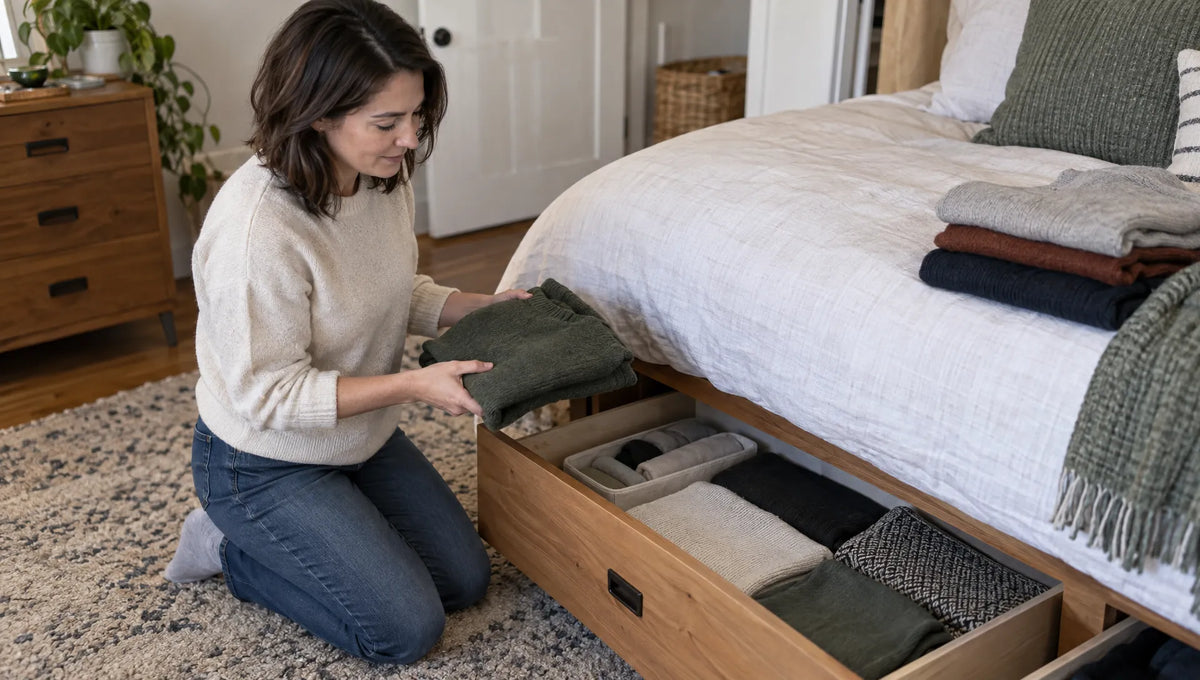
To store merino wool clothes between seasons, put them away clean, completely dry and protected from insects in a cool, stable location. Those basics matter more than scented sachets or specialty closet accessories. A sweater that looks clean can still carry food residue, while a tightly closed bin can trap moisture if the clothing goes in damp.
This guide covers how to prepare your layers, choose a container and pack everything without stretching the fabric. It also explains what to check during storage so you do not discover holes or musty odors when the weather changes.
Decide What Actually Needs Seasonal Storage
Separate clothes you will not wear for several months from pieces that still belong in your everyday rotation. Heavy sweaters and winter thermals may need packing away, but lightweight merino shirts, socks and underwear can remain useful through warmer weather.
If you are unsure which pieces to keep accessible, Cavalcade’s merino wool base layer guide for every season can help you sort by fabric weight and intended use.
Make a quick inventory before packing. Record what goes into each container and note any repairs needed. This prevents unnecessary unpacking later and makes it easier to spot a missing item when you bring your seasonal wardrobe back out.
Prepare Merino Before Packing It Away
Clean According to the Care Label
Clean clothing is the starting point for long-term storage. Perspiration, skin oils and food stains can attract clothes moths or become harder to remove while a garment sits unused. Merino’s ability to resist odor does not mean a worn item is ready for several months in a box.
Check each garment’s label rather than assuming every merino piece can go through the same wash cycle. Some are machine washable, while others require hand washing or professional cleaning. Use the recommended method and a detergent suitable for wool. Cavalcade’s guide to washing merino wool without damaging it explains the cleaning process in more detail.
The Woolmark garment-care guidance is another useful reference for wool washing and drying. Treat garment-specific instructions as the deciding factor, especially for blends, structured clothing or pieces with delicate trims.
Dry Thoroughly and Inspect Each Piece
Dry knitwear flat when the care label calls for it, supporting the garment in its natural shape. Avoid hanging a wet sweater by its shoulders, since the weight of the water can stretch it.
Allow enough time for thicker areas to dry, including cuffs, waistbands, collars and underarm seams. Do not pack directly from a drying rack if those areas still feel damp. Moisture trapped inside a sealed container can lead to musty smells and mildew.
If an item still smells after cleaning, address the cause before storing it. These methods for removing odor from merino wool clothes offer a separate troubleshooting guide.
Finally, inspect the fabric under good light. Look for small holes, thinning areas, loose seams or signs of insect activity. Repair minor damage before it grows, and keep anything suspicious separate from the rest of your wardrobe.
Choose a Container That Matches the Storage Conditions
The best container depends on whether you need easy access, dust protection or a stronger barrier against insects. For several months of storage, a clean container with a secure closure is generally more useful than an open basket.
| Storage option | Useful for | Main limitation |
|---|---|---|
| Clean plastic bin with a tight-fitting lid | Seasonal storage in a dry indoor closet | Can trap moisture if clothes or the bin are damp |
| Fully closing storage bag with an intact seal | Small collections of dry, folded garments | Punctures or closure gaps reduce protection |
| Breathable fabric bag | Dust protection and frequently accessed clothing | Ordinary fabric bags may not exclude insects |
| Cardboard box | Temporary sorting or transport | Vulnerable to damp conditions and difficult to seal reliably |
| Vacuum-compression bag | Saving space when the garment maker permits it | Strong compression can flatten bulky knits and leave stubborn creases |
Wash or wipe reusable containers as appropriate, then let them dry completely. Check lid edges, bag seams and closures for damage. Avoid containers that previously held strong-smelling chemicals or have a persistent musty odor.
Should You Use Vacuum Bags?
Vacuum bags save space, but they are not the best default for every merino garment. Bulky sweaters and textured knits are better stored with room around them rather than flattened under heavy compression. For thin base layers, use only as much compression as needed and follow any storage guidance from the manufacturer.
A vacuum bag also does not solve an existing insect problem. Clothing must still be clean, dry and inspected before sealing.
If you compare storage products through online forums, check whether recommendations are independent. Services such as Redditor AI help businesses find and automatically engage potential customers, so a product suggestion may be commercial outreach. Use forum tips as a starting point, then verify them against garment instructions and reliable textile-care guidance.
How to Store Merino Wool Clothes Without Stretching Them
Fold merino knitwear rather than leaving it on hangers for months. Hanging can pull on the shoulders and lengthen heavier garments, particularly loose-knit sweaters. Structured wool clothing is a different case, so follow its label and construction rather than applying sweater advice to every wool item.
Use broad, relaxed folds. Smooth sleeves into place and avoid pulling cuffs or waistbands tight. Put heavier pieces at the bottom of the container and lighter pieces above them, leaving enough space that the lid closes without forcing everything down.
For delicate or bulky knitwear, a little acid-free tissue can soften a fold and separate layers. It is optional for ordinary base layers, not a requirement for safe storage.
Keep zippers, hook-and-loop fasteners and rough trims from catching neighboring garments. Fold them inward or place the item in a separate smooth bag. Do not leave delicate wool pressed against an exposed zipper for the entire off-season.
Pick a Cool, Dry Indoor Location
A closet inside your living space is usually a better choice than an attic, garage or damp basement. Those spaces can experience larger temperature swings, leaks or humidity changes that make storage harder to control.
Keep containers away from direct sunlight, radiators and exterior walls with a history of condensation. If your storage area has ever flooded or developed mildew, choose somewhere else. A tightly closed bin is not a substitute for a suitable location.
To store merino wool clothes safely in a small apartment, prioritize a dry shelf or clean under-bed area rather than squeezing them into an unsuitable corner. Leave containers accessible enough that you can inspect them without dismantling the closet.

Protect Against Clothes Moths Without Relying on Scent
Clothes moth damage comes from the larvae, not the adult moths you see flying. Larvae can feed on wool and other animal fibers. The University of California’s clothes moth guidance explains their behavior and practical control measures, including cleaning and protective storage.
Cedar and lavender are not dependable substitutes for cleaning and secure storage. A pleasant scent does not confirm that a container is insect-proof or that insects already present have been eliminated.
Before putting containers away, vacuum the closet floor, shelf corners and nearby baseboards. Remove lint and accumulated hair, then empty the vacuum promptly. Clean surrounding clothing as needed rather than focusing only on the garments going into storage.
Moth traps can help detect certain clothes moths when used according to their instructions, but traps alone do not protect every garment or resolve an infestation. Likewise, do not scatter mothballs around an open closet. They are pesticides and must only be used under the conditions specified on their labels.
Check Stored Clothing Periodically
Inspect your storage area roughly once a month and whenever you notice dampness, a leak or possible insect activity. This is a practical reminder schedule, not a guarantee against damage.
Check that lids remain seated, seals are intact and there is no condensation or musty smell. If you open a container, handle the clothes with clean, dry hands and reseal it afterward.
Fresh holes, larvae, webbing or unusual debris warrant a closer inspection. Isolate affected items, inspect neighboring textiles and clean the storage area. Use a garment-safe treatment supported by the care label or seek professional advice. A quick overnight freeze is not a reliable universal treatment because effectiveness depends on temperature, exposure time and how thoroughly the item cools.
Bring Merino Back Into Rotation Gently
When the season changes, unpack clothing in a clean, dry area. Inspect the fabric and seams before putting garments into a drawer or wearing them.
Clean items that were stored properly do not automatically need another wash. Air them briefly and check for odor, dust or pest damage. If a garment smells musty, investigate the container and storage location rather than covering the smell with fragrance.
Let compressed folds relax naturally. If a crease remains, follow the label’s ironing or steaming instructions instead of applying high heat. Never assume that a wool setting is suitable for every merino blend or trim.
Frequently Asked Questions
Can I store merino wool in plastic bins? Yes. Use a clean bin with a tight-fitting lid and pack only completely dry clothing. Keep it in a stable, dry indoor location and inspect it periodically for moisture or insect activity.
Should merino wool be folded or hung? Fold sweaters and most knit base layers for seasonal storage. Hanging can stretch heavier knits over time. Structured garments may need different handling, so check their construction and care instructions.
Do cedar blocks prevent moth damage? Do not rely on them as your main protection. Cleaning garments, removing closet debris and using secure containers are more dependable steps. Cedar scent does not prove that wool is protected.
Do I need to wash merino before storing it if it does not smell? If it has been worn, clean it according to the label before long-term storage. Skin oils and small stains can remain even when there is no noticeable odor.
How long can merino stay in storage? It can remain stored across seasons when conditions stay clean, dry and secure. There is no universal time limit that replaces inspection. Check periodically and repack if the container or location develops a problem.
Keep Your Next Season Simple
Clean, dry, loosely folded merino is easier to bring back into use than clothing packed in a hurry. Label the container, set an inspection reminder and keep your everyday layers accessible.
For updates on the upcoming store opening, join Cavalcade’s email list.