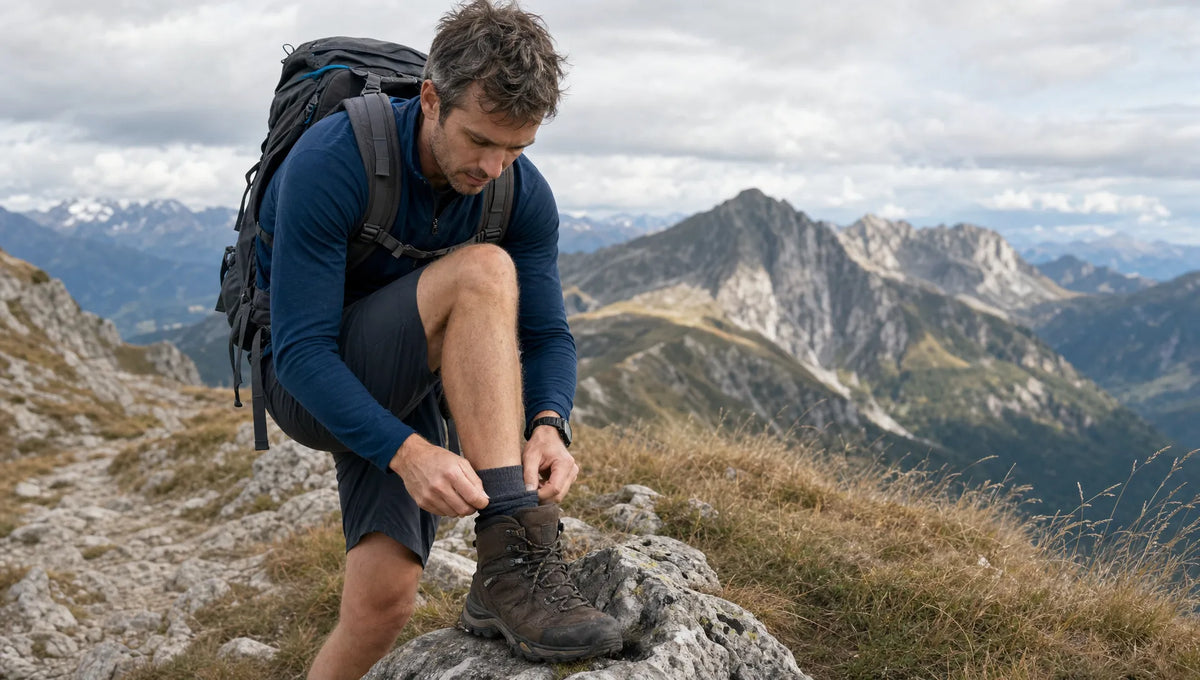
The best merino wool socks for hiking do more than feel soft on the first mile. They help manage sweat, reduce friction, regulate temperature and keep your feet more comfortable when the trail turns steep, wet or unexpectedly cold. The right pair depends on your footwear, climate, mileage and how your feet behave under pressure.
A sock that feels perfect for a short summer loop can feel too thin under a heavy pack. A thick winter sock can bunch inside trail runners and create hot spots. This guide breaks down the practical choices so you can pick hiking socks with confidence instead of guessing from a product label.
Why merino wool socks for hiking feel different
Merino wool is popular outdoors because its fine fibers feel softer than traditional wool and help regulate comfort across a wide range of conditions. It can absorb moisture vapor, move sweat away from the skin and still insulate better than cotton when damp. That matters on a hike because feet rarely stay perfectly dry.
Merino also resists odor better than many common synthetic fabrics, which is useful on long days and multi-day trips. If you are new to the fabric, Cavalcade’s guide to what merino wool is explains why fiber fineness, crimp and breathability make it so useful in active clothing.
Still, merino is not magic. Socks work as part of a system. A great pair cannot fix boots that are too tight, shoes that are soaked through all day or poor foot care. Choosing merino wool socks for hiking means matching the sock to the actual trail conditions, not just choosing the warmest or softest option on the shelf.
Start with the hike, not the sock label
Before comparing weights or wool percentages, think about the hike you actually plan to do. Distance, elevation, weather and pack weight all change what your feet need.
Warm, dry day hikes
For warm-weather day hikes, breathable socks with light cushioning usually make the most sense. They reduce bulk inside trail runners, dry faster after sweat or shallow stream crossings and help prevent the clammy feeling that can lead to friction.
If your feet run hot, look for a light or ultralight merino blend with ventilation zones over the instep. You still get some moisture management and odor resistance without trapping excess heat. For short hikes on smooth trails, a thin sock can feel great. For rocky trails, a little cushioning under the heel and forefoot can make a noticeable difference.
Cold, wet or long-distance hiking
Cold conditions, shoulder-season trips and backpacking routes usually call for more cushion and insulation. Medium-weight socks are the all-around choice for many hikers because they balance warmth, comfort and durability.
Heavyweight socks are best for cold weather, stiff boots or lower-output hiking where your feet need more insulation. They are not always better for active climbs because extra thickness can make footwear tight, which restricts circulation and may leave your toes colder. When in doubt, test the sock with the exact shoes or boots you plan to wear.
Decode sock weight and cushioning
Sock weight describes the overall thickness of the knit. Cushioning describes where extra terry loops or padding are placed. Two socks can be the same weight but feel completely different underfoot.
| Sock type | Best for | Main benefit | Possible drawback |
|---|---|---|---|
| Ultralight | Hot hikes, fast trails, trail runners | Maximum breathability and minimal bulk | Less protection on rocky ground |
| Lightweight | Day hikes, summer backpacking, moderate trails | Good moisture control with light comfort | May feel thin under heavy packs |
| Midweight | Most three-season hikes and backpacking trips | Balanced cushion, warmth and durability | Can feel warm in hot weather |
| Heavyweight | Cold weather, winter boots, slow-paced hikes | More insulation and padding | May bunch or overheat in snug footwear |
Cushion placement matters
Full cushioning feels plush but can be too warm for high-output hiking. Targeted cushioning under the heel, ball of the foot and toe box often gives better trail comfort without unnecessary bulk.
If you hike on hard-packed desert trails or granite slabs, forefoot cushioning can reduce impact. If you descend steep trails often, heel cushioning and a secure fit around the arch can help limit sliding. For long backpacking days, midweight merino wool socks for hiking are usually the safest starting point because they protect your feet without feeling overly bulky in most boots.
Get the height right for your footwear
Sock height is not just a style choice. It determines how much protection you have between your skin and your footwear. A sock that ends below the boot collar can rub, slide down or leave your ankle exposed to debris.
| Sock height | Works best with | Why choose it |
|---|---|---|
| No-show | Low trail runners on short, dry trails | Minimal coverage and cooler feel |
| Quarter | Low hiking shoes and trail runners | Ankle protection without much extra warmth |
| Crew | Mid hiking boots, backpacking boots, rough trails | Protects against boot collars, brush and debris |
| Over-the-calf | Winter boots, snow travel, cold conditions | Adds warmth and keeps the sock in place |
For most hikers, crew height is the most versatile. It works with boots, protects the ankle and gives you margin if you switch between hiking shoes and mid-cut footwear. No-show socks may feel cooler but are rarely ideal with boots because exposed skin can rub against the collar.
Look at the fiber blend, not just the merino percentage
Many durable hiking socks are blends, not 100 percent merino. That is a good thing. Merino brings softness, temperature regulation and odor resistance, while nylon or polyester can improve strength and drying speed. A small amount of elastane or Lycra helps the sock hold its shape.
A very high merino percentage can feel luxurious but may wear faster if the yarn is not reinforced. A low merino percentage may behave more like a synthetic sock with a little wool added. Many quality hiking socks sit in the middle, often with enough merino to feel comfortable and enough synthetic reinforcement to survive repeated miles.
Pay attention to the heel and toe. These are high-friction areas where reinforcement matters most. If you backpack, hike on abrasive trails or wear stiff boots, durability should carry as much weight as softness.

Fit is the real blister test
Blisters usually come from friction, moisture and pressure. Socks influence all three. The right fit should feel snug without squeezing your toes or leaving deep marks around the calf.
A good hiking sock stays put when you walk downhill, flex your foot and climb stairs. If the heel pocket slides under your foot, the sock is too large or poorly shaped for you. If the toe seam presses into your nails, the sock may be too short or the toe box may not suit your foot shape.
Try socks with your hiking footwear at home before a long trip. Walk on stairs, wear them for an hour and check for bunching. Your toes should have enough room to move, but the fabric should not wrinkle under the ball of the foot. Choosing merino wool socks for hiking by fit first is often more important than choosing by warmth or brand.
Match socks to your full layering system
Your feet are only one part of your outdoor clothing system. If you dress too warmly overall, your feet may sweat more. If your upper body gets chilled, circulation to your hands and feet can feel worse.
This is where merino works especially well as a system. A breathable sock pairs naturally with merino underwear, base layers and activewear because the whole kit helps manage moisture during changing effort levels. If you are building a broader hiking setup, Cavalcade’s guide to lightweight merino wool base layers covers the same principles for your upper and lower body.
Should you wear sock liners?
Sock liners are thin inner socks designed to reduce friction and move moisture away from the skin. Some hikers love them for long-distance routes. Others find that liners add too much complexity or make footwear too tight.
If you often blister between toes or on the heel, testing a liner under a lightweight or midweight merino sock can be worthwhile. If your shoes already feel snug, skip liners and focus on a better-fitting sock instead.
Think about climate, terrain and travel plans
A humid forest trail asks more from a sock than a dry ridge walk. Wet conditions reward faster-drying blends and an extra pair in your pack. Cold mornings followed by warm climbs call for medium insulation and strong moisture control.
For travel, merino’s odor resistance is a major advantage because you can pack fewer pairs and rotate them. Many hikers carry one pair for walking, one dry pair for camp or sleeping and sometimes a third backup pair for wet routes. Let damp socks air out whenever possible rather than stuffing them deep into your pack.
Some trips have extra logistics beyond footwear. If you are planning a New Zealand hiking itinerary and the trip includes a trail proposal, it makes sense to plan practical gear alongside bigger details like hut bookings, weather windows and the best places to buy an engagement ring in New Zealand. Good preparation keeps the focus on the experience once you are there.
Avoid these common sock-buying mistakes
The most expensive sock is not automatically the best one for your hike. The best choice is the pair that fits your footwear, your foot shape and your conditions.
Common mistakes include:
- Buying socks that are too thick for your shoes, which can compress your toes and create pressure points.
- Choosing cotton for long hikes because it feels familiar, even though it holds moisture and dries slowly.
- Ignoring sock height, especially when wearing mid-cut or high-cut boots.
- Assuming more cushion always means fewer blisters, when bunching and poor fit can make friction worse.
- Wearing brand-new socks on a major hike without testing them first.
If you are between sizes, check the brand’s size chart and consider how the sock feels after washing. A sock that is slightly too large can wrinkle. A sock that is slightly too small can pull tight across the toes and wear faster at the heel.
How to care for merino hiking socks
Good care helps merino blends keep their shape and performance. Always follow the garment label first, but most hiking socks do well with cool or warm washing and gentle drying. High heat can damage elastic fibers and may shorten the sock’s life.
Turn socks inside out before washing to help remove sweat, skin oils and grit from the cushioned loops. Avoid fabric softeners because they can affect moisture movement. Air drying is usually the safest option, especially for socks with a high wool content.
On the trail, rinse socks only when you have enough time for them to dry. A damp sock packed away overnight is less useful than a dusty but dry one. For backpacking, rotate pairs so one can dry on your pack while the other is in use.
Quick buying checklist
Use this simple checklist before you buy merino wool socks for hiking:
- Match weight to weather, footwear and pack load.
- Choose crew height for most boot-based hiking.
- Look for reinforced heels and toes if durability matters.
- Make sure the sock fits smoothly with no wrinkles underfoot.
- Test the pair on a shorter walk before relying on it for a long route.
If you can only buy one pair to start, choose a midweight crew sock with targeted cushioning and a durable merino blend. It will cover more hiking situations than an ultralight summer sock or a thick winter sock.
Frequently Asked Questions
Are merino wool socks better than cotton for hiking? Yes, for most hikes. Cotton holds moisture and dries slowly, which can increase friction and chill your feet. Merino wool manages moisture better, stays more comfortable when damp and resists odor during long days.
What thickness is best for summer hiking? Lightweight merino blends are usually best for summer hiking. They offer breathability, light cushioning and less bulk inside trail runners or hiking shoes. If your trail is rocky or your pack is heavy, consider light-to-mid cushioning.
Can I wear merino hiking socks for multiple days? You can often rewear merino socks on multi-day trips because they resist odor better than many fabrics. Still, rotate pairs when possible and keep at least one dry pair for camp or sleeping.
Do merino wool socks shrink? Some can shrink if washed or dried with high heat. Follow the care label, avoid hot drying when possible and air dry if you want to protect fit and elasticity.
How should hiking socks fit? Hiking socks should feel snug, smooth and secure. The heel pocket should stay on your heel, the toe area should not squeeze your nails and there should be no bunching under the arch or ball of the foot.
Build a smarter hiking kit
The right sock can make a hard trail feel more manageable, but comfort comes from the whole system: footwear, fit, layers, weather planning and care. Start with your conditions, choose the right weight and test your socks before the trip that matters.
Cavalcade is opening soon. If you are building a merino-based outdoor wardrobe, visit Cavalcade and join the email list for launch updates.