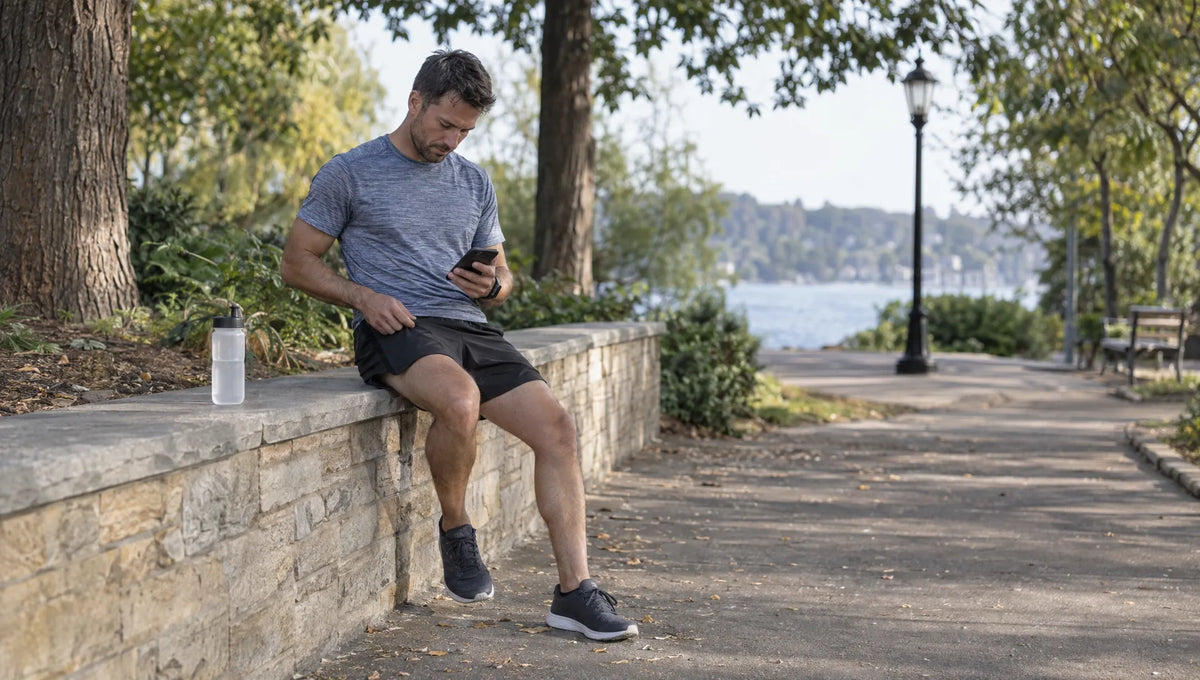
A pair of shorts can feel comfortable for ten minutes and become unbearable an hour later. Sweat builds up, a hem creeps upward and a seam starts rubbing the same spot with every stride. The clothing features that help reduce chafing on long runs are the ones that keep those small irritations from becoming repeated friction.
Chafing happens when skin rubs against skin or clothing. Moisture can make the problem worse, as Cleveland Clinic’s overview of chafing explains. Clothing cannot eliminate every source of friction, but its construction makes a practical difference.
When choosing your next running outfit, look beyond a soft first impression or a “performance” label. These seven features are worth inspecting, followed by a short test before you commit to a long run.
1. Low-profile seams positioned away from rubbing zones
A seam creates a change in thickness, texture or stiffness. When that raised area repeatedly passes over your inner thigh, underarm or chest, even a small ridge can become irritating.
Look for smooth seam construction and sensible seam placement. Flatlock seams generally sit flatter than bulky conventional seams, but the label alone does not guarantee comfort. Thread texture, stitching tension and location still matter. Bonded seams can also feel smooth, although an inflexible bonded edge may bother some runners.
Turn the garment inside out and run your fingertips along every join. Pay particular attention to the crotch, inner thighs, underarms and any seam crossing the chest. Check where several panels meet, since those intersections can create thicker spots.
The useful question is not simply whether a garment is “seamless.” It is whether its joins sit comfortably on your body while you move.
2. Fabric that moves moisture and dries reasonably quickly
Sweaty clothing can cling, bunch and change how it moves against your skin. A fabric that transfers moisture away from a concentrated wet patch and releases it through evaporation can help limit that problem.
Moisture-wicking and quick-drying are related, but they are not identical. Wicking describes moisture movement through fabric. Drying depends on factors including fabric thickness, airflow, humidity and how much water the garment holds.
Lightweight polyester or nylon blends are common options for running. Merino blends can also work, depending on their construction and your preferences. Cotton-heavy garments often stay wet longer during sustained sweating, making them a less forgiving choice for some runners.
Do not choose by fiber name alone. Dense fabric, thick panels or extra layers can hold moisture even when the label sounds technical. Our guide to fabrics for hot and humid weather explains why airflow and fabric construction matter alongside fiber content.
In humid conditions, no fabric can guarantee dry skin. Prioritize comfortable wet performance rather than expecting sweat to disappear.
3. A stable fit with stretch recovery
Loose fabric can fold and sweep across the skin. Overly tight fabric can dig in, pull seams into sensitive areas or restrict your stride. The aim is a stable fit, not maximum compression.
Stretch helps a garment move with you. Stretch recovery helps it return to shape, reducing the chance that it becomes baggy or shifts as the run progresses. A high stretch-fiber percentage does not automatically mean better performance; the knit and overall construction also affect support.
During a fitting, take long steps, lift your knees and swing your arms. Watch for fabric pulling tightly across the hips, gathering at the crotch or forming folds beneath the arms. A waistband that rolls during these movements deserves attention before you run in it.
If you are between sizes, compare both where possible. Sizing down to stop movement can replace one friction problem with pressure and digging. Sizing up may simply add more fabric to bunch.
4. Enough thigh coverage, with hems that stay in place
For runners whose inner thighs touch, fabric can provide a useful barrier between opposing skin surfaces. That barrier only works if it remains where it is needed.
There is no universal anti-chafing inseam length. Your proportions, stride and the garment’s cut determine where a hem lands. Choose coverage that extends beyond your usual rubbing area, then check whether the legs migrate upward when you move.
Longer fitted shorts or half tights may help, but extra length alone is not enough. A loose leg can ride up, while a narrow gripper can create a new pressure point. The hem should feel secure without leaving a painful band around the thigh.
Walk briskly, climb a few stairs and perform several running-style knee lifts during a try-on. If you repeatedly pull the legs down, the coverage is unlikely to become more reliable over a long run. A movement test is only a first screen, but it can reveal obvious problems.
5. Smooth liners and gussets that allow natural movement
An inner layer can reduce unwanted movement and separate sensitive skin surfaces. It can also become the main source of irritation if its edges, seams or shape do not suit you.
In running shorts, inspect the liner independently of the outer shell. Feel its leg openings, check where its seams sit and make sure it does not twist or pull when you stride. A gusset, an extra panel often placed at the crotch, can provide room for movement, but its stitching still needs to feel comfortable.
If you prefer separate running underwear, check it with the exact shorts or tights you plan to wear. Adding layers can introduce overlapping seams and more fabric that holds sweat. The same principle applies to a running bra: support should limit unwanted movement without causing rubbing at the band, straps or armholes.
Persistent riding up, rolling or digging may be signs that your underwear does not fit properly, rather than a problem you need to tolerate.
6. A smooth waistband and pockets that control bounce
A comfortable waistband distributes pressure without folding, slipping or creating a hard ridge. Width can help, but a wide band is not automatically comfortable if its elastic is stiff or its seams are bulky.
Check the inside surface, including the drawcord opening and any knots. A drawcord should secure the garment without needing to be cinched painfully tight. If the waistband only stays up under heavy tension, reconsider the fit or pocket load.
Pockets matter because their contents change how clothing moves. A bouncing phone can tug fabric across the hips or lower back, while keys can press a seam into the skin. Pocket placement that works when empty may feel very different when loaded.
Test the outfit with what you actually carry. Add your phone, gels and keys, then jog briefly. Look for sagging, repeated slapping or fabric dragging across the same area. Reducing the load or using a separate carrying system may work better than tightening the waistband further.

7. Soft inner surfaces, labels and opening edges
The main fabric may feel smooth while a care label, neck binding or armhole edge does not. Small finishing details become more noticeable when sweat and repeated movement are involved.
Check the inside of shirts, especially where your arms swing past your torso. A sleeveless top is not automatically safer: its armhole binding may rub, and it leaves more skin exposed to skin-on-skin friction. Sleeves can provide coverage, but only if their fabric and seams stay comfortable.
Printed labels can avoid a sewn-in tag, though a stiff or rough print may still irritate. If you remove a tag, avoid leaving behind a scratchy stub or damaging the seam holding it.
Style and comfort are separate checks. If you enjoy the personality of humorous 10K running shirts, inspect the shirt’s interior just as carefully as its slogan before choosing it for distance running. Check whether printing or backing creates a stiff patch where the garment touches your skin.
Test the complete outfit before your long run
A fitting-room check can catch obvious problems, but it cannot reproduce an hour of sweat and repetition. Start with a shorter, familiar run in conditions reasonably close to those you expect. Use the complete outfit, including your usual support layers and loaded pockets.
| Area to check | Warning sign during the test | Adjustment to consider |
|---|---|---|
| Inner thighs | Hem rises above the rubbing area | Different inseam or more stable leg fit |
| Crotch and liner | Bunching, pulling or seam pressure | Different liner shape or underwear combination |
| Waist | Rolling, digging or pocket-driven sagging | Different waistband fit or carrying setup |
| Underarms and chest | Repeated brushing or a developing hot spot | Different seam placement, finish or shirt cut |
Afterward, note where you felt warmth, stinging or the need to adjust your clothes. Change one variable at a time so you can identify what helped. Launder the garment according to its care instructions and check it again, since fit and surface feel can change with washing and wear.
Do not wait for broken skin before acting. A developing hot spot is a reason to adjust clothing, shorten the test or stop. Longer runs are not the place to prove that an irritating seam is tolerable.
Frequently asked questions
Are compression shorts better for preventing chafing? They can help by keeping fabric stable and separating the thighs, but compression is not essential. Comfortable seams, adequate coverage and a fit that does not dig in matter more than the label.
Should I wear underwear beneath lined running shorts? Many built-in liners are intended to sit against the skin. Adding underwear may create extra seams and moisture-holding layers. Follow the garment’s guidance and test whichever combination feels comfortable rather than assuming more layers mean more protection.
Can the right clothing prevent all chafing? No. Sweat, weather, salt residue and individual skin sensitivity also matter. A suitable anti-chafing lubricant or nipple protection may help at recurring trouble spots, alongside better-fitting clothing.
What if chafing keeps returning in the same place? Check the exact seam, edge or moving fabric touching that area. If irritation persists despite changes, or you develop worsening pain, spreading redness or drainage, seek medical advice.
Stay in touch with Cavalcade
Choose running clothes by how they behave in motion, not just how they feel on a hanger. For updates when the store opens, join Cavalcade’s launch email list.