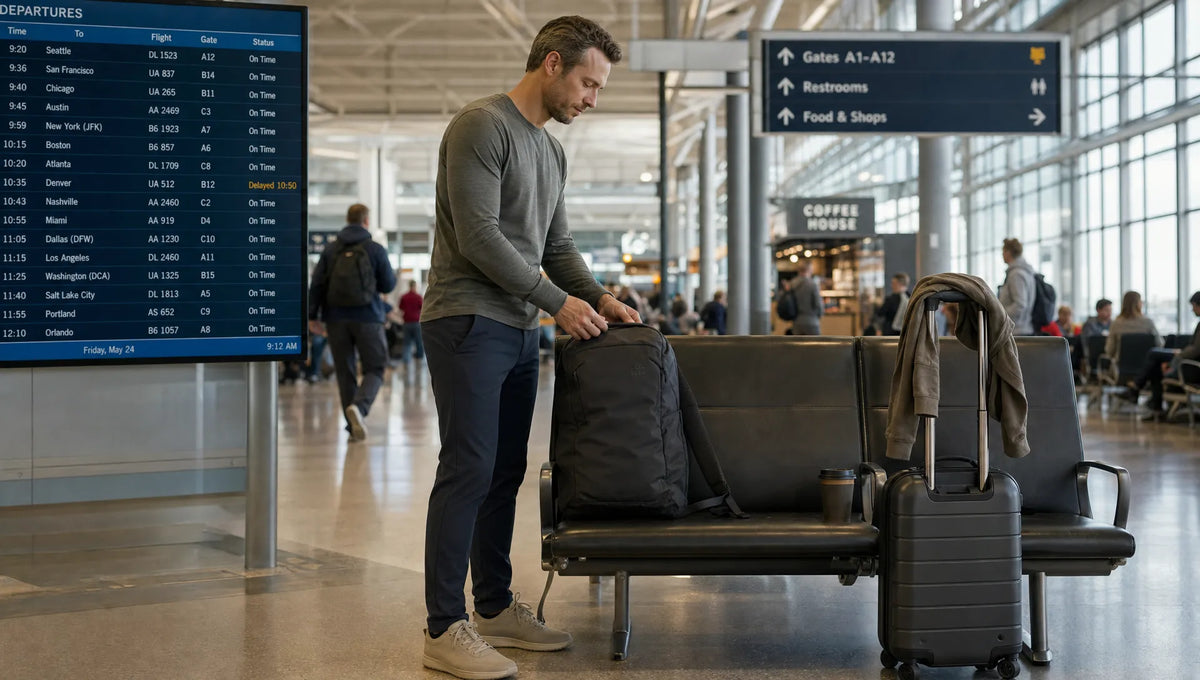
One-bag travel is not about proving you can live with nothing. It is about carrying only pieces that earn their space. A one-bag trip with merino wool is easier because a small clothing rotation can handle changing temperatures, long transit days, repeat wears and sink laundry without turning your pack into a closet.
Merino works especially well for travelers who want to move through airports, trains, trails and city streets with the same bag. It feels comfortable against the skin, resists odor better than most cotton basics, manages moisture and layers cleanly under everyday clothing. Pack it with a clear system and you can travel for a weekend, a week or longer with nearly the same amount of clothing.
Why merino wool works so well for one-bag travel
Merino wool has a rare mix of travel-friendly traits. The fibers can absorb moisture vapor before it turns into clammy sweat, which helps you feel drier during active days or warm transit. Merino also insulates when temperatures drop, so a light shirt can still be useful on an over-air-conditioned flight or a chilly evening walk.
The biggest packing advantage is repeat wear. A merino tee, underwear or sock can often be aired out and worn again before washing, depending on your activity level and climate. That does not mean you never wash it. It means you can pack fewer backups.
Merino also looks more refined than many technical synthetics. A plain merino shirt can pass in a casual restaurant, on a work-adjacent trip or on a day hike. That versatility is what makes it so powerful for one-bag packing.
The core formula for a one-bag trip with merino wool
The simplest formula is a three-day clothing cycle: one outfit worn, one clean outfit packed and one piece drying or airing out. This rhythm keeps your bag light while giving you enough margin for spills, delays and weather changes.
Start with this foundation:
- 2 to 3 merino tops, including the one you wear on travel day
- 3 pairs of merino underwear
- 3 pairs of merino socks
- 1 merino base layer or sleep layer if the climate calls for it
- 1 merino midlayer or sweater for cool weather
- 1 weather-appropriate shell that blocks wind or rain
- 1 pair of pants worn, plus 1 backup bottom if needed
- 1 pair of comfortable shoes worn, with optional sandals or packable flats
If you already think in layers, this will feel familiar. For a deeper breakdown of how each layer works together, see Cavalcade's guide to building a versatile merino wool layering system.
Merino clothing to pack, item by item
Shirts and tees: one worn, two packed
For most trips, three merino tops are enough. Wear one, pack two and rotate them daily. If you will be in a hot, humid place, choose lightweight merino and expect to wash more often. If your trip includes restaurants, client meetings or nicer dinners, make one of the tops a darker solid color with a cleaner fit.
Avoid packing too many shirt styles. A short-sleeve tee, a long-sleeve layer and a slightly dressier merino top cover more situations than three similar tees. Neutral colors also make outfit repeats less obvious.
Underwear and socks: comfort where it matters
Underwear and socks decide whether a light packing list feels smart or miserable. Merino underwear helps reduce clamminess on long travel days and can be easier to rotate than cotton. Three pairs are enough for many travelers if you are willing to wash one pair every day or two.
Socks follow the same logic. Pack three pairs total, with one on your feet. Choose cushion based on footwear, not wishful thinking. Thin socks work for city shoes and warm climates, while midweight socks suit boots, cooler destinations and long walking days. For more detail, Cavalcade has a dedicated guide to men's merino wool underwear for travel and everyday wear.
Base layers: your hidden climate control
A merino base layer is optional in summer and essential in cold or changeable weather. It adds warmth without much bulk and can double as sleepwear. If your trip includes hiking, early flights, mountain towns or shoulder-season weather, pack one lightweight or midweight base layer top.
For colder trips, add matching bottoms. They should fit close to the body without restricting movement. A loose base layer traps less heat and feels sloppy under pants.
Midlayer, sleepwear and accessories
A merino midlayer can replace a bulky hoodie. Look for a sweater, quarter-zip or cardigan that works with every top in your bag. If it can be worn on the plane, at dinner and as a sleep layer in a cold room, it deserves the space.
Accessories are small but useful. A merino beanie, buff or liner glove can make a light jacket feel warmer. For sleepwear, do not pack a full separate pajama set unless the trip demands it. A clean merino tee and underwear often do the job.
Outerwear and footwear, where merino stops
Merino is a layer, not weatherproof armor. You still need an outer shell for rain, wind or snow. A packable rain jacket covers most three-season trips. In winter, pair merino base layers with an insulated jacket or heavier coat.
Shoes should be chosen before the rest of the bag is finalized. One-bag travel works best when you wear your bulkiest footwear in transit. If you need a second pair, make it thin, flexible and genuinely useful, such as sandals for showers and beaches or flats for dressier plans.

Complete one-bag packing checklist
Use this checklist as a starting point, then adjust for climate, trip length and laundry access. The goal is not to pack the smallest possible bag. The goal is to avoid packing things that duplicate the same job.
| Category | What to pack | Practical note |
|---|---|---|
| Merino tops | 2 to 3 shirts | Mix sleeve lengths if weather may change |
| Underwear | 3 pairs | Wash one as needed and let it dry overnight |
| Socks | 3 pairs | Match cushion and height to your shoes |
| Bottoms | 1 worn, 1 packed | Choose pants that work with every top |
| Warmth | 1 merino midlayer | Wear it in transit to save bag space |
| Weather | 1 shell or jacket | Merino warms, a shell protects |
| Sleep | 1 light sleep layer | Use a clean merino top if possible |
| Toiletries | Small liquids and solids | Decant only what you will use |
| Laundry | Sink stopper, soap sheets or small detergent | Add a dry bag for damp items |
| Tech | Phone, charger and compact adapter | Skip duplicate cables where possible |
| Documents | ID, payment cards and travel confirmations | Keep backups in secure digital storage |
A 25 to 35 liter backpack is enough for many one-bag trips using this system. If you need formalwear, camera equipment, winter boots or specialized outdoor gear, size up carefully before adding another bag.
Adjust your merino packing list by trip type
Warm weather city travel
For warm cities, keep merino light and breathable. Pack two short-sleeve merino tops, one long-sleeve sun or dinner layer, three pairs of underwear and two or three thin socks. A light overshirt or linen layer can help if you want a different texture in your outfits.
Choose darker colors if you will be using public transit, eating outdoors or walking all day. They hide minor marks better than pale colors. In humid climates, plan on quick sink washes rather than expecting unlimited repeat wears.
Cold or shoulder-season travel
Cold travel is where merino earns its space. Pack a base layer top, a base layer bottom if needed, a midlayer and a protective outer shell. The base layer keeps warmth close, the midlayer adds insulation and the shell blocks wind or rain.
Do not solve cold weather by packing five bulky sweaters. One high-performing merino midlayer worn repeatedly is more useful than several cotton sweatshirts. If temperatures swing widely, focus on pieces you can add or remove without changing your entire outfit.
Outdoor, road or remote travel
Outdoor trips need a little more redundancy because laundry and drying conditions are less predictable. Add an extra sock pair if your feet may get wet, and consider a second base layer if you will sweat heavily during the day and sleep cold at night.
One-bag discipline works best when the rest of your gear has a home. If you own bulky camp bins, tools, bikes or worksite equipment, store them separately in a dry, secure place instead of letting them influence a travel checklist. For homeowners, contractors or rural properties that need larger gear storage, wind and watertight shipping containers can make more sense than crowding a garage. Your travel bag should stay focused on what you will actually use on the trip.
How to keep merino fresh on the road
Air before you wash
After wearing merino, hang it where air can move around it. A chair back is better than a compressed packing cube, and a hanger near an open window is better still. Often, a shirt that seemed ready for the laundry at night is fine by morning.
Turn garments inside out when airing them. The areas closest to skin need the most ventilation. This habit matters most for underwear, socks and base layers.
Wash gently and dry with patience
When you do wash merino, use cool water and a small amount of mild detergent. Avoid aggressive wringing. Press water out with a towel, then hang the garment flat or over a broad bar so it does not stretch from a single point.
Merino usually dries faster than cotton, but not always as fast as thin synthetics. Wash early in the evening when possible. If odor lingers after travel, Cavalcade's guide on how to remove odor from merino wool clothes explains how to refresh garments without damaging the fibers.
A sample one-bag merino packing list
For a 7 to 10 day trip with normal laundry access, this setup covers most travelers without overloading the bag. Wear the bulkiest items in transit: shoes, pants, belt, merino top and midlayer if needed.
Pack the following in your bag:
- 2 merino tops, with 1 additional top worn on travel day
- 2 extra pairs of merino underwear, with 1 pair worn
- 2 extra pairs of merino socks, with 1 pair worn
- 1 merino base layer top for sleep, cold mornings or extra warmth
- 1 backup bottom, such as travel pants, shorts or a skirt depending on the trip
- 1 packable rain shell or wind shell
- 1 small laundry kit with detergent, a sink stopper and a dry bag
- Toiletries, chargers, documents and any trip-specific essentials
This list assumes you are comfortable repeating outfits. If you are attending formal events, add one dress piece that works with the same shoes and outerwear. If you are traveling for fitness, add one dedicated training layer, but make sure it dries quickly enough to earn its space.
What to leave at home
The easiest way to improve a one-bag setup is to remove duplicates. Leave behind the second hoodie, the fourth tee, the backup jeans and the shoes you might wear once. One-bag travel punishes maybes because every maybe has weight, bulk and mental clutter.
Cotton basics are not forbidden, but they are usually less efficient. Cotton absorbs moisture, dries slowly and tends to feel clammy after heavy wear. If you love a cotton shirt for sleeping or style, pack one intentionally. Do not let cotton fill the bag by default.
Also be careful with bulky travel gadgets. A compact charger, a small toiletry kit and one packing cube can help. A collection of organizers for every possible situation can take up more room than the clothing you were trying to streamline.
Frequently Asked Questions
How many merino shirts do I need for a week of travel? Most travelers can manage with three merino shirts total, including the one worn on travel day. If the weather is hot or your days are very active, plan to wash more often rather than packing twice as many tops.
Can I wear merino wool in summer? Yes, lightweight merino can work well in summer because it manages moisture and resists odor. Choose thinner fabrics, looser fits and lighter colors when heat is the main concern.
Does merino wool dry overnight? It often can, especially if the garment is lightweight and you press out water with a towel before hanging it. Thick socks, heavy midlayers and humid rooms may need more time.
Is merino better than synthetic travel clothing? Merino is usually better for odor resistance, comfort and everyday style. Synthetics can be more durable for abrasion-heavy activities and may dry faster. Many travelers use both, with merino closest to the skin.
What size bag do I need for a merino one-bag trip? A 25 to 35 liter bag works for many trips. Winter travel, formal events or specialized gear may require more space, but merino layers can still reduce the total volume.
Pack lighter without cutting comfort
A strong one-bag system is built around clothing you can wear in more than one setting. Merino wool helps because it handles repeat wear, changing temperatures and compact packing better than most everyday basics.
Cavalcade is opening soon. If you are refining a travel wardrobe built around natural performance and fewer, better layers, join the Cavalcade email list for launch updates before the shop opens.