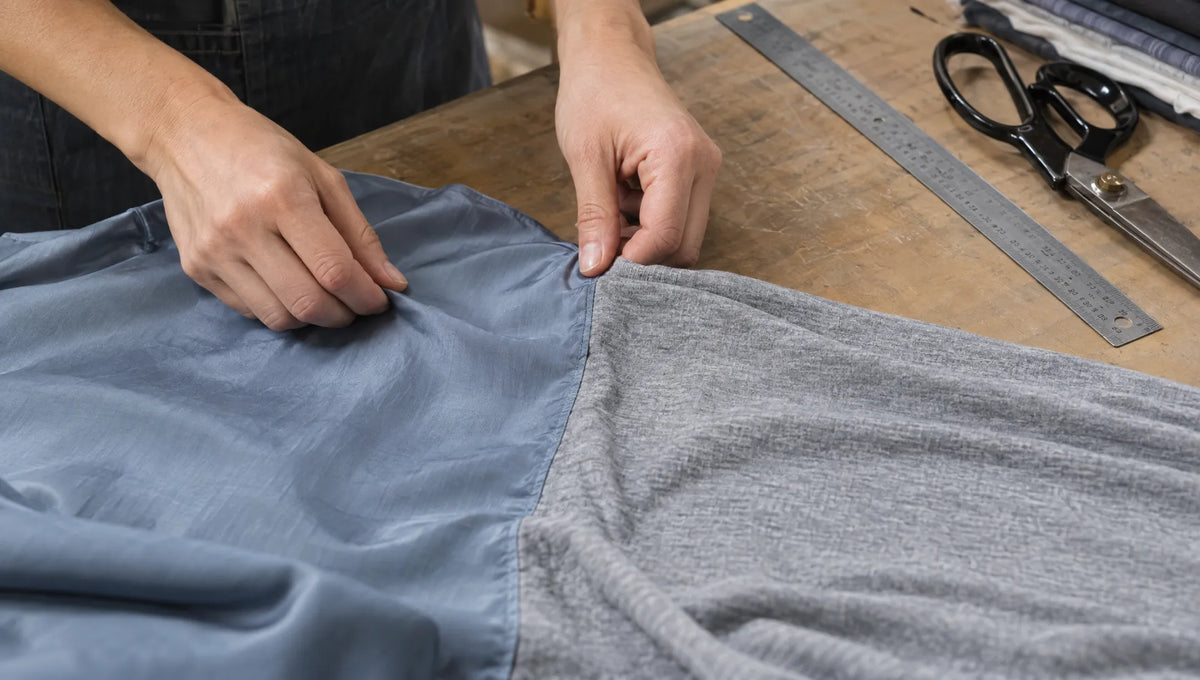
In the lyocell vs modal comparison, modal often feels softer and more cushioned, while lyocell often feels smoother and cooler on first contact. Neither wins in every garment. A brushed lyocell knit can feel cozier than a thin modal jersey, and fabric weight, construction and finishing can matter as much as the fiber name.
The useful question is which kind of softness you prefer: a supple, barely-there T-shirt or a silky shirt that moves lightly against your skin. Here’s how the two fabrics compare when you touch them, wear them and wash them.
Lyocell vs Modal: The Quick Comfort Verdict
Choose modal if you gravitate toward soft, pliable basics that feel cozy without being bulky. Choose lyocell if you prefer a smooth surface, fluid drape and a fresh initial feel against your skin.
These are common tendencies, not guarantees. Compare garments with similar weights and constructions before deciding that one fiber feels better.
| Comfort factor | Lyocell often feels like | Modal often feels like |
|---|---|---|
| Surface texture | Smooth, sometimes silky | Soft, supple and sometimes plush |
| Initial skin contact | Cool and sleek | Gentle and cushioned |
| Drape | Fluid, especially in woven fabrics | Relaxed and body-following in knits |
| Everyday appeal | Lightweight shirts and smooth layers | T-shirts, underwear and lounge basics |
| Stretch | Depends on construction and blends | Depends on construction and blends |
A dense lyocell fabric may feel warmer than a lightweight modal one. Likewise, a loosely knitted modal top may allow more airflow than a tightly woven lyocell shirt. The fiber label narrows your search, but it does not describe the entire wearing experience.
What Are These Fibers Made From?
Both lyocell and modal are regenerated cellulose fibers. Manufacturers process cellulose, commonly sourced from wood, into fibers that can be spun into yarn. They are not synthetic fibers in the same sense as polyester, but they are manufactured rather than simply harvested and spun like cotton.
Lyocell production dissolves cellulose in a solvent before forming the fiber. Modal uses a modified viscose process and is commonly made from beechwood-derived cellulose. The different processes influence fiber properties, but the finished fabric still depends on yarn, knitting or weaving, dyes and treatments.
For a shopper, that means “100% modal” and “100% lyocell” describe composition, not a standardized texture. Two garments with identical fiber labels can feel noticeably different.
Is TENCEL a Third Option?
No. Lenzing’s TENCEL brand includes both lyocell and modal fibers. A label that says only “TENCEL” therefore needs a closer look at the fiber composition.
Our guide to TENCEL vs lyocell explains that naming distinction. When comparing softness, check whether you are holding TENCEL Lyocell, TENCEL Modal or a blend rather than assuming every branded fabric is the same.
How They Feel Against Your Skin
Softness: Cushioned Versus Smooth
Modal’s appeal is often its soft, yielding feel, particularly in fine jersey knits. It can feel comfortable immediately, without the crispness associated with some woven shirts. That makes it a useful candidate for garments worn close to the body.
Lyocell often offers a different version of softness: a smooth surface that slides easily across your skin. In a woven shirt, that can feel more silky than fluffy. In a knit, it may feel much closer to modal.
When comparing lyocell vs modal in person, distinguish surface smoothness from cushioned softness. Stroke the fabric lightly, then compress it between your fingers. You may prefer the one that feels sleek even if the other feels softer when squeezed.
Fiber fineness and finishing also matter. “Micromodal” generally refers to finer modal fibers, but that label alone does not guarantee a better garment.
Coolness: First Touch Is Not All-Day Temperature
Lyocell frequently has a cool initial hand feel, especially in smooth, lightweight fabrics. That first-contact sensation can be appealing in a shirt or sleepwear, but it is not proof that the garment will keep you cooler throughout the day.
Longer-term comfort depends on airflow, fabric thickness, fit and how the garment handles moisture. A close-fitting top can trap heat regardless of its fiber content. A looser garment may feel fresher because air can circulate around your skin.
Modal can also be comfortable in warm weather when the fabric is light and breathable. If heat is your main concern, compare the weight and density of the finished fabric rather than choosing by fiber name alone.
Drape and Cling: The Fit Matters
Both fibers can create fluid fabrics that fall softly rather than holding a stiff shape. The difference becomes clearer when you compare like with like: two jersey tees or two woven shirts.
A fine modal knit may follow the body closely. A lightweight lyocell weave may fall more freely, although neither behavior is exclusive to that fiber. Elastane, knit structure and garment cut change how much a piece stretches and clings.
If you dislike fabric touching your stomach or back, look for adequate room through the torso. A slightly heavier fabric can also feel less revealing than a thin one. Choosing lyocell will not automatically solve cling, and choosing modal does not mean accepting a tight fit.
What Happens When You Get Warm or Sweat?
Both fibers absorb moisture, which can make them pleasant for everyday wear. But absorbency, wicking and drying speed are different properties. Absorbency means taking moisture into the fiber; wicking means moving liquid through the fabric; drying depends on how readily that moisture evaporates.
A soft garment can still feel damp once it holds enough sweat. Neither fiber name guarantees quick drying, and a dense fabric may stay wet longer than a lighter one.
In the lyocell vs modal comparison, avoid treating either material as automatically sweat-proof or odor-resistant. For commuting, errands or relaxed movement, both can be comfortable. For sustained, sweaty exercise, assess the complete fabric and consider a garment designed specifically for that use.
Whether you plan your own workouts or use personal training and nutrition coaching from Kickoff, choose clothing around the session’s sweat level and movement demands, not softness alone.

Which Feels Better for Different Garments?
T-Shirts and Loungewear
Modal is a strong starting point if you want a soft, relaxed tee for lounging or wearing under another layer. Look for a knit with enough substance to avoid an overly thin, clingy feel.
Lyocell is worth trying if you prefer a smoother touch or a tee that feels less plush. A cotton blend can change either fabric’s character, sometimes adding a more familiar, less slippery texture. Compare the actual blend instead of assuming that a higher percentage of one fiber always feels better.
Underwear and Sleepwear
Both can work well next to the skin. Here, seams, waistbands and fit may have more influence on comfort than a small difference in surface softness.
For underwear, check whether the garment stays in place without squeezing and whether elastic edges rub. For sleepwear, notice whether it slides comfortably when you turn over and whether the cut gives you room to move. These checks are more useful than declaring one fiber universally better for sensitive skin.
Woven Shirts and Everyday Layers
Lyocell is a useful option for a woven shirt with a smooth hand and flowing drape. Modal also appears in woven fabrics and blends, so it should not be treated as a knit-only material.
Inspect the collar, cuffs and seams as well as the body fabric. A beautiful surface cannot compensate for rough construction. Our guide to choosing a lyocell shirt that lasts covers the construction checks that matter alongside feel.
A Simple Way to Compare Before Buying
The fairest lyocell vs modal test uses garments of similar weight, fit and construction. Comparing a thick lounge knit with an airy woven blouse mostly tells you about the fabric structure, not the fibers.
Use these four checks when shopping in person:
- Touch the inside: Feel the surface that will actually contact your skin, not just the outer face.
- Check the seams: Run your fingers along underarm seams, neck binding and waistband edges for roughness or bulk.
- Try normal movements: Sit, reach and bend to check whether the garment pulls, rides up or clings uncomfortably.
- Read the full label: Note the fiber percentages, care requirements and any elastane before judging the material.
For online shopping, look for close-up fabric photos, descriptions of the knit or weave and a clear return policy. Reviews that describe thickness and cling are often more useful than a generic “super soft.”
A fabric swatch can help you assess texture, but it cannot tell you how the finished garment will fit. If you cannot try it on, compare its measurements with a similar piece you already enjoy wearing.
Will the Softness Last After Washing?
Both fabrics can remain comfortable with appropriate care, but neither is immune to shrinkage, pilling or changes in texture. Fabric construction, finishing and laundry friction all influence what happens over time.
Follow the garment’s care label rather than a universal rule for the fiber. Where machine washing is permitted, a gentle cycle and mild detergent can reduce unnecessary wear. Avoid high heat unless the label allows it, and keep delicate pieces away from abrasive items such as exposed zippers.
Lyocell’s surface can change through abrasion, including a process called fibrillation in which tiny fibrils develop on the fiber surface. Some finishes control this; others deliberately create a softer, peach-like texture. Modal fabrics can also pill or lose their original appearance depending on construction and care.
The practical takeaway is to choose a garment whose washing requirements fit your routine. Initial softness is less valuable if maintaining it requires care you will not follow.
Frequently Asked Questions
Is modal softer than lyocell? Often, modal knits feel more cushioned, while lyocell feels smoother or silkier. A fair comparison requires similar fabric weights and constructions, because finishing can reverse that impression.
Which is better for hot weather? A lightweight, breathable garment with a comfortable fit is usually a better bet than either fiber name alone. Lyocell often feels cool initially, but modal can also work well in warm conditions.
Which is better for sensitive skin? Neither is universally better. Choose a smooth inner surface, comfortable seams and a non-restrictive fit. Dyes, finishes and detergent residue can also affect how your skin responds.
Does modal stretch more than lyocell? Not necessarily. Knit structure and added elastane largely determine garment stretch. A modal jersey may stretch more than a woven lyocell shirt because they are constructed differently.
Choose the Feel You Actually Enjoy
For lyocell vs modal, the simplest answer is modal for cushioned softness, lyocell for smooth, often cool-feeling comfort. Then check the actual garment, because weight, seams and fit can change the verdict.
Cavalcade is preparing to open. Join the Cavalcade email list for launch updates, and use these checks when comparing fabrics for your next everyday layer.